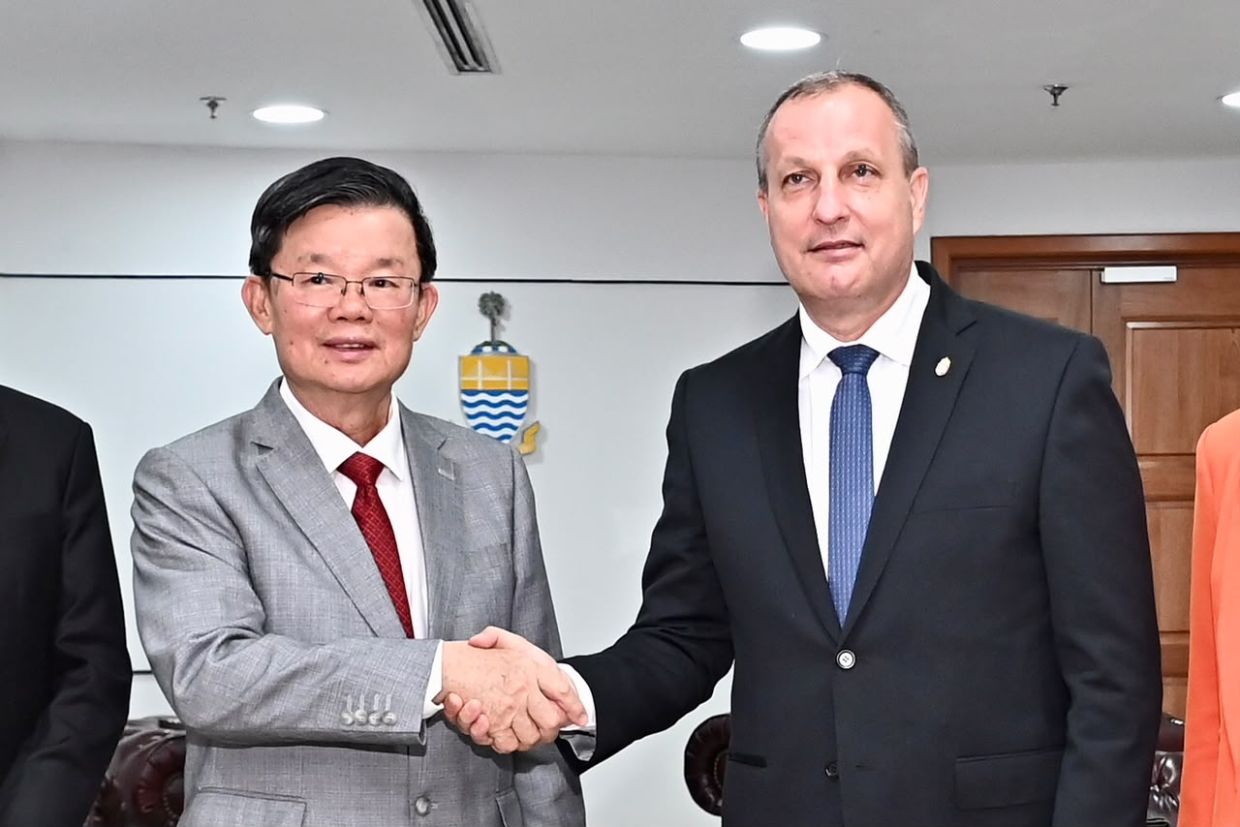
Penang is pursuing an expanded partnership with Hungary across multiple domains including higher education, technological advancement, water management and green energy, according to discussions between state leadership and a Hungarian diplomatic delegation visiting the Malaysian state.
Penang Chief Minister Chow Kon Yeow characterised Hungary as a strategically important European nation with substantial technical and operational expertise that could benefit the island state's development trajectory. The Chief Minister met with Hungarian Ambassador to Malaysia Dr Sándor Sipos and accompanying officials to chart areas of mutual interest and potential joint ventures. Chow emphasised that Penang and Hungary share fundamental commitments to balancing economic growth with environmental stewardship and cultural legacy protection—a positioning that could resonate across Southeast Asia's broader sustainability agenda.
The substantive discussions extended across numerous sectors reflecting both nations' development priorities. Conversations addressed heritage preservation initiatives, academic partnerships, commercial and investment possibilities, water supply infrastructure, clean energy technologies, destination marketing and people-to-people cultural engagement. Officials also examined how universities, commercial enterprises and government bodies might coordinate more effectively to unlock collaborative opportunities. For Malaysian observers, such multilateral engagement represents a broader pattern of regional states leveraging overseas partnerships to address shared challenges in resource management and technological capability.
Chow highlighted particular enthusiasm for deepening research cooperation, enhancing water security frameworks, expanding renewable energy applications and building regional talent capabilities. He specifically praised Hungary's existing scholarship initiative, which he described as creating vital educational pathways for young Malaysians seeking advanced learning and research experiences overseas. The Chief Minister positioned education and skills exchange as foundational to building durable interstate relationships—a perspective increasingly relevant as Southeast Asian nations compete for technical expertise in emerging industries.
Hungary's scholarship programme represents a tangible expression of the bilateral intent. Ambassador Sipos disclosed that Budapest annually funds 40 complete scholarships for Malaysian applicants, with the government actively encouraging high-performing students nationwide—including those from Penang—to participate. The diplomat expressed optimism that greater numbers of Penang-based students would access these opportunities, signalling Budapest's commitment to deepening institutional and human connections with the Malaysian state.
The diplomatic visits extended beyond senior state leadership. Sipos and delegation members conducted courtesy meetings with state executive councillors Goh Choon Aik and Gooi Zi Sen, during which officials explored additional dimensions of potential cooperation. These discussions encompassed commercial and investment frameworks, community engagement methodologies, youth development programming and sporting collaboration—subjects reflecting Budapest's broader interest in multifaceted engagement with the Malaysian region.
Sports cooperation emerged as an unexpected but potentially significant avenue. Councillor Gooi indicated that Penang's state sports authority would investigate which athletic disciplines and competitive frameworks might benefit from bilateral exchange and training partnerships with Hungarian counterparts. Gooi framed such cooperation as aligned with the state government's objective of elevating local sports standards and identifying young athletes with genuine development potential. This dimension of engagement, while less prominently discussed than education and technology, underscores how Southeast Asian states increasingly view international relationships as encompassing competitive domains.
The water management emphasis deserves particular attention given regional water scarcity challenges. Hungary has developed sophisticated water treatment, conservation and distribution technologies—capabilities directly applicable to tropical island states facing competing water demands across residential, industrial and agricultural sectors. Penang's engagement with Hungarian expertise in this domain potentially addresses a critical infrastructure vulnerability affecting millions of residents across the region.
Green technology collaboration carries similar strategic weight. As Malaysia targets substantial carbon emission reductions and renewable energy expansion, Hungarian expertise in clean technology development and implementation offers practical solutions. The discussions suggest Penang may examine specific applications in solar energy deployment, waste management innovation and sustainable urban planning—areas where European technical standards and methodologies could enhance local capacity.
Chow's emphasis on translating diplomatic discussions into concrete collaborative projects indicates realistic expectations about implementation timelines. Historical patterns suggest that while high-level engagement provides essential political foundation, actual institutional partnerships, research initiatives and commercial ventures require sustained follow-up, regulatory alignment and resource commitment. The Chief Minister's request that discussions yield tangible outcomes reflects awareness that symbolic gestures, while diplomatically valuable, ultimately require demonstrable benefits to justify continued political investment.
For Malaysian stakeholders, the Penang-Hungary initiative illustrates how regional states diversify their international partnerships beyond traditional economic powerhouses. Hungary's reputation for technical excellence, innovation and educational quality makes it an attractive partner for Malaysian regions pursuing knowledge transfer and capacity enhancement. The partnership also reflects broader strategic trends in which Southeast Asian states cultivate multifaceted relationships with mid-sized developed economies rather than concentrating influence exclusively among major powers.
The cultural and heritage conservation elements embedded in discussions acknowledge that modern partnership encompasses more than commercial transactions or technological transfers. Both Penang and Hungary possess distinctive cultural heritages, historic sites and artistic traditions—dimensions that diplomatic engagement increasingly recognises as sources of mutual learning and social cohesion. Educational and cultural exchange programmes historically generate sustained public support and create citizen networks that outlast individual political administrations, thereby strengthening relationship durability.
Looking forward, the success of Penang-Hungary cooperation will likely depend on whether discussions translate into operating university partnerships, corporate technology collaborations and student exchange programme expansion. The Ambassador's willingness to expand scholarship allocations and the state government's apparent receptiveness to sustained engagement suggest political commitment exists on both sides. Whether institutions, businesses and academic bodies mobilise effectively to capitalise on this diplomatic foundation will ultimately determine whether the initiative achieves its considerable potential for mutual benefit across education, technology and environmental management.

