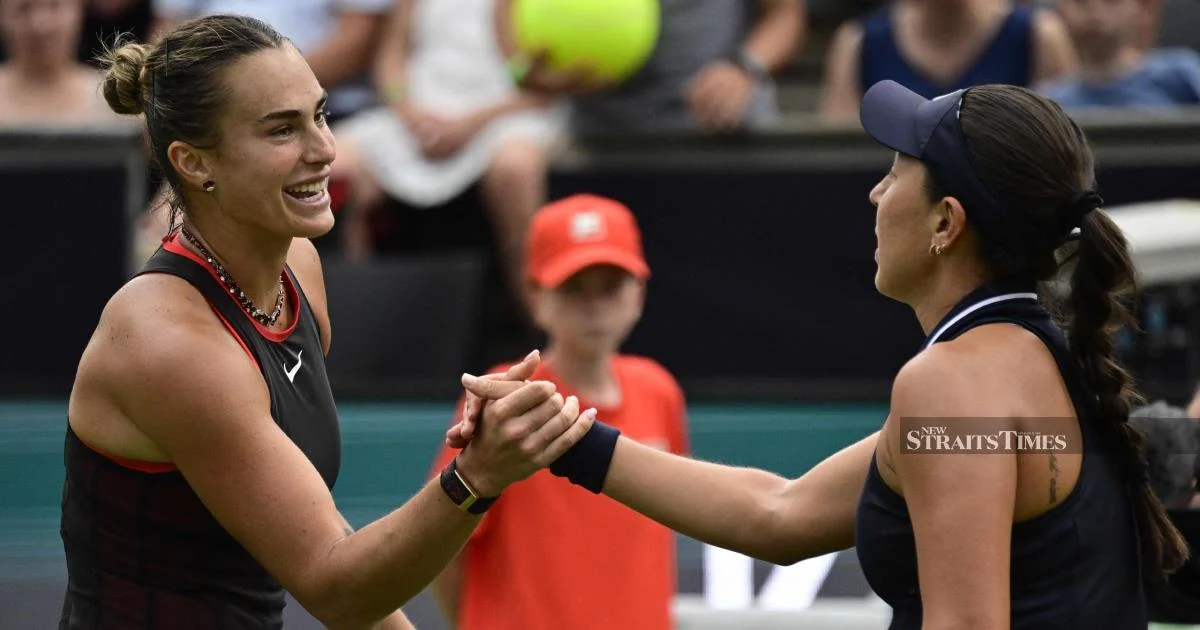
Jessica Pegula mounted an impressive comeback to eliminate world number one Aryna Sabalenka from the Berlin WTA grass-court tournament, claiming a 6-2, 6-7 (4-7), 6-0 victory in their semifinal encounter. The American's comprehensive performance propels her into the championship match for the second occasion at this prestigious Berlin venue, demonstrating her growing prowess on grass surfaces—a traditional strength of elite female competitors seeking major tournament success.
Pegula's pathway to the final showcases a remarkable turnaround in form and mental fortitude during the second set, where Sabalenka mounted fierce resistance through the tiebreak. After dominating the opening set with aggressive baseline play and confident serving, the American faced a stern examination when her opponent forced the decisive third-set competition. Rather than wilt under pressure, Pegula elevated her performance markedly, delivering a shutout final set that provided a decisive statement of her superiority on the day. This comeback mentality reflects the championship-level temperament increasingly evident in Pegula's recent tournament displays.
For Malaysian and Southeast Asian tennis enthusiasts, Pegula's ascent represents the continuing strength and depth of American women's tennis on the professional circuit. Her success against a reigning world champion underscores how competitive grass-court competition demands specific technical adjustments—particularly serve-and-volley mechanics, rapid court positioning, and precise volleying technique that separate elite performers from the broader tour roster. Pegula's tactical execution in managing these elements against one of the tour's most formidable competitors demonstrates the value of surface-specific preparation and training.
Sabalenka's defeat marks a significant stumble for the Belarusian powerhouse, whose commanding ranking reflects sustained excellence across diverse court surfaces. However, grass courts present particular challenges for players whose games revolve primarily around powerful baseline exchanges and extended rallies. The rapid court conditions at Berlin demand faster decision-making and more aggressive net advancement—stylistic adjustments that can disrupt established patterns of play. Sabalenka's loss suggests that even world-leading competitors face vulnerabilities when their primary tactical strengths encounter environmental conditions favoring alternative playing strategies.
The Berlin WTA tournament occupies an important position within the professional calendar, functioning as a significant grass-court preparation event preceding Wimbledon. For players like Pegula, strong performances here carry genuine momentum implications heading into sport's oldest major championship. The grass-court season compresses into merely a handful of tournaments, meaning each appearance assumes outsized importance for those seeking to peak during this specialized phase of the annual cycling. Pegula's return to a Berlin final suggests she is effectively peaking during this critical window.
Pegula's career trajectory has featured steady improvement across multiple seasons, gradually elevating her competitive standing from journeyman tour participant to consistent major tournament contender. This semifinal victory represents another stepping stone in establishing herself as a genuine threat at prestigious events. Her ability to maintain focus through extended matches and execute under pressure—particularly against ranked opponents—indicates a maturing professional who understands the tactical and psychological demands of contemporary professional tennis.
The American's previous Berlin final appearance establishes her familiarity with the tournament environment and surfaces. This experience advantage proves valuable in championship matches, where accumulated knowledge regarding court behavior, climatic conditions, and opponent tendencies can provide subtle competitive edges. Players returning to venues where they have succeeded previously often demonstrate heightened confidence and refined tactical approaches developed through prior competitive exposure.
Reaching the Berlin final positions Pegula within striking distance of significant ranking points and prize money, both valuable commodities for sustaining long-term professional competitiveness. Tournament victories at prestigious grass-court venues contribute substantially to players' tournament résumés, enhancing sponsorship appeal and seeding status at subsequent major championships. For Pegula, extending her run in Berlin would represent a capstone achievement during the season's most specialized competitive window.
Looking ahead, Pegula now faces an opponent determined in the second semifinal, with championship aspirations and distinct tactical profiles that will demand further strategic adjustments. The final promises compelling competitive drama, featuring two accomplished athletes competing for tournament supremacy on grass—a surface that continues rewarding those who master its particular demands and rhythms. Pegula's victory over Sabalenka establishes her as a formidable championship contender, though grass-court tennis remains sufficiently unpredictable that any final carries inherent uncertainty regarding ultimate victors.

