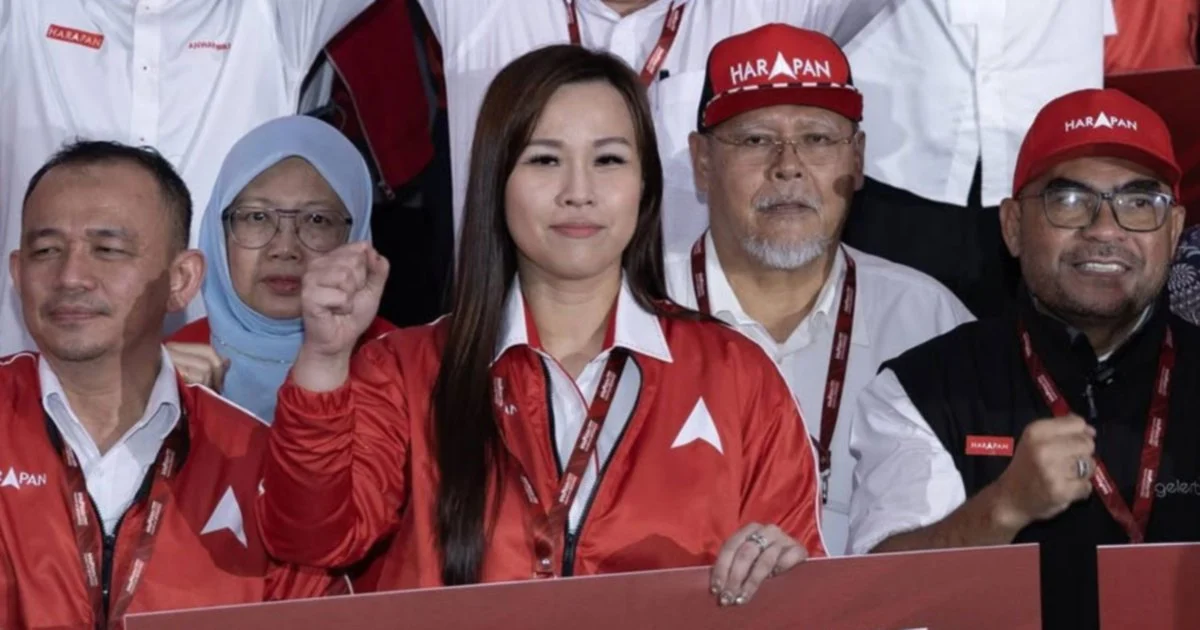
Amanah's grassroots wing in Pasir Gudang has declared its intention to withdraw support from Pakatan Harapan's nominee for the Permas state constituency in the forthcoming 16th Johor state election. The party division has specifically targeted Sharon Teo, characterizing her candidacy as emblematic of a 'parachute' appointment—the controversial practice of fielding candidates imposed from outside the local party structure rather than selected through democratic grassroots processes.
The boycott reflects mounting tension within the PH coalition over candidate selection mechanisms, particularly in Johor where party unity has proven fragile. Amanah's position signals that internal dissension over how candidates are chosen may undermine the coalition's electoral performance, even as it seeks to consolidate support against rivals in a fiercely competitive state political landscape. The Pasir Gudang division's public objection suggests that parachute placements continue to generate resentment among party members who view such decisions as circumventing legitimate intra-party democratic procedures.
The 16th Johor state election represents a critical contest for multiple political factions vying to shape the state's governance direction. Permas, situated within Pasir Gudang's electoral geography, carries strategic importance, and the choice of candidate carries implications not merely for local representation but for broader coalition dynamics. Sharon Teo's candidacy apparently emerged through a selection process that bypassed local party structures, prompting Amanah members to view her imposition as a violation of organizational principles they have championed.
Amanah's stance reflects a broader pattern within PH coalitions across Malaysia, where tensions between centralized decision-making and grassroots participation have repeatedly surfaced. The party has historically positioned itself as an advocate for internal democracy and member engagement, making parachute appointments particularly controversial for its base. By publicly distancing itself from this candidacy, Pasir Gudang Amanah signals that it will not unconditionally subordinate principle to coalition maintenance, even at electoral risk.
The boycott carries practical consequences for PH's campaign machinery in the Permas state seat. Amanah members, who might otherwise mobilize volunteers, canvas voters, and coordinate logistical support, will instead withhold these resources. This fragmentation could prove decisive in a state where winning margins are often razor-thin and where competing coalitions—notably Barisan Nasional and other configurations—command substantial organizational capabilities and voter allegiance.
From a wider Southeast Asian perspective, Malaysia's continuing struggle to balance party cohesion with internal democratic accountability reflects challenges common to the region's evolving democracies. Coalitional politics demands compromise and centralized coordination, yet parties that diverge too sharply from their stated values risk erosion of member loyalty and grassroots energy. Amanah's refusal to silently accept Sharon Teo's candidacy illustrates the cost of such divergence when party structures feel bypassed.
The controversy also underscores the particular salience of candidate selection as a flashpoint in Malaysian politics. Unlike many democracies where primary elections or other formal mechanisms determine nominees, Malaysian party systems often rely on backroom negotiations, leadership prerogatives, and informal networks. This opacity breeds suspicion and enables aggrieved factions to frame decisions as imposed rather than consensual, amplifying conflict within coalitions.
For Malaysian voters in Johor and beyond, Amanah's boycott signals that even ostensibly unified coalitions are prone to internal fracture when fundamental procedural questions arise. Voters aligned with Pakatan Harapan may find themselves facing divided party machinery in some constituencies, potentially weakening the coalition's overall campaign effectiveness. Conversely, rivals may exploit such divisions as evidence of PH's organizational weakness or ideological incoherence.
The Pasir Gudang Amanah's public stance also carries implications for future candidate selection negotiations within the coalition. Other party divisions, observing that vocal dissent receives attention and potentially influences outcomes, may feel emboldened to challenge centralized decisions perceived as arbitrary. This could lead either to more consultative selection processes or to deeper rifts if the central leadership remains intransigent.
The 16th Johor state election will test whether Amanah's boycott of Sharon Teo's candidacy reflects isolated local grievance or portends broader coalition dysfunction. Should PH suffer electoral reverses in Permas or elsewhere due to internal discord, pressure will mount for reformed candidate selection procedures that accommodate grassroots input. Conversely, if PH prevails despite Amanah's dissension, the coalition may interpret the outcome as validation of centralized decision-making authority.
Ultimately, the Pasir Gudang Amanah controversy exemplifies the enduring tension in Malaysian coalitional politics between inclusive democratic procedures and effective electoral coordination. Sharon Teo's candidacy, whether ultimately successful or not, has already catalyzed conflict that may influence how future candidates are chosen and how party members engage with selection outcomes. For coalition managers, balancing legitimacy with efficacy remains an unresolved challenge.

