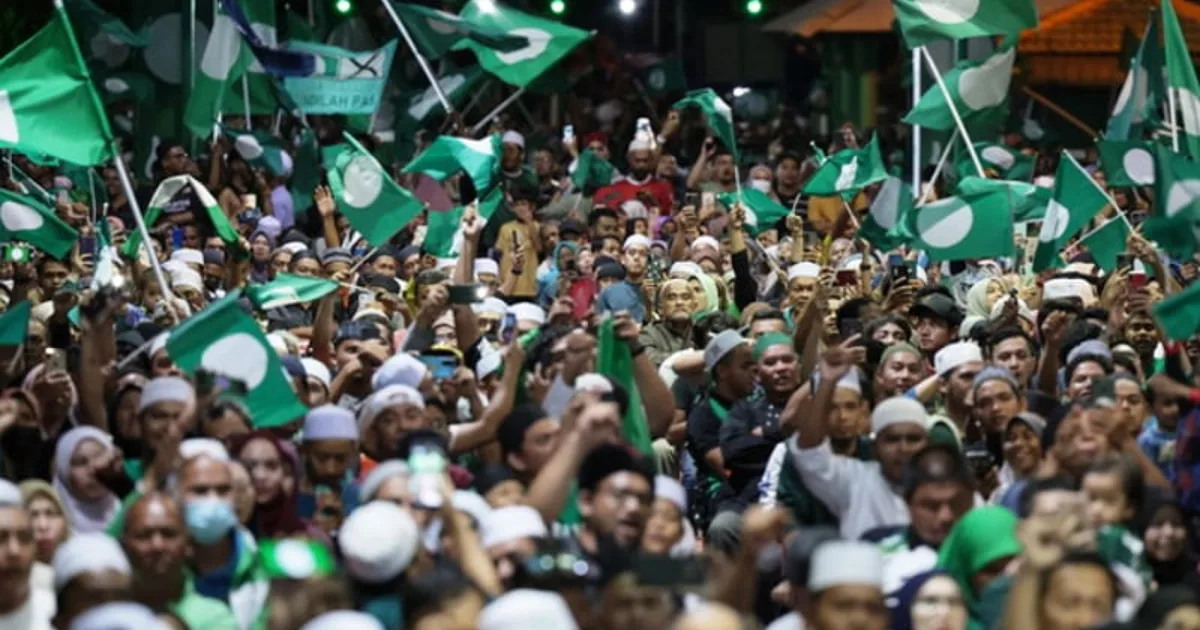
The Pan-Malaysian Islamic Party has strategically repositioned its electoral machinery, withdrawing campaign support from constituencies where the Malaysian United Indigenous Party is the primary Perikatan Nasional candidate. This tactical recalibration aims to optimise the coalition's competitive positioning across contested parliamentary and state assembly seats by concentrating resources where the Islamic party itself maintains stronger organisational presence or historical strength.
The decision reflects an evolution in how Perikatan Nasional's constituent parties coordinate their ground operations ahead of electoral contests. Rather than dispersing campaign efforts across all marginal constituencies, PAS has chosen to concentrate its considerable network—comprising grassroots mobilisers, religious teachers, and community volunteers—exclusively on seats where the party has legitimate prospects of victory or where its presence directly supports coalition gains.
This approach carries significant implications for Malaysian electoral dynamics, particularly within Perikatan Nasional's internal balance. Bersatu, led by Muhyiddin Yassin, has relied on cross-party support during previous campaigns, yet this withdrawal signals a more compartmentalised coalition structure. Each component party now appears focused on maximising returns within its designated electoral constituencies rather than mounting a unified assault across all competitive battlegrounds.
The reallocation of PAS resources underscores the practical complexities of managing multi-party coalitions in Malaysia's first-past-the-post electoral system. When multiple parties contest overlapping constituencies, volunteer fatigue, message confusion, and competing ground operations can dilute voter mobilisation efforts. By partitioning the electoral map, Perikatan Nasional seeks to avoid such inefficiencies and ensure concentrated campaigning delivers measurable results.
For Malaysian voters and political observers, this development signals that Perikatan Nasional operates less as a monolithic bloc and more as a coalition of convenience with defined boundaries. Each party protects its turf while supporting allies elsewhere, a pragmatic arrangement that acknowledges both shared ideological space and autonomous party interests. The arrangement may also reflect confidence in Bersatu's capacity to campaign independently in its allocated constituencies.
This strategic recalibration also has implications for broader political competition. The Pakatan Harapan coalition and independent candidates may find pockets of reduced opposition campaign intensity in Bersatu-contested seats, potentially creating openings for alternative political forces. Conversely, seats designated as PAS battlegrounds will likely experience intensive Islamic party mobilisation, reflecting the party's deep community networks particularly in peninsular Malaysia.
Regionally, such coordination mechanisms demonstrate how Southeast Asian political coalitions navigate electoral mathematics. Unlike systems with proportional representation, Malaysia's winner-take-all framework forces coalition partners into territorial agreements. PAS's decision exemplifies the strategic clarity increasingly demanded of coalition partners seeking to translate numerical strength into parliamentary seats and political influence.
The withdrawal also reflects PAS's recent organisational momentum. The Islamic party has emerged as a significant power broker within Perikatan Nasional, commanding substantial grassroots support particularly in rural areas and among conservative Muslim constituencies. By consolidating resources on designated constituencies, PAS can potentially increase vote margins and demonstrate electoral viability independent of larger partners.
For Bersatu, this arrangement presents both opportunities and challenges. The party gains undivided attention and resources within its designated constituencies, potentially improving performance in seats where it previously faced split-coalition opposition. However, reduced PAS support in Bersatu seats also means the Malaysian United Indigenous Party cannot rely on the Islamic party's volunteer infrastructure and community connections to amplify messaging or drive voter turnout.
The strategic decision also illuminates questions about Perikatan Nasional's longer-term cohesion. By operating as functionally separate electoral entities rather than integrated campaign machinery, coalition components may find it increasingly difficult to coordinate policy messaging or maintain unified public positioning on contested issues. The arrangement prioritises near-term electoral efficiency over coalition brand consistency.
Looking forward, this model of resource allocation may establish precedent for future electoral cycles. If such compartmentalised approaches yield improved performance compared to previous unified efforts, other Malaysian political coalitions may adopt similar territorial frameworks. The approach reflects sophisticated understanding of ground-level campaign dynamics and voter behaviour patterns accumulated through Malaysia's recent electoral history.
Ultimately, PAS's redeployment of campaign machinery demonstrates how Malaysian political coalitions continuously evolve their operational strategies to navigate an increasingly complex and competitive electoral environment. The willingness to withdraw support from ally-contested seats, while maintaining coalition membership, illustrates the sophisticated calculus required of parties seeking to maximise both coalition objectives and autonomous electoral gains.

