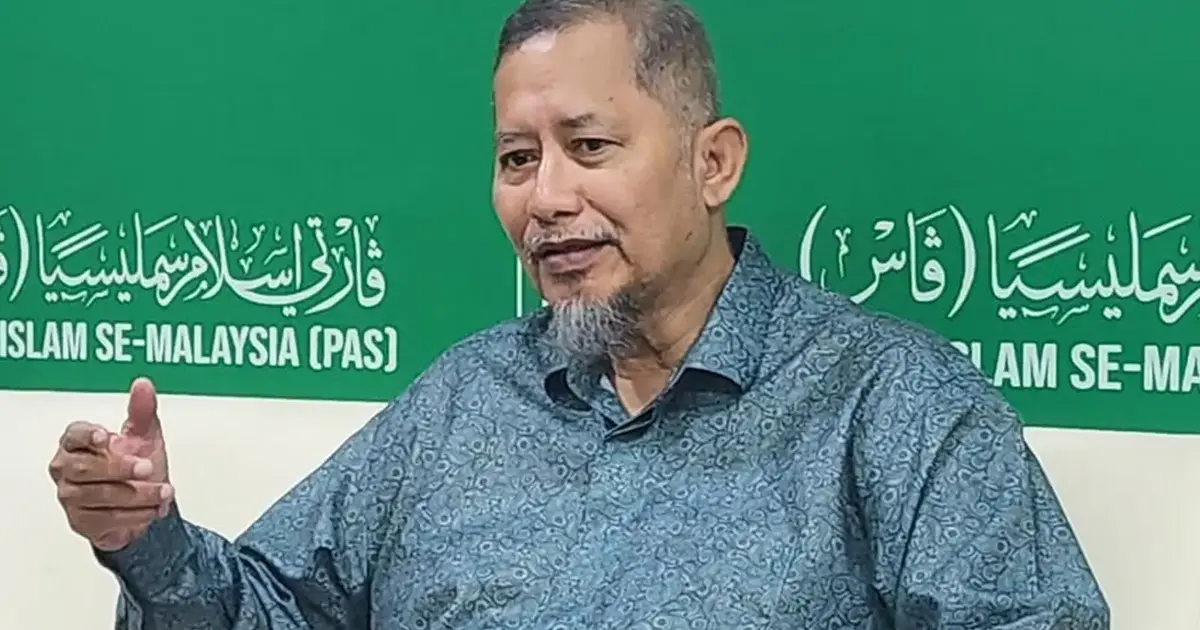
PAS treasurer Iskandar Abdul Samad has thrown down a political gauntlet, declaring that his party would triumph over Bersatu should the two organisations face off at the ballot box. The assertion reflects rising tensions within the Perikatan Nasional coalition and signals growing competition for influence and voter support within the Islamist political space in Malaysia.
Iskandar's remarks come at a time of considerable friction between PAS and Bersatu, the two major components of the PN bloc. The tension stems from competing visions for the coalition's direction and disagreements over seat allocation and campaign strategy. In making his claim, the PAS treasurer essentially argues that his party possesses greater organisational strength and deeper grassroots support than its coalition partner, particularly among voters who have traditionally backed PN candidates.
The assertion carries significant implications for Malaysia's fragmented political landscape, which has become increasingly volatile since the 2022 general election. At that time, PN secured 73 parliamentary seats, establishing itself as a formidable third force in Malaysian politics. However, internal cohesion within the coalition has since deteriorated, with both PAS and Bersatu pursuing independent political initiatives and courting support from other parties.
Iskandar's confidence appears rooted in PAS's track record in electoral contests. The party has historically performed well in states with substantial Muslim-majority populations, particularly in the East Coast region where it holds significant administrative power in Kelantan and Terengganu. Furthermore, PAS's extensive grassroots network, built through decades of religious and community organising, provides it with mobilisation capabilities that rival or exceed those of Bersatu, a relatively newer political entity that emerged from the internal rupture of the United Malays National Organisation.
Bersatu, led by former Prime Minister Mahathir Mohamad until his recent departure from the party, has itself struggled with internal cohesion and public perception challenges. The party's rapid ascendancy following its split from UMNO was tempered by multiple rounds of defections and leadership controversies. Its electoral viability remains unproven at the national level, as it performed comparatively poorly in direct contests during the 2022 elections despite its placement within PN.
The territorial distribution of PN's support further favours PAS in any hypothetical confrontation. While Bersatu has attempted to build presence across multiple states and regions, PAS maintains entrenched positions in key constituencies, particularly in Peninsular Malaysia's conservative heartland. This geographic advantage would prove decisive in a direct electoral competition, as it would allow PAS to concentrate resources where it already possesses structural advantages.
Yet Iskandar's remarks also underscore a broader anxiety within PN about the coalition's long-term viability. Should the two principal parties begin contesting individual seats against one another, the resulting fragmentation could severely damage both organisations while benefiting rivals such as the Barisan Nasional government and the opposition Pakatan Harapan coalition. Voters who might otherwise support PN-backed candidates could face confusion or demotivation if confronted with competing candidates claiming allegiance to the same broad political movement.
The treasurer's comments likely reflect internal discussions within PAS about the party's future strategic direction. With general election prospects potentially two to three years away, PAS appears to be positioning itself as PN's natural core and dominant voice. This positioning strategy serves multiple purposes: it strengthens Iskandar's hand in negotiating seat allocations with Bersatu, it reassures PAS members that their party's leadership remains confident and in control, and it signals to potential coalition partners or even uncommitted voters that PAS represents a more stable and electorally proven option than Bersatu.
For Malaysian political observers, the statement highlights the ongoing realignment occurring within the country's coalition politics. The traditional two-bloc system that characterised Malaysian politics for decades has given way to a more fluid and unpredictable configuration involving multiple groupings. In this environment, PAS has emerged as perhaps the most internally coherent and electorally disciplined force among Malaysia's explicitly religious-nationalist parties.
The implications for Malaysia's broader political trajectory remain substantial. Should PN indeed fragment into constituent components competing separately, the resulting electoral landscape would become markedly more complex. Vote-splitting between PAS and Bersatu could enable Barisan Nasional or Pakatan Harapan to capture seats that might otherwise have been retained by unified PN candidates. This outcome would serve neither PAS nor Bersatu, suggesting that however justified Iskandar's confidence about his party's relative strength, both organisations retain incentives to maintain their formal coalition structure.
Ultimately, Iskandar Abdul Samad's assertion of PAS electoral superiority should be understood as both a negotiating tactic within PN and a reflection of genuine strategic advantages that PAS possesses. Whether these advantages would translate into electoral victory in an actual contest remains speculative, but the treasurer's willingness to articulate such claims publicly demonstrates PAS's current confidence in its political standing and its determination to exercise decisive influence within whatever political configuration emerges in Malaysia's upcoming electoral cycle.