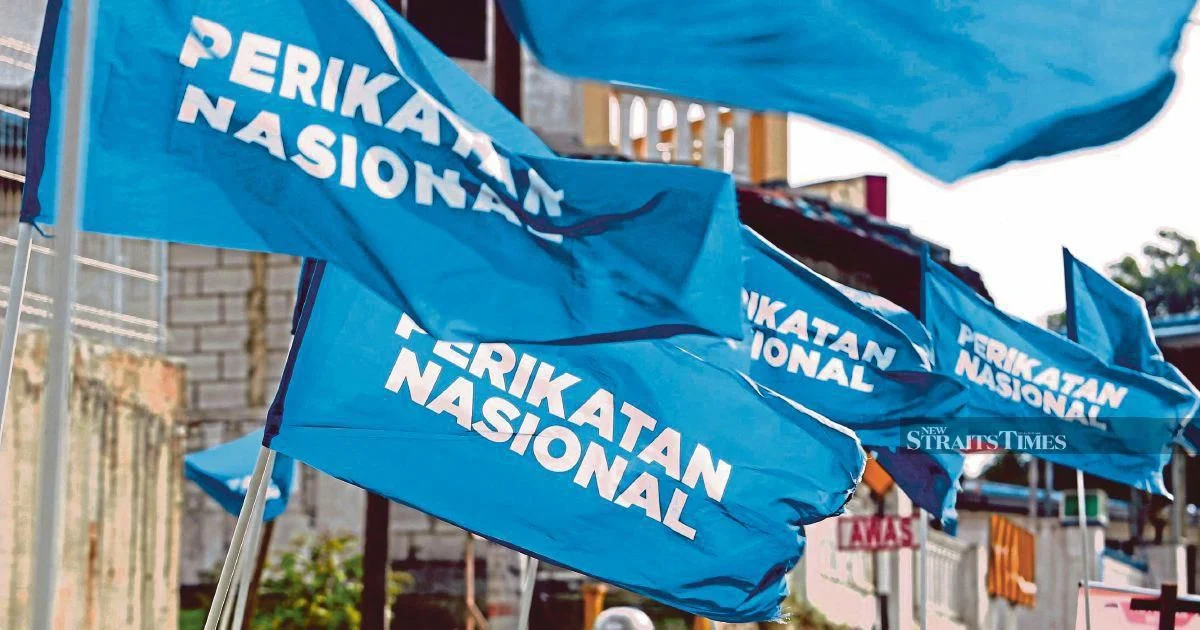
Escalating tensions within Perikatan Nasional surfaced in Kota Baru as PAS leadership challenged Bersatu's unilateral decision to deploy the coalition's official logo in the upcoming state elections scheduled for Johor and Negri Sembilan. The dispute highlights deepening fissures within an alliance that has served as a significant counterweight to the ruling Pakatan Harapan government, revealing fundamental disagreements over governance structures and decision-making protocols within the coalition.
PAS leaders have made explicit that only the Perikatan Nasional coalition chairman possesses the authority to authorise the use of the alliance's logo by any member party. This assertion directly contradicts what PAS characterises as Bersatu's presumptuous move to appropriate the coalition's branding for its campaign machinery. The statement effectively questions whether Bersatu obtained the requisite formal permission from the coalition's leadership before proceeding with such an strategically significant decision.
The conflict reflects broader institutional weaknesses within Perikatan Nasional's organisational framework. Unlike mature, established coalitions with clearly codified protocols, PN operates through a looser arrangement that has increasingly exposed gaps in clarity regarding which decisions require collective approval and which fall within individual parties' remit. This ambiguity has created space for competing interpretations of coalition governance, allowing member parties to act unilaterally while claiming procedural legitimacy.
For Malaysian political observers, the logo dispute carries symbolic weight extending far beyond mere marketing semantics. The coalition's branding represents collective identity and shared commitment among member parties. By using the logo, a party signals to voters that it operates under the coalition's umbrella and shares in collective decision-making legitimacy. Bersatu's apparent move to deploy this imagery independently suggests an attempt to capture the coalition brand's credibility while retaining operational autonomy, a position PAS finds untenable and potentially damaging to PN's coherence.
The timing of this disagreement poses particular complications as Johor and Negri Sembilan elections approach. These contests offer Perikatan Nasional opportunities to demonstrate viability as a government alternative and test its electoral machinery in regions where it hopes to make significant gains. Coalition disunity during this critical campaign phase risks undermining the unified front necessary to challenge established ruling parties and regain voter confidence in regions where PN previously held stronger influence.
Bersatu's strategic positioning within Malaysian politics creates additional context for understanding this conflict. As the newest substantial addition to the PN coalition, Bersatu brings organisational resources and political capital from its exit from Pakatan Harapan. However, this relative newcomer status may contribute to questions about whether the party fully appreciates or respects coalition protocols that other members consider foundational to collective legitimacy. PAS, by contrast, represents the coalition's longest-standing Islamic-aligned component and perceives itself as custodian of PN's ideological coherence.
The broader implications for Southeast Asian coalition politics warrant consideration. Malaysia's experience demonstrates how fragile multi-party alliances become when member organisations lack clear governance structures and dispute-resolution mechanisms. As regional democracies increasingly rely on coalition governments rather than single-party majorities, establishing robust protocols for decision-making and resource-sharing becomes essential to preventing institutional collapse and repeated cycles of factional conflict.
This latest disagreement also affects voter perception of Perikatan Nasional's readiness for government. Malaysian electorates increasingly scrutinise coalition stability and internal discipline when assessing whether alternative alliances can effectively govern. Visible disputes over procedural authority inadvertently signal to voters that PN lacks the organisational maturity and mutual trust essential for managing larger governance challenges, potentially swaying undecided voters toward incumbent or competing coalitions.
The resolution of this dispute will likely establish precedent for future logo usage and, more broadly, for how PN resolves internal disagreements. Should the coalition chairman intervene decisively to restrict logo usage to authorised entities, such action could strengthen institutional governance but risks antagonising Bersatu and raising questions about party autonomy within the broader alliance. Conversely, permitting Bersatu's unilateral action might preserve short-term coalition unity while establishing problematic precedent for future unilateral member decisions.
Looking ahead toward the state elections, both Johor and Negri Sembilan campaigns will undoubtedly proceed regardless of logo usage resolution. However, the underlying conflict reflects genuine disagreement about coalition identity and governance that extends well beyond electoral messaging. PAS's firm stance suggests the party views logo usage as a fundamental matter of coalition authority rather than a trivial administrative detail, indicating deeper concerns about Bersatu's commitment to collective decision-making within Perikatan Nasional's framework.