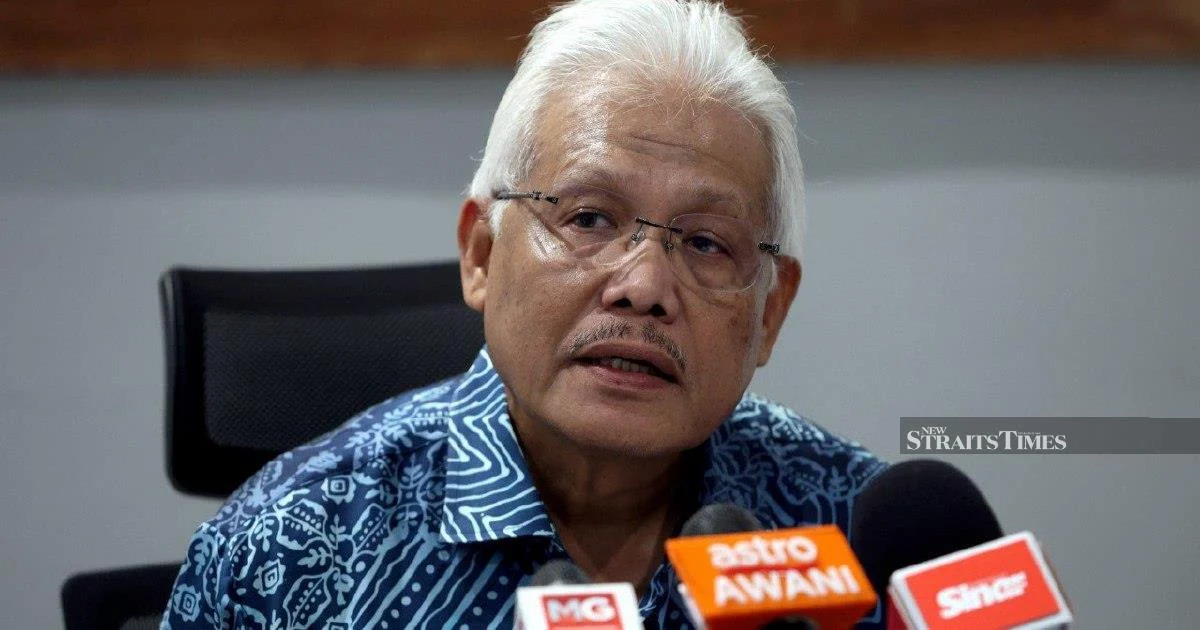
Parti Wawasan Negara, the recently rebranded political outfit previously known as Parti Cinta Malaysia, has positioned itself as a potential reconciliatory force between Pas and Umno, two major Malay-based parties whose relationship has deteriorated markedly over the past several years. The party's leadership, under Hamzah Zainudin, argues that such mediation is essential to prevent the Malay-Muslim voting bloc from fragmenting further, a development that could undermine the broader political interests of the community and weaken its collective influence in national policymaking.
The timing of this overture reflects genuine anxieties within Malaysia's political establishment about the consequences of prolonged antagonism between Pas and Umno. These two parties have historically dominated Malay politics, but their relationship has grown increasingly acrimonious, particularly following the fracturing of the Barisan Nasional coalition and subsequent political realignments. Hamzah Zainudin's explicit call for bridge-building suggests that smaller players in the political ecosystem recognise both an opportunity and a necessity in attempting to repair this rupture before electoral cycles further entrench division.
The rebranding from Parti Cinta Malaysia to Parti Wawasan Negara signals a deliberate repositioning of the party's identity and strategic objectives. This shift in nomenclature often accompanies efforts to reshape a party's public perception and broaden its appeal beyond its founding constituency. For Hamzah Zainudin, the new identity appears designed to emphasise a more inclusive, nationally-focused vision rather than one perceived as narrowly particularistic. Such moves are calculated to establish credibility as an honest broker in intercommunal political negotiations.
The fragmentation of Malay political support has been one of the most consequential developments in Malaysian politics since 2018. When the Malay-Muslim vote splits across multiple parties without clear coordination or agreement on fundamental principles, the result is typically diminished bargaining power at the federal level and reduced ability to shape the national agenda. Both Pas and Umno have experienced significant electoral volatility precisely because of this fragmentation, with neither party able to command the overwhelming dominance they once took for granted. The emergence of other competing voices, including Bersatu and various coalition partners, has further complicated this landscape.
Hamzah Zainudin's party recognises that sustained political division carries material costs for the constituencies these parties claim to represent. When energy is consumed in intra-Malay disputes rather than channelled toward concrete policy achievements, ordinary voters across the community ultimately suffer. This pragmatic argument—that unity serves material interests—forms the foundation of Parti Wawasan Negara's pitch to both Pas and Umno. The party is essentially proposing that ideological or personality-driven conflicts should not take precedence over collective political effectiveness.
The potential for a mediating party to gain traction in this environment depends heavily on its perceived neutrality and credibility. Parti Wawasan Negara enters this space without the historical baggage that characterises Pas and Umno, both of which have accumulated grievances and rivalries spanning decades. However, the party must simultaneously avoid appearing entirely divorced from the concerns and principles that animate Malay-Muslim politics. This balancing act is delicate and requires careful navigation of complex communal sensitivities.
Pas, as an Islamic party, brings ideological commitments that shape its approach to governance and coalition-building. Umno, despite its Islamic credentials, has traditionally prioritised patronage networks, personal leadership dynamics, and pragmatic power consolidation. These fundamental differences in political cultures and motivations create substantive obstacles to reconciliation. Any mediating force must understand these deeper structural differences and address them, rather than simply appealing for superficial unity around slogans or symbolic gestures.
The broader Southeast Asian context lends additional weight to the quest for Malaysian Malay-Muslim political cohesion. Across the region, Muslim-majority societies are navigating complex transitions involving religious identity, national development, and integration into evolving regional economic and security architectures. When national political systems fragment along communal lines without clear mechanisms for internal coordination, external actors may exploit these divisions. Regional stability partly depends on Malaysia's ability to maintain functional political consensus despite inevitable disagreements.
For Malaysian voters and observers, Parti Wawasan Negara's initiative warrants scrutiny regarding implementation feasibility. Bridging efforts require willingness from both Pas and Umno to engage meaningfully in dialogue, acknowledge legitimate grievances held by the other party, and identify areas of genuine convergence. Neither party has demonstrated consistent appetite for such exercises in recent years. Hamzah Zainudin's party may discover that positioning oneself as a mediator and actually achieving reconciliation are entirely distinct propositions.
The proposal also raises questions about what form such unity might eventually take. Would it involve formal coalition agreements, informal coordination protocols, or something more diffuse? Different configurations would carry markedly different implications for Malaysia's political system, governance quality, and distribution of resources. Clarity on end goals becomes essential before embarking on mediation efforts that could consume significant political capital without producing tangible results.
Successful bridging between Pas and Umno could theoretically alter Malaysia's political trajectory by concentrating Malay-Muslim political power in a more cohesive formation. This outcome would likely strengthen Islamic-oriented governance initiatives and increase influence over constitutional matters, religious policy, and resource allocation. Conversely, failure would entrench the current fragmentation, creating ongoing instability and unpredictability in coalition mathematics that shape federal governments.
The coming months will reveal whether Hamzah Zainudin and Parti Wawasan Negara possess the diplomatic skills, institutional resources, and political leverage necessary to translate bridging aspirations into concrete reconciliation mechanisms. The enterprise touches fundamental questions about Malaysian political culture, the role of ideology versus pragmatism in party politics, and the capacity of the political system to self-correct when dysfunction threatens collective interests.

