The Parliamentary Select Committee on Domestic Trade, Entrepreneurship, Cost of Living and Agriculture has raised concerns that Malaysia's RM10 billion SARA (Sumbangan Asas Rahmah) assistance scheme risks widening economic disparities between large retail chains and small traders unless participation is significantly broadened. The committee's chairman, Cha Kee Chin, who represents Rasah, presented a comprehensive report detailing how the programme's current structure is inadvertently disadvantaging village retailers who traditionally served rural communities.
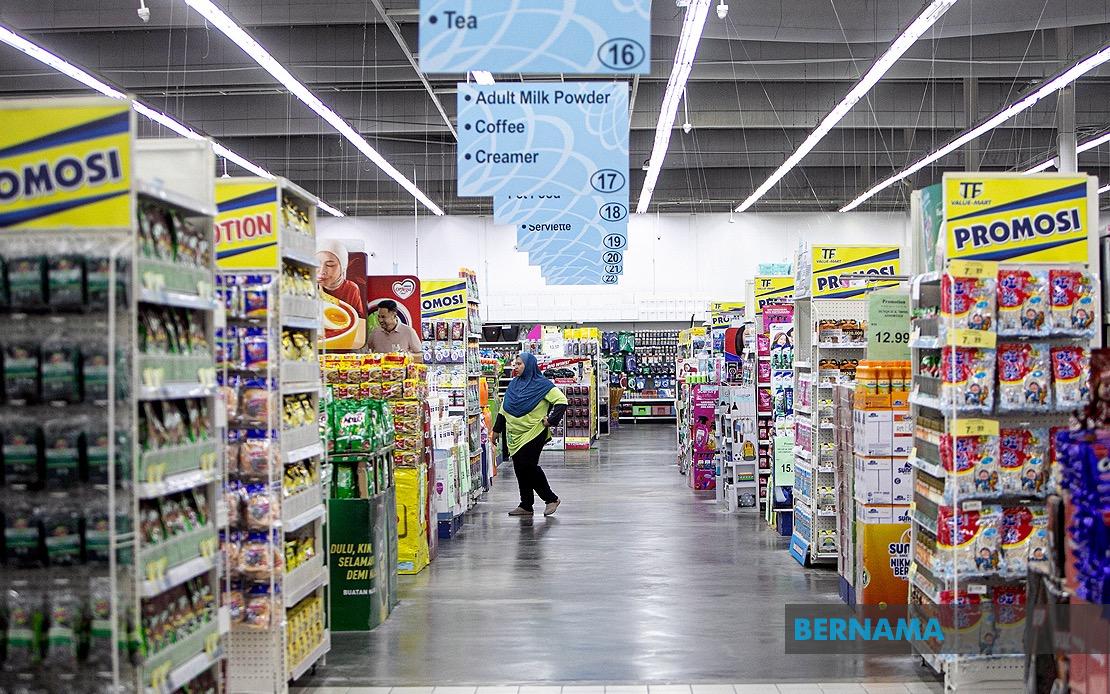
The core issue centres on a fundamental shift in consumer spending patterns triggered by the programme's design. Because SARA recipients must shop at government-recognised partner outlets that accept MyKad-linked digital payments, customers have migrated away from traditional small retailers toward supermarkets and larger stores equipped with modern payment systems. This migration has created a secondary crisis for village shops already struggling with thin profit margins, forcing some owners to contemplate closure despite decades of service to their communities. The committee heard testimony revealing that spending flows previously directed to local neighbourhood shops have been diverted to corporate retail chains, effectively redirecting aid benefits away from the small business ecosystem.
Chair Cha emphasised that the programme's intended objective—to provide genuine relief across all Malaysian communities—cannot be achieved if only large retail operators capture the financial benefits. With RM10 billion allocated annually, the selection of participating merchants becomes a critical policy lever. The committee's position reflects growing parliamentary concern that aid programmes, regardless of their humanitarian intent, can inadvertently concentrate wealth if implementation mechanisms are not carefully calibrated to include disadvantaged business segments.
A significant barrier to small trader participation involves the technical and regulatory hurdles erected by the SARA framework. Many small retailers, particularly those operating in interior areas across Sarawak, Sabah, and the peninsula's remote regions, lack formal training in digital systems, struggle with point-of-sale technology requirements, and cannot afford the infrastructure investments demanded. The eligibility criteria themselves have been flagged as unreasonably burdensome, creating gatekeeping effects that exclude precisely the traders most in need of market access opportunities. These requirements effectively penalise traders for their resource constraints rather than their trustworthiness or product quality.
The committee documented that participation by small traders has grown from 3,000 to 5,893 as of mid-June, representing nearly a doubling but still falling significantly short of the 10,000-trader target set for year-end. This trajectory suggests implementation challenges persist despite policy awareness. To address the digital divide, Yayasan MyKasih has initiated a POS Terminal Deployment programme, deploying 2,000 sets of point-of-sale equipment. The first deployment in Kuching, Sarawak, expanded to 14 interior retail shops, demonstrating that infrastructure provision can enable participation when government makes targeted investments in enabling technology.
The commission structure imposed on participating traders has emerged as another contentious issue. Opposition parliamentarian Khoo Poay Tiong highlighted the burden placed on merchants with razor-thin profit margins, noting that subsidised cooking oil—sold under SARA parameters—carries less than one per cent profit margins yet traders must surrender one per cent in commissions to MyKasih. This mathematical reality effectively eliminates any profit from certain commodity sales, effectively converting small traders into unpaid distribution agents for government assistance rather than autonomous business operators. The policy incentivises larger retailers with higher-margin product mixes while penalising those selling subsidised essentials.
The committee's 17 recommendations address multiple dimensions of the participation problem. Beyond expanding trader numbers and streamlining eligibility requirements, recommendations include ensuring no SARA customer must travel more than 10 kilometres to access partner shops, implementing comprehensive training programmes, and accelerating payment processing for business partners whose cash flow often depends on rapid reimbursement. The proposal to integrate night markets, farmers' markets, and rural cooperatives into the SARA ecosystem would extend programme reach into informal commerce channels where rural populations naturally congregate, reducing access friction while supporting traditional market structures integral to village economies.
Parlimentarian Datuk Siti Zailah Mohd Yusoff from Rantau Panjang articulated a crucial principle: cost-of-living assistance must benefit entire local economic ecosystems, not merely provide consumer subsidies while dismantling the retail infrastructure that communities depend upon. When SARA implementation causes small trader closures, the programme creates hidden costs in lost employment, reduced local economic dynamism, and weakened social fabric in rural Malaysia. The committee recognises that genuine poverty relief requires preserving the economic opportunities available to poor and middle-class business owners, not merely subsidising consumption among poor households.
The recommendations reflect sophisticated understanding that aid programmes operate within complex economic ecosystems where unintended consequences often outweigh intended benefits if implementation lacks granular consideration of micro-economic realities. Malaysia's retail landscape comprises hundreds of thousands of small traders concentrated in rural and interior regions precisely where government services are thinnest and market access most constrained. These merchants are not merely retail intermediaries but community anchors, employers, and nodes in informal credit and social networks. Their marginalisation represents development failure regardless of consumer subsidy success.
The Parliamentary Select Committee's intervention signals growing recognition that programme design matters profoundly. The RM10 billion SARA budget represents a massive policy instrument capable of strengthening or weakening the small business sector depending on implementation details. Rather than treating small traders as obstacles to efficient aid delivery, the committee's recommendations position them as legitimate stakeholders whose participation strengthens programme legitimacy and distributes benefits more equitably across society. Expanding small trader access requires visible government commitment: enhanced infrastructure investment, simplified compliance pathways, fair commission structures, and sustained training support.
For Malaysian policymakers, the committee's analysis offers a template for evaluating other assistance programmes. Cost-of-living interventions frequently trigger unintended distributional consequences when programme architects focus exclusively on beneficiary outcomes while ignoring supplier-side impacts. The SARA experience demonstrates that inclusive programme design—wherein small merchants gain genuine market access benefits—generates broader development outcomes than narrowly-targeted consumer subsidies that inadvertently consolidate retail markets. As Malaysia continues grappling with cost-of-living pressures and rural-urban disparities, the principle that assistance programmes should strengthen rather than undermine local entrepreneurship deserves centre-stage policy consideration.

