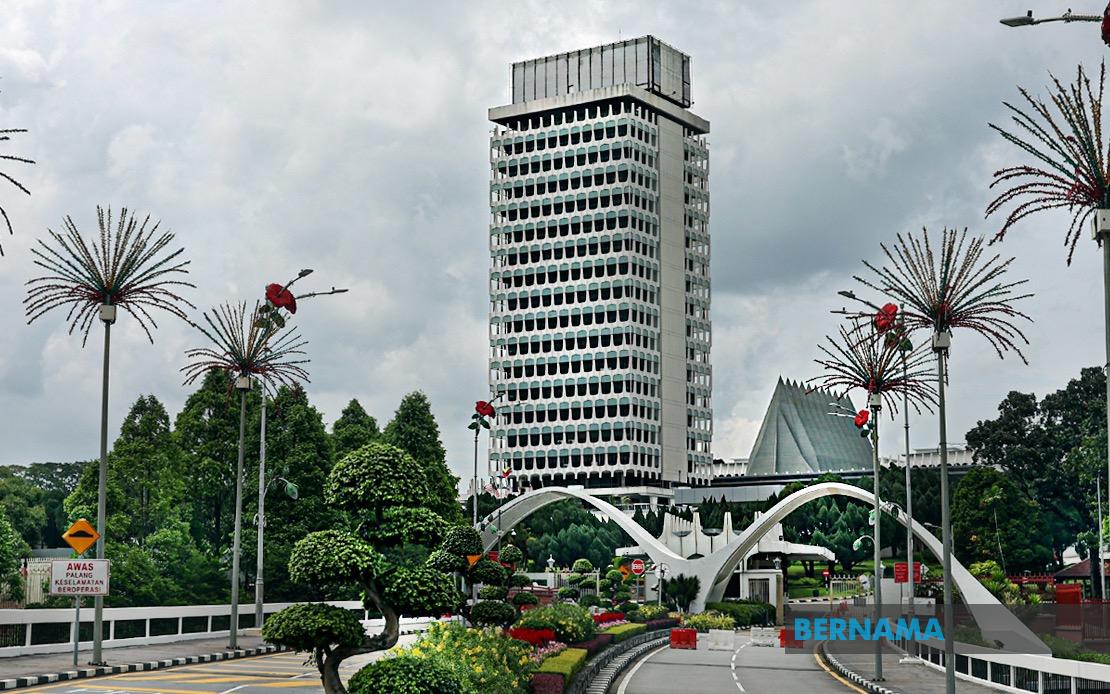
The Malaysian Parliament is set to scrutinise several policy areas today, with particular focus on how renewable energy schemes are being rolled out across Malaysian industry and what direction the government intends to chart regarding Myanmar as regional tensions persist. The session promises substantive exchanges between government ministers and parliamentarians from across the political spectrum, reflecting ongoing national concerns about energy transition, economic resilience, and Malaysia's regional standing.
At the core of today's parliamentary proceedings lies the Corporate Renewable Energy Supply Scheme (CRESS), a mechanism designed to accelerate industrial adoption of renewable power generation. Rodziah Ismail of the PH-Ampang constituency will press the Minister of Energy Transition and Water Transformation on precisely how many companies have signed on to participate in CRESS since its introduction, and what barriers remain preventing faster uptake. Her questioning will extend to a separate but related concern: the implications of the System Access Charge (SAC) rate review on Malaysia's ability to attract data centre operators. This line of inquiry taps into a strategic priority for Malaysia, which has positioned itself as a regional hub for data centre infrastructure. Rising operating costs in Malaysia could push multinational technology firms to establish facilities in competing jurisdictions, making the rate review's conclusions critically important for economic competitiveness.
The energy transition debate will widen when Mohd Syahir Che Sulaiman, representing PN-Bachok, directs questions to the Minister of Economy about how the National Economic Action Council is responding to job losses and business closures triggered by the global energy crisis and broader economic uncertainty. His inquiry seeks concrete evidence of what mitigation measures have actually delivered tangible results rather than merely been announced. In Southeast Asia, where energy costs remain a significant competitive factor for manufacturing and technology sectors, Malaysia's ability to manage this transition without crippling its industrial base will determine whether the nation emerges stronger or loses ground to regional rivals.
Fuel subsidy policy will also come under parliamentary scrutiny when Datuk Seri Hasni Mohammad of BN-Simpang Renggam questions the Finance Minister on the government's fuel subsidy targeting approach. Specifically, he wants clarity on why MyKad has been selected as the verification mechanism for diesel purchases and whether the standardised 200-litre entitlement for both petrol and diesel adequately serves ordinary Malaysian consumers. This question reflects broader public anxiety about whether subsidy reforms are being implemented fairly and whether the allocation truly reflects genuine usage patterns across different regions and worker demographics.
On the international relations front, William Leong Jee Keen of PH-Selayang will raise a question with the Foreign Minister about Malaysia's diplomatic posture toward Myanmar's military-led government and how this stance aligns with the progress made under the Five-Point Consensus (5PC). The 5PC framework, established through ASEAN engagement, represents the region's collective diplomatic approach to the Myanmar crisis, but member states have interpreted and implemented it with varying degrees of vigour. Malaysia's specific approach carries weight because of the country's geographic proximity to Myanmar and its significant Rohingya refugee population. Understanding how the government translates consensus agreements into actual policy will shed light on whether Malaysia is merely paying lip service to ASEAN solidarity or genuinely pushing for substantive change in Myanmar.
Data sovereignty emerges as another critical theme when Datuk Seri Amirudin Shari of PH-Gombak puts forward questions to the Digital Minister. He will ask how the government is synchronising state-level data infrastructure projects, particularly the Selangor Dark Fiber Network, to ensure that Malaysia's data sovereignty is protected and national security interests are safeguarded. This concern reflects growing global awareness that digital infrastructure represents a strategic asset requiring careful management. His supplementary question about whether data sovereignty considerations are being baked into Malaysia's ambition to become an AI-ready nation by 2030 touches on a tension between rapid technological adoption and the need to maintain control over sensitive data and systems.
Educational standards and federalism will feature when Datuk Idris Ahmad of PN-Bagan Serai challenges the Prime Minister on the effectiveness of Islamic Education curricula in developing students holistically, and how coordination between federal and state-level Islamic religious authorities ensures quality consistency across the nation. This question points to the complexities of Malaysia's federal structure, where education authority is distributed between different levels of government, potentially creating inconsistencies in what students learn regardless of where they live.
The thorny issue of constitutional power-sharing in East Malaysia will surface when Isnaraissah Munirah Majilis of Warisan-Kota Belud asks the Prime Minister for an update on Malaysia Agreement 1963 (MA63) implementation and the timeline for increasing parliamentary representation for Sabah and Sarawak to 35 per cent of all seats nationwide. The MA63, which governs the terms under which Sabah and Sarawak joined Malaysia, has long been a source of contention, with East Malaysian politicians arguing that their states remain under-represented relative to their population and geographic significance. Progress on constitutional amendments affecting parliamentary seat distribution would represent a major shift in national power dynamics.
Beyond question time, parliament will hear a briefing from the Public Accounts Committee chairman concerning a damning report on the escalation of private health insurance premiums and private hospital charges. This public accounts inquiry, spanning the Ministry of Finance, Ministry of Health, and Bank Negara Malaysia, addresses a growing concern about healthcare affordability for middle-income Malaysians increasingly reliant on private services. The committee's findings will likely recommend policy interventions to curb rapid premium inflation that is pricing people out of adequate coverage.
The parliament session, part of the 15th Parliament's fifth session, represents the second meeting of a two-week sitting that commenced on June 22 and will run through July 16. Beyond today's deliberations, the Dewan Rakyat will continue debating the Prisons (Amendment) Bill 2026, which may address sentencing policy, prisoner welfare, or prison management standards. The breadth of issues under parliament's scrutiny—spanning energy policy, economic resilience, regional diplomacy, digital infrastructure, constitutional reform, and social policy—underscores the multiple fronts on which Malaysian governance must operate simultaneously.

