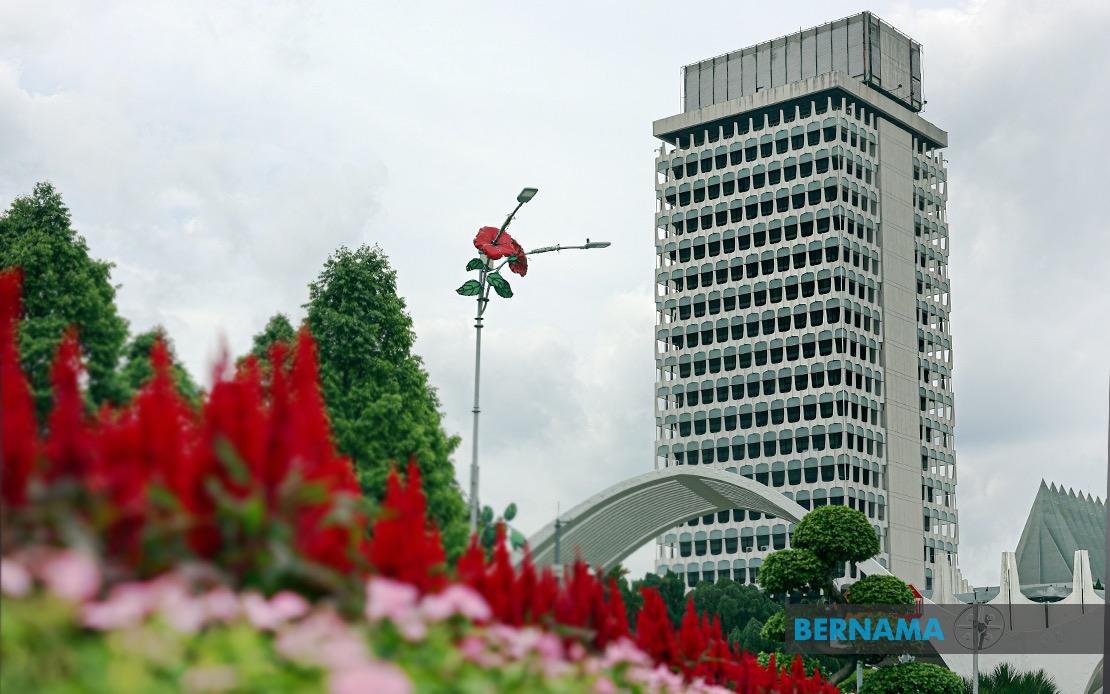
Parliament's legislative calendar shifts into high gear on Monday as the Dewan Rakyat begins its second meeting of the fifth session, bringing with it several consequential pieces of legislation that dominated debate during the previous parliamentary sitting and remain unresolved. The sitting, extending through July 16, represents another chapter in the government's broader constitutional reform agenda, though the path forward remains uncertain given the failure of earlier attempts to secure the necessary parliamentary support.
Two constitutional amendment bills return for fresh consideration after faltering in earlier debate. The Constitution (Amendment) Bill 2026, which proposes limiting the prime minister's tenure to a fixed 10-year term, previously failed to achieve the two-thirds majority required for passage. This threshold requirement reflects constitutional protections designed to prevent simple majoritarian abuse of fundamental law, meaning the government faces substantial hurdles in advancing institutional reforms without broader political consensus. The second constitutional bill seeks to disaggregate the dual roles of Attorney General and Public Prosecutor, a structural reorganisation intended to enhance prosecutorial independence and judicial governance. That measure has been referred to a Parliamentary Special Select Committee for deeper examination, signalling that significant technical and constitutional questions remain unresolved.
Beyond constitutional matters, Parliament will grapple with cybercrime legislation and meaningful amendments to road transport law. Transport Minister Anthony Loke has flagged the Road Transport Act 1987 (Amendment) Bill for introduction on the session's opening day, with substantive debate following immediately thereafter. The proposed amendments address 11 distinct areas through 42 individual clauses, targeting the persistent and dangerous phenomenon of illegal street racing that continues claiming lives on Malaysian roads. These revisions represent a hardened legislative response to organised racing syndicates, colloquially known as 'tonto' operators, whose activities endanger public safety and strain enforcement resources across the nation's highway system.
The amendments extend beyond merely penalising racing participants, introducing reinforced compliance mechanisms and enhanced enforcement tools designed to disrupt syndicate operations at their organisational level. Transport authorities have long struggled against well-resourced racing networks operating with sophisticated coordination, and legislative enhancement of investigative and prosecutorial powers addresses identified gaps in existing enforcement capacity. The amendments therefore reflect lesson-learning from practical difficulties in combating organised racing culture, particularly in urban and suburban contexts where infrastructure density increases potential civilian casualty rates.
The 16-day parliamentary calendar will inevitably address Malaysia's economic vulnerability to international energy market disruptions, particularly given ongoing geopolitical tensions in West Asia. The Middle Eastern conflict has already demonstrated capacity to disrupt global energy supply chains, raising inflation pressures and complicating Malaysia's macroeconomic management. As an energy exporter with significant domestic consumption requirements, Malaysia faces complex tradeoffs between international market conditions and domestic price management. Parliamentary deliberation on energy security therefore carries substantial implications for household budgets, industrial competitiveness, and government fiscal management.
Dewan Rakyat Speaker Tan Sri Johari Abdul has emphasised that parliamentary proceedings must maintain institutional dignity and substantive focus despite contemporary political pressures. His call for factual, data-driven debate reflects institutional concern that parliamentary discourse has increasingly become vehicles for partisan point-scoring rather than genuine policy development. The speaker's explicit linking of legislative quality to democratic legitimacy underscores Malaysian parliamentary tradition emphasising reasoned deliberation over rhetorical combat.
Johari's intervention carries particular significance given concurrent Johor state elections, which creates competing demands on MPs' time and attention. The speaker explicitly cautioned against parliamentary misuse for electoral campaigning, distinguishing between MPs' wider political responsibilities and their foundational parliamentary obligations. This distinction addresses recurring tensions in Westminster-derived systems where individual legislators maintain multiple institutional roles. The speaker's emphasis that parliamentary attendance constitutes non-negotiable duty rather than optional supplementary activity reflects concern that electoral pressures might otherwise divert focus from legislative work.
The speaker has framed expected parliamentary focus on cost-of-living pressures, educational quality, healthcare access, economic opportunity, and community welfare as legitimate expressions of representative democracy. These concerns resonate across Malaysian society, particularly among middle-income and lower-income households experiencing sustained inflationary pressures. Parliament's capacity to address such substantive issues through rigorous policy debate thus becomes measure of institutional effectiveness and democratic responsiveness.
Johari's remarks implicitly critique debate quality by emphasising that parliamentary discourse should rest on empirical foundations rather than sentiment or unsubstantiated polemic. This standards-setting reflects institutional anxiety about parliamentary reputation and legislative output quality. Malaysian parliamentary effectiveness depends substantially on backbench engagement with policy substance, as government legislation moves more effectively through productive opposition scrutiny than through rushed partisan majorities.
Sequentially, the Dewan Negara will commence its own 10-day sitting from July 20 through August 4, providing second-chamber review of matters passed or substantially debated in the lower house. The senate's concurrent sitting creates opportunity for parallel deliberation on constitutional matters and legislative substance, though the upper chamber's composition typically generates less contentious debate patterns. Constitutional amendments particularly benefit from senate consideration, as upper house deliberation often permits more measured examination of fundamental law modifications.
The concurrent Johor state election introduces additional complications for parliamentary effectiveness, potentially reducing physical attendance and dividing legislator attention between state and national level concerns. This scheduling challenge reflects Malaysia's federal constitutional structure requiring simultaneous management of multiple electoral cycles, a recurring institutional feature. Parliamentary productivity during such periods typically diminishes as legislators invest time in campaign activities and constituency engagement tied to electoral cycles.
The constitutional amendment debate will likely dominate media and political analysis, given the prime ministerial term limit's significance for institutional governance and executive power distribution. However, the road safety amendments address more immediate public concerns affecting driving populations and road user safety daily. Both legislative tracks thus merit serious parliamentary attention, reflecting different temporal urgencies but equal practical importance.
Parliament reconvenes, therefore, as both the nation's supreme legislative body and arena for contested institutional reforms. The sitting's success will depend substantially on whether MPs prioritise legislative substance over partisan positioning, whether adequate political consensus emerges for constitutional changes, and whether technical amendments addressing tangible safety concerns proceed without obstruction. The speaker's call for institutional maturity carries particular weight given Malaysia's democratic consolidation trajectory and public expectations of parliamentary effectiveness.

