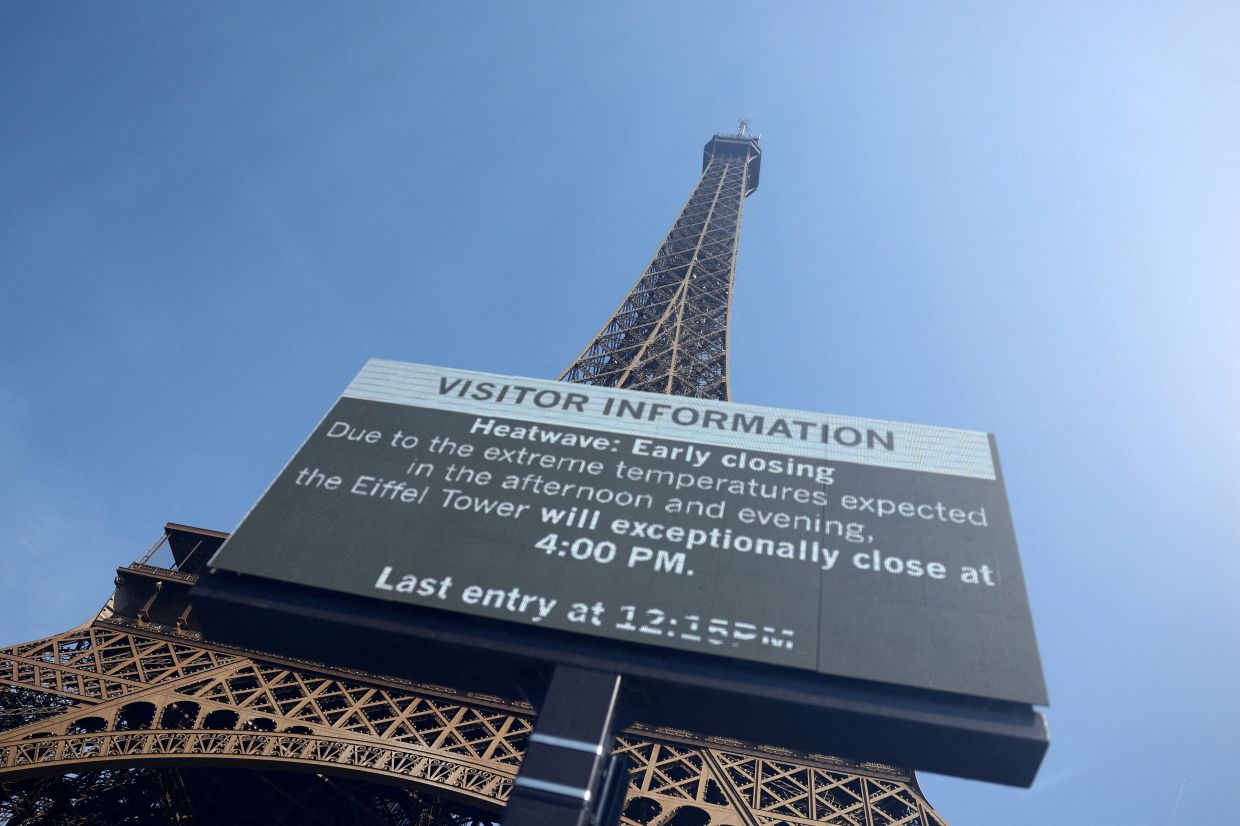
France's brutal heatwave this week has upended the summer travel plans of thousands of international visitors, with authorities forced to shut down iconic Paris landmarks during peak tourist season. The Eiffel Tower and Louvre Museum both implemented emergency early closures as temperatures soared to record levels, frustrating travellers who had saved months or years for trips to the French capital. The disruptions underscore how extreme weather events are increasingly affecting the tourism industry across Europe, with implications for the broader economy and visitor experience in major heritage destinations.
On June 23, France recorded its hottest day since temperature measurements began in 1947, according to meteorological records. The severity of the heat prompted the Eiffel Tower's operators to shut the landmark at 4pm, well ahead of its usual midnight closure during the summer season. Management indicated the abbreviated hours would likely continue throughout the heatwave, depriving the 324-metre monument's seven million annual visitors of access to one of the world's most recognizable attractions. For many tourists, climbing the tower represents the centrepiece of a Paris visit, making the forced closure particularly disappointing.
Among those affected was Maite Blazques, a 35-year-old nurse from Madrid who had spent months saving to bring her six-year-old son to Paris. The extreme conditions forced her to completely reconfigure her itinerary on the fly, abandoning plans for a guided tour through the historic Marais district, a river cruise along the Seine, and the eagerly anticipated ascent of the Eiffel Tower. Speaking quietly while holding her son's hand, she described the frustration of having her carefully planned family holiday derailed by circumstances beyond anyone's control. Similar stories played out across the city as tour operators cancelled afternoon and evening excursions.
American tourist Tamara Dancer had her scheduled guided tour cancelled on Tuesday afternoon, a disappointment she felt keenly after anticipating the experience. Like countless other visitors, she had to scramble to find alternative activities compatible with the oppressive heat. The cancellations rippled through Paris's tourism infrastructure, affecting not just individual visitors but the entire ecosystem of tour operators, guides, and hospitality workers who depend on steady tourist flow during high season.
Those who ventured outdoors encountered streets and public spaces transformed into heat traps. Tourists armed themselves with umbrellas, wide-brimmed hats, and portable fans in attempts to shield themselves from the radiant heat emanating from pavements and building facades. John Beeler, a 45-year-old American engineer travelling with his wife, described the experience bluntly: suffocation in the streets, in the subway system, and even within their rental accommodation. The couple ultimately relocated to an air-conditioned hotel room, adding unexpected expenses to their trip. Such adaptive measures were common among visitors, though not everyone had the resources or flexibility to upgrade their accommodation.
The alternative strategy adopted by many tourists was to seek refuge indoors. Drake Winners, a 66-year-old retiree from London, acknowledged that discovering Paris through walking—the traditional and most rewarding way to experience the city's architecture, neighbourhoods, and street life—became physically impossible in the extreme heat. He pivoted to visiting museums and churches, establishments where climate control provided respite from outdoor conditions. The Louvre, the world's most visited museum with approximately nine million annual visitors, became a destination of necessity rather than primary choice for many.
However, even the Louvre faced complications. Museum management announced that the vast palace, constructed over centuries by successive French monarchs and presidents, was not sufficiently equipped to handle the climate extremes posed by contemporary heatwaves. The admission reflected a broader vulnerability in Europe's heritage infrastructure, much of which was designed and built for historical climate conditions rather than modern temperature extremes. The museum has also confronted multiple operational challenges this year, including a brazen US$100 million jewellery heist, water leaks, and various maintenance issues that compound the pressure on an institution already stretched by record visitor numbers.
Beyond Paris, the heatwave's impact extended across France's tourism landscape. More than half of mainland France remained under the weather service's highest red alert level, prompting precautionary warnings and closures at attractions nationwide. Mont Saint-Michel, the spectacular island fortress in Normandy and France's most visited tourism site outside the Paris region, issued explicit advisories urging visitors to postpone their trips. Such warnings represented an unprecedented measure, reflecting the severity of conditions and authorities' concerns about visitor safety in environments with limited climate control and emergency services.
The broader implications of this disruption extend beyond immediate visitor disappointment. Climate-driven tourism disruptions represent a growing economic concern for European destinations that depend substantially on summer travel revenue. The pattern suggests that heritage sites and outdoor attractions across the continent will face increasing pressure to adapt infrastructure, operating procedures, and seasonal calendars to accommodate extreme weather events. For Southeast Asian travellers considering European trips, such incidents highlight the importance of flexible booking arrangements and travel insurance that accounts for weather-related cancellations.
For the tourism industry, the Paris heatwave serves as a cautionary moment about climate resilience. Investment in cooling infrastructure for indoor attractions, enhanced outdoor shading and hydration facilities, and dynamic scheduling systems that allow rapid operational adjustments will become essential competitive advantages. Destinations that demonstrate the ability to manage extreme weather while maintaining visitor experience will retain their market share, while those that cannot adapt risk losing both revenue and reputation.
The incident also underscores divergent vulnerabilities across tourism destinations. While Paris and other European cities can draw on substantial resources for adaptation, developing nations heavily dependent on tourism face greater challenges in retrofitting aging infrastructure or absorbing revenue losses from climate disruptions. The experience of visitors like Blazques and Beeler—forced to improvise on expensive holidays—illustrates how climate change is beginning to alter the fundamental calculus of travel planning and destination competitiveness globally.

