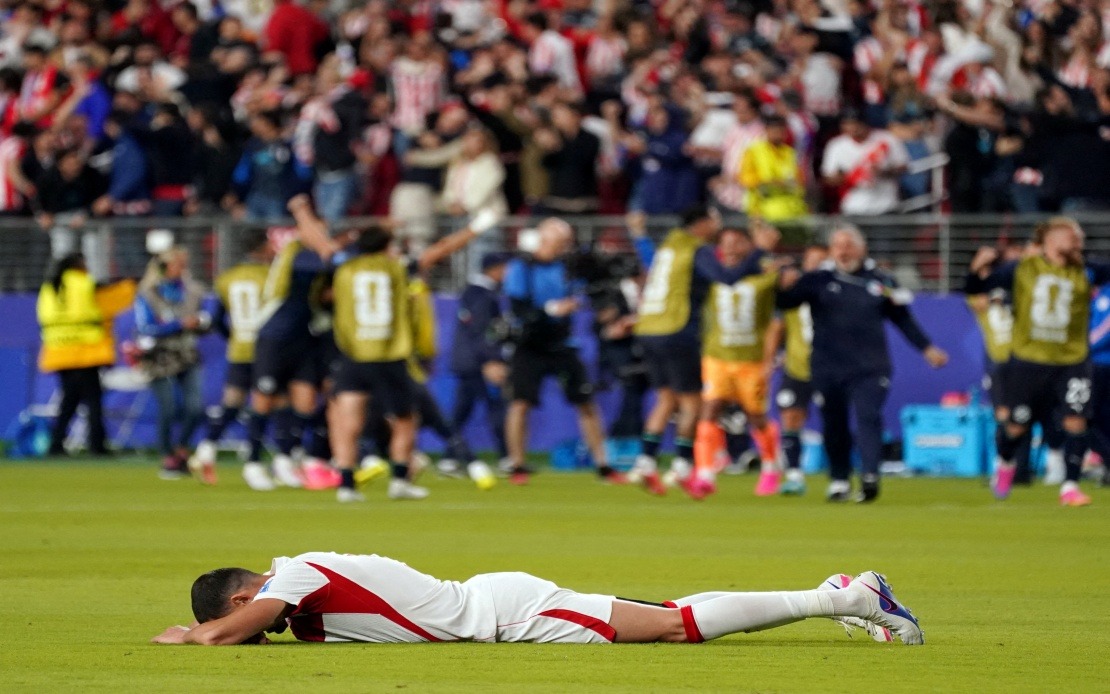
Paraguay pulled off a shock victory over Türkiye at the San Francisco Bay Area Stadium on June 20, winning 1-0 in a Group D encounter of the 2026 FIFA World Cup. The South American side's clinical performance in the opening minute proved decisive, as they weathered sustained Turkish pressure throughout the remainder of the match to secure a vital three points and climb to third in their group standings.
Matias Galarza's strike after just 64 seconds set the tone for Paraguay's disciplined display. The midfielder's well-struck finish from distance into the bottom corner established what would become the match-winner and etched his name into World Cup history as the author of the tournament's quickest goal to date. For Paraguay, accustomed to competing in a fiercely competitive South American qualifying environment, the early breakthrough provided crucial breathing room against a European opponent.
Türkiye's response to falling behind demonstrated the attacking intent their coaching staff had prepared. Despite conceding so early, the Anatolian nation shifted into an aggressive attacking mode, dominating possession and launching repeated waves of offensive play in search of an equaliser. Their football was purposeful and organised, with midfield control becoming their primary weapon as they sought to break down Paraguay's defensive shape.
The match's defining moment arrived in the closing stages of the first half when Miguel Almiron was shown a red card following an incident with Mert Muldur. According to new FIFA regulations designed to maintain respect between players, Almiron's actions—covering his mouth while speaking to the Turkish defender—warranted immediate dismissal. This moment fundamentally altered the tactical landscape, forcing Paraguay to defend with ten men for the entire second period.
What unfolded after the interval was a masterclass in organised defensive football from Paraguay. Despite numerical disadvantage, the ten-man outfit absorbed relentless Turkish pressure with remarkable discipline and concentration. Türkiye's dominance became overwhelming, accumulating more than 27 shot attempts and maintaining approximately 80 per cent possession while completing over 600 passes. The volume of attacking play suggested an inevitable breakthrough was imminent.
Yet Paraguay's goalkeeper and defensive line repeatedly stood firm against the Turkish onslaught. Clear-cut opportunities went begging, and the final pass or clinical finish continually eluded Türkiye's forwards and attacking midfielders. For Southeast Asian observers, the match provided a reminder that World Cup success often hinges not on statistical superiority but on converting chances when they arrive—a lesson relevant to developing footballing nations throughout the region.
The consequences of this result reshaped Group D's landscape considerably. Paraguay's ascent to third place reflects their pragmatic approach and clinical execution, while Türkiye's descent to the bottom of the standings represents a catastrophic outcome for their tournament ambitions. With their elimination mathematically confirmed, the Turkish federation faces difficult questions about tactical preparation and the ability to maintain composure under pressure.
The United States consolidated their position atop Group D with this result, affirming their credentials as genuine contenders in their home World Cup. Their leadership of the group represents significant progress for North American football on the tournament's grandest stage, particularly given the competitive calibre of Group D opponents. For Malaysian and Southeast Asian football enthusiasts following the competition, the American dominance underscores the growing financial and organisational investments the United States has channelled into developing a world-class national programme.
Paraguay's victory carries broader implications for South American football at this World Cup. The nation has demonstrated that continental pedigree and defensive solidity can overcome numerical disadvantage and superior possession statistics. Their progression from this group, secured through a combination of clinical finishing and resolute defending, showcases qualities that have historically defined successful Latin American sides at the tournament.
Türkiye's elimination marks a disappointing campaign for a team that entered with genuine aspirations of advancing further. The gap between their statistical performance and actual results highlights recurring challenges in international football—the difficulty of translating dominance into goals. As they depart the tournament, questions will inevitably arise about squad selection, tactical flexibility, and the management of pivotal moments in knockout-format competition.
Looking ahead, the Group D conclusion sets up intriguing knockout-stage matchups. Paraguay's third-place finish determines their path through the remaining stages, while the United States' group leadership guarantees them a favourable draw. For regional observers, this World Cup iteration has already demonstrated how the tournament's increased participant base and expanded group format can produce surprising results and unexpected eliminations.

