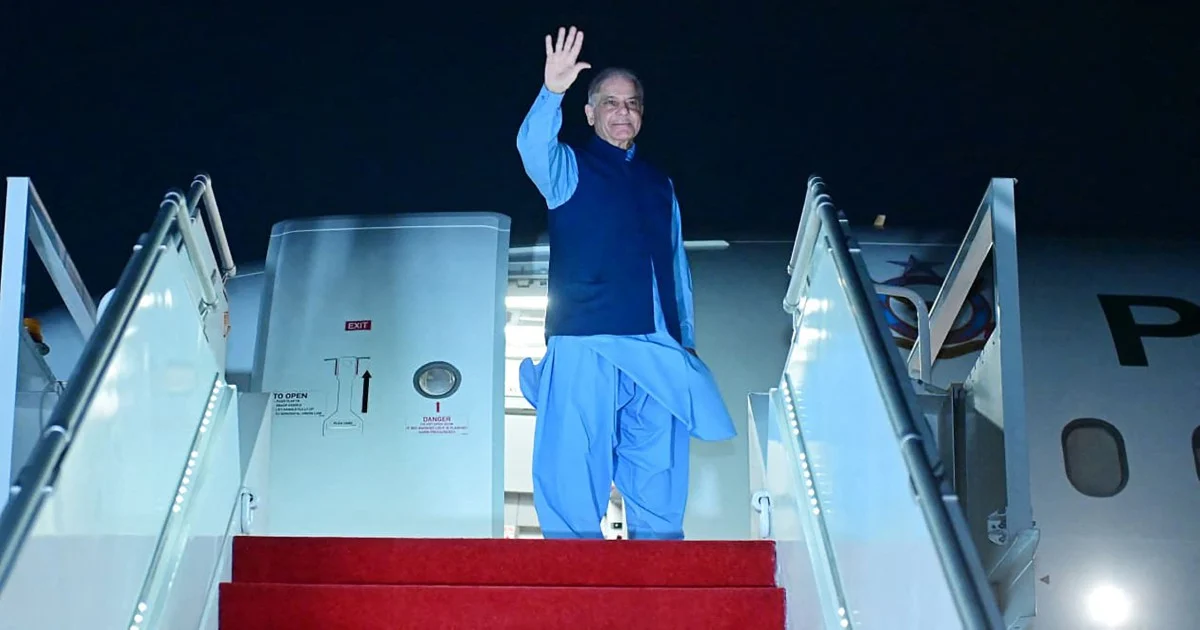
Pakistan's Prime Minister Shehbaz Sharif arrived in Switzerland on Sunday morning to participate in technical-level discussions aimed at bridging the longstanding divide between the United States and Iran over nuclear ambitions and regional security concerns. The premier's presence at these crucial negotiations underscores Islamabad's strategic interest in achieving lasting stability across the Middle East, a region where Pakistan maintains significant diplomatic and economic connections.
The timing of Sharif's arrival carries considerable significance for South Asian foreign policy observers. Pakistan, as a nation deeply embedded in regional geopolitical dynamics and serving as a crucial bridge between the Islamic world and Western powers, has long sought to position itself as a stabilising force in Middle Eastern conflicts. By participating in these technical discussions, the Pakistani leadership demonstrates its commitment to fostering dialogue between two nations whose confrontation has ripple effects across the broader Islamic world and global energy markets.
The talks represent an attempt to create the conditions necessary for a sustained ceasefire and eventual political settlement. Technical-level negotiations, while less visible than high-profile diplomatic summits, often prove instrumental in establishing the foundational agreements and mechanisms required for broader peace frameworks. Pakistan's involvement suggests that Islamabad believes it can contribute meaningful perspectives to these discussions, particularly given its historical relationships with both Washington and Tehran.
For Malaysian readers, Pakistan's diplomatic engagement here offers important lessons about small and medium-sized nations' roles in international conflict resolution. Like Malaysia, Pakistan has cultivated relationships across different international alignments, allowing it to serve as a neutral ground facilitator when tensions between major powers threaten regional stability. This model of strategic positioning has become increasingly relevant as multipolar competition reshapes the Indo-Pacific region.
The Middle Eastern conflict in question continues to inflict enormous humanitarian costs and threatens global economic stability through disruptions to energy supplies and shipping lanes. Pakistan, as an energy-importing nation with substantial petroleum needs, has vested interests in reducing price volatility and ensuring uninterrupted access to crucial fuel supplies. Any successful negotiation reducing tensions would benefit Pakistan's already strained economy and energy sector.
Islamabad's diplomatic footprint extends across the Gulf region, where Pakistani expatriates number in the millions and remittances form a critical component of the national economy. Sustained instability in the Middle East directly threatens the livelihoods of Pakistani workers abroad and complicates Islamabad's bilateral relations with Gulf states. By actively participating in peace efforts, Pakistan signals to its regional partners that it remains committed to promoting stability that protects its diaspora and economic interests.
The participation of a South Asian intermediary in these talks also reflects broader shifts in global diplomacy. Traditional Western-led frameworks for conflict resolution increasingly depend upon input from nations that maintain balanced relationships across competing power blocs. Pakistan, despite historical US alliance commitments, has cultivated growing strategic ties with China and maintained nuanced relationships with Russia, positioning itself as genuinely non-aligned on many contemporary issues.
These technical discussions build upon previous diplomatic channels between Washington and Tehran, though the relationship between these two nations remains fundamentally strained. Such talks typically focus on specific operational issues—verification mechanisms, implementation timelines, communication protocols—rather than the broader political differences that characterise their rivalry. Pakistan's presence may help ensure that discussions remain grounded in practical considerations rather than escalating into ideological confrontations.
For Southeast Asian nations observing these developments, Pakistan's diplomatic engagement offers important insights into conflict management strategies. The region faces its own complex great-power rivalries and territorial disputes, making the example of how middle powers navigate between competing interests particularly instructive. Pakistan's willingness to invest diplomatic capital in supporting US-Iran negotiations demonstrates how nations can promote stability even when direct strategic interests appear limited.
The success or failure of these technical-level talks will reverberate across Asia. A negotiated settlement would improve global economic conditions and reduce the likelihood of further military escalation in one of the world's most strategically vital regions. Conversely, continued tensions would strengthen arguments for larger military expenditures globally and maintain uncertainty in energy markets, affecting inflation and growth rates across Asia-Pacific economies including Malaysia.
Pakistan's Prime Minister faced significant domestic challenges upon arriving in Switzerland, including addressing economic difficulties at home and managing complex relationships with various regional actors. His decision to personally participate in these Middle Eastern peace efforts signals that Islamabad considers stabilising the broader Muslim world integral to its own national interests and international standing. This personal engagement, rather than delegating participation to lower-level officials, emphasises the gravity with which Pakistan views these negotiations.

