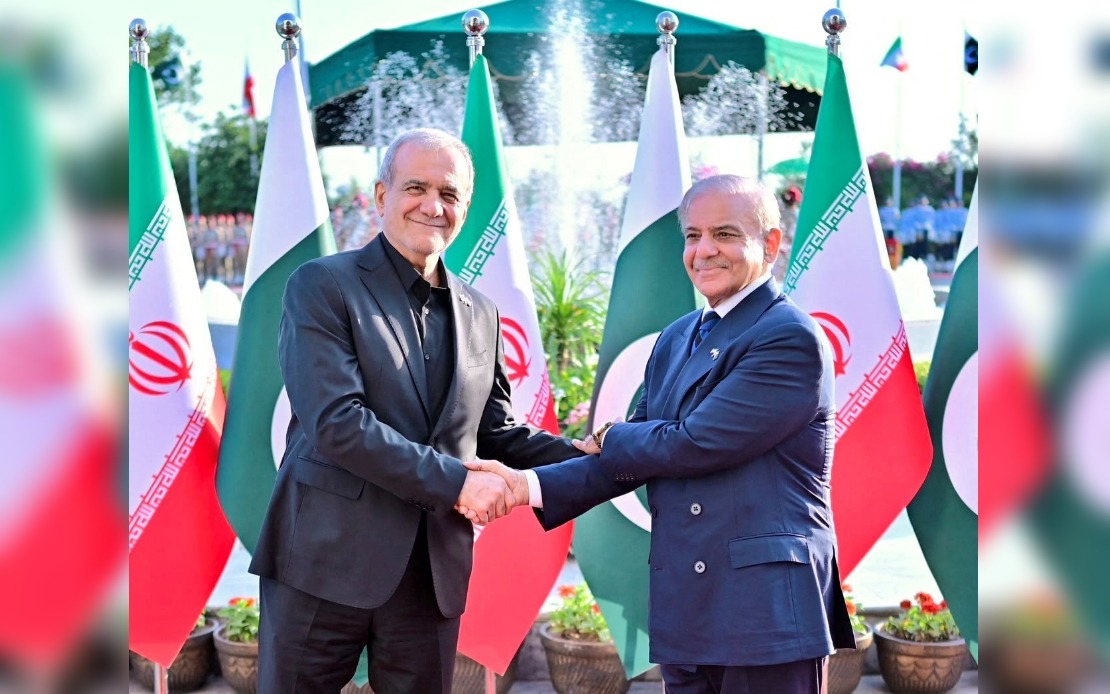
Pakistan's Prime Minister Shehbaz Sharif has firmly thrown his weight behind Iran's ballistic missile programme, declaring that Tehran should not face discriminatory standards regarding its military capabilities. The endorsement came during official talks with Iranian President Masoud Pezeshkian in Islamabad on Tuesday, underscoring Pakistan's deepening alignment with Iran at a critical moment in Middle Eastern geopolitics. Sharif's vocal support represents a significant diplomatic statement, positioning Islamabad as a steadfast partner to Tehran while simultaneously asserting that missile development lay entirely outside the scope of negotiations between Iran and the United States.
The Pakistani premier emphasized that the recent memorandum of understanding reached between Tehran and Washington on June 17 contained no provisions concerning ballistic missiles, and that the Iranian delegation had never sought to bring this topic to the negotiating table. This point carries substantial weight given Pakistan's recent mediation role in brokering temporary ceasefires and peace discussions between the two countries. By explicitly stating that missiles were not part of the accord, Sharif shielded Iran from international pressure that might otherwise demand concessions on its weapons capabilities as a condition for improved relations. His assertion that some nations possess such arsenals while Iran should remain prohibited addresses a longstanding grievance within Iranian foreign policy circles regarding what Tehran views as unjust international double standards.
For Malaysian and Southeast Asian observers, Pakistan's stance illuminates the complex diplomatic currents reshaping South and West Asian alignment structures. Pakistan's willingness to publicly defend Iran's military autonomy reflects both historical ties between the two nations and Islamabad's strategy of positioning itself as an honest broker capable of fostering dialogue between antagonistic powers. This mediation capacity has become increasingly valuable as regional tensions escalate, and Pakistan appears determined to leverage this influence to strengthen partnerships across the Islamic world. The implications extend beyond bilateral Iran-Pakistan relations to encompass broader questions about how non-Western states negotiate their security interests within a multipolar international system.
Iran's missile capabilities carry particular significance given recent military escalations in the Middle East. Tehran views its ballistic arsenal as fundamental to deterrence following strikes launched against Iranian targets in February by Israel and the United States. These attacks fundamentally altered Iran's threat assessment and reinforced the leadership's conviction that conventional military strength represents the only credible safeguard against external aggression. From Iran's perspective, disarming or limiting these weapons would represent capitulation to pressure from adversaries who possess vastly superior conventional military capabilities and nuclear weapons. President Pezeshkian articulated this perspective starkly, warning that without defensive missiles, Israel and the United States would subjugate Iran as they have reportedly done in Gaza, showing no mercy to civilian populations.
The timing of Pezeshkian's state visit to Islamabad carries significance beyond ceremonial diplomacy. Pakistan provided substantial hospitality, dispatching six Air Force fighter jets to escort the Iranian presidential aircraft and arranging a twenty-one-gun salute upon arrival. These protocols signaled respect and solidarity, yet also served practical purposes in demonstrating military coordination and capability. Such displays matter considerably in regional perception, where visible demonstrations of partnership carry diplomatic weight. The involvement of Pakistan's Foreign Minister Ishaq Dar and Chief of Army Staff Field Marshal Syed Asim Munir in mediation efforts underscores how thoroughly institutional Pakistan had invested in facilitating dialogue between Washington and Tehran.
Sharp contrast emerges between Pakistan's measured diplomatic approach and the positions maintained by other regional actors. The United States, through President Donald Trump's recent statements in Paris, has already acknowledged Iran's legitimate claim to ballistic missiles, conceding that restrictions would constitute unfair treatment if other nations possessed such capabilities. This American acknowledgement, whether temporary or enduring, provides diplomatic cover for Pakistan and other nations seeking to defend Iran's military prerogatives. However, Israel remains identified as the primary obstacle to sustainable peace arrangements in West Asia, with ongoing military operations in Lebanon and occupied Palestinian territories generating casualties and destruction. Pakistan implicitly criticizes what it terms international "spoilers" seeking to undermine the emerging US-Iran understanding, an oblique reference to regional rivals who benefit from continued antagonism.
From a Malaysian perspective, Pakistan's diplomatic activism in facilitating peace between Iran and the United States offers instructive lessons regarding the role smaller and mid-sized powers can play in mediating great power disputes. Malaysia itself maintains complex relationships across the Islamic world and the broader international community, occasionally positioning itself as an interlocutor between opposing camps. Pakistan's success in arranging temporary ceasefires and ultimately contributing to the June memorandum demonstrates how countries with legitimate connections to multiple parties can leverage cultural and historical ties into diplomatic influence. The model also illustrates the value of institutional investment in peace-building capacity, with Pakistan deploying its armed forces leadership alongside civilian diplomatic expertise.
Pezeshkian's insistence on the non-negotiable character of Iran's defensive capabilities reflects broader strategic calculations within Tehran's leadership. The Iranian president positioned missiles not as instruments of aggression but as existential safeguards against superior military powers. This framing attempts to transform a contentious weapons issue into a straightforward matter of national survival. For regional states including Malaysia, Iran's argument carries implications for how rising powers justify military modernization programs and weapons acquisitions. The debate touches fundamental questions about sovereignty, deterrence, and the rights of non-aligned nations to maintain independent defense capabilities without international restrictions.
The episode highlights Pakistan's diminished international standing but persistent regional relevance. While grappling with domestic economic challenges and political instability, Pakistan has carved out diplomatic space through its geographic location and historic relationships. Sharif's willingness to publicly defend Iran's military prerogatives, particularly against implicit pressure from the United States, demonstrates how Islamabad balances competing interests. Pakistan cannot afford to alienate either Washington or Tehran, yet it has chosen to emphasize the legitimacy of Iran's position. This calculation suggests confidence that the current American administration, or at least its current occupant, accepts Iran's missile capabilities as inevitable and potentially negotiable.
Looking forward, the sustainability of Pakistan's mediation role depends on continued willingness from all parties to engage through Islamabad as intermediary. The appearance of spoilers attempting to scuttle the peace agreement indicates that significant opposition exists to improved US-Iran relations, originating from parties who benefit from regional instability. Pakistan's challenge lies in maintaining its neutral mediator status while avoiding perception as overly aligned with any single actor. The public endorsement of Iran's missile rights, while politically significant for relations with Tehran, simultaneously tests how far Washington will tolerate Pakistani advocacy for Iranian positions. The emerging dynamics will substantially shape South Asian security architecture and regional alignment patterns throughout the coming years.
Ultimately, Pakistan's diplomatic positioning reflects the reality that major geopolitical transitions rarely emerge from bilateral agreements alone but require support from respected intermediaries who can articulate the legitimacy of settlements to skeptical audiences. By defending Iran's ballistic missile capabilities as entirely consistent with the US-Iran understanding, Pakistan attempts to resolve a potential contradictory reading of events. This argumentative strategy serves Pakistani interests by sustaining its credibility with both Washington and Tehran while positioning Islamabad as an indispensable voice in West Asian affairs. For Malaysia and other Southeast Asian nations watching these developments, the episode underscores how regional powers navigate great power competition and the opportunities available for countries willing to invest in conflict resolution capacity.

