Pakatan Harapan is preparing to deploy a comprehensive two-pronged campaign strategy for the 16th Johor State Election, combining traditional ground-level mobilisation with modern digital platforms to maximise its reach across the state. The coalition's approach reflects recognition that effective political communication in contemporary Malaysia requires simultaneous presence in both physical communities and virtual spaces, particularly when competing for voter support in a state that has traditionally been a political battleground.
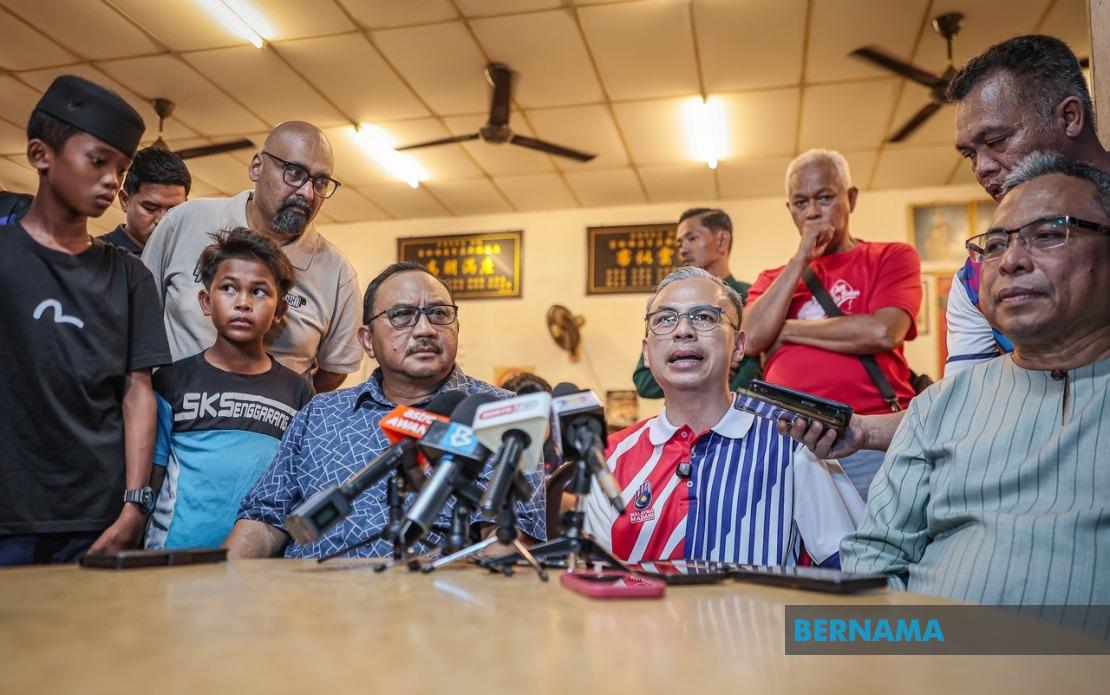
Datuk Fahmi Fadzil, the coalition's communications director and federal Minister of Communications, outlined the strategy at a press conference in Batu Pahat following a grassroots engagement programme. The emphasis on integrating community-based activism with social media distribution signals PH's understanding that different voter demographics consume political information through varied channels. Older voters may remain primarily influenced by direct personal contact and traditional media, while younger constituents increasingly rely on online platforms for political news and candidate information.
The PKR component of the coalition, contesting 20 seats in the Johor election, will commence campaign activities immediately after nomination procedures close on June 27. Fahmi indicated he would personally lead outreach efforts in Semerah while deputy president Nurul Izzah Anwar would accompany Senggarang candidate Onn Abu Bakar during the nomination process. This high-profile leadership participation underscores the coalition's commitment to the state election and signals confidence in its slate of candidates across key constituencies.
A critical element of PH's campaign architecture involves establishing dedicated digital infrastructure to rapidly disseminate candidate information and policy positions. The creation of an official media group dedicated specifically to the Johor election allows the coalition to control its messaging environment, counter misinformation in real-time, and ensure consistent communication across multiple online platforms. This infrastructure becomes particularly important in combating false narratives that routinely circulate during Malaysian electoral periods.
Fahmi emphasised that PH's campaign messaging will prioritise factually-grounded communication, aiming to provide voters with accurate information throughout the election period. This commitment to evidence-based political discourse reflects broader concerns about misinformation's role in recent Southeast Asian elections. By explicitly committing to fact-checked messaging, PH positions itself as a more trustworthy information source compared to competitors who might deploy misleading claims.
The coalition's campaign narrative will prominently feature federal-state cooperation initiatives that have delivered tangible development outcomes in Johor. Two flagship projects—the Rapid Transit System Link and the Johor-Singapore Special Economic Zone—exemplify how collaboration between federal authorities and state administration can catalyse economic growth and reduce regional development disparities. These projects carry particular resonance in Johor, where economic opportunities and infrastructure development influence voter preferences significantly.
PH intends to leverage its governance track record in other states as evidence of administrative competence and delivery capacity. The coalition's management of Selangor, Negeri Sembilan, and Penang demonstrates its ability to implement policies and manage state finances effectively. By contrasting this proven performance against opposition governance records, PH can construct a compelling narrative about which coalition can genuinely improve Johor's development trajectory and address constituent concerns across diverse districts.
Candidate quality represents another dimension of PH's electoral strategy. The coalition has fielded established political figures such as Dr Maszlee Malik in Puteri Wangsa and Onn Abu Bakar in Senggarang, individuals with demonstrated political experience and constituency connections. Strategic candidate selection ensures that PH's electoral appeal rests not solely on national narratives but on respected local personalities capable of translating party messaging into constituent support.
PH has committed to unveiling a comprehensive manifesto specifically tailored to Johor's electorate, signalling that the coalition views the state election as warranting dedicated policy attention rather than simply applying national party platforms. A Johor-specific manifesto allows PH to address particular state concerns—such as local economic priorities, infrastructure needs, and regional development goals—in ways that resonate more directly with voters than generic national messaging.
The Malaysian government has mobilised regulatory and enforcement mechanisms to maintain electoral integrity during the campaign period. A special task force comprising the Malaysian Communications and Multimedia Commission, Election Commission, Royal Malaysia Police, and Malaysian Media Council has been established to monitor and suppress misinformation circulation. This multi-agency approach acknowledges that combating false information requires coordination across communications regulators, electoral authorities, law enforcement, and media industry stakeholders.
PH's campaign strategy reflects evolving realities of Malaysian electoral competition, where technological change, information fragmentation, and voter sophistication require coalitions to simultaneously invest in traditional community engagement while building digital campaign infrastructure. The Johor election represents a significant test of whether this integrated approach can effectively mobilise diverse voter segments and translate campaign activities into electoral success, particularly in a state where historical voting patterns and regional political dynamics create complex competitive dynamics.
The coalition's emphasis on fact-based communication and development achievements attempts to position PH as representing stability and progress, contrasting with opposition parties. Success in Johor would strengthen PH's position nationally and demonstrate that its governance model remains electorally viable despite challenges that have emerged since its 2018 federal victory.

