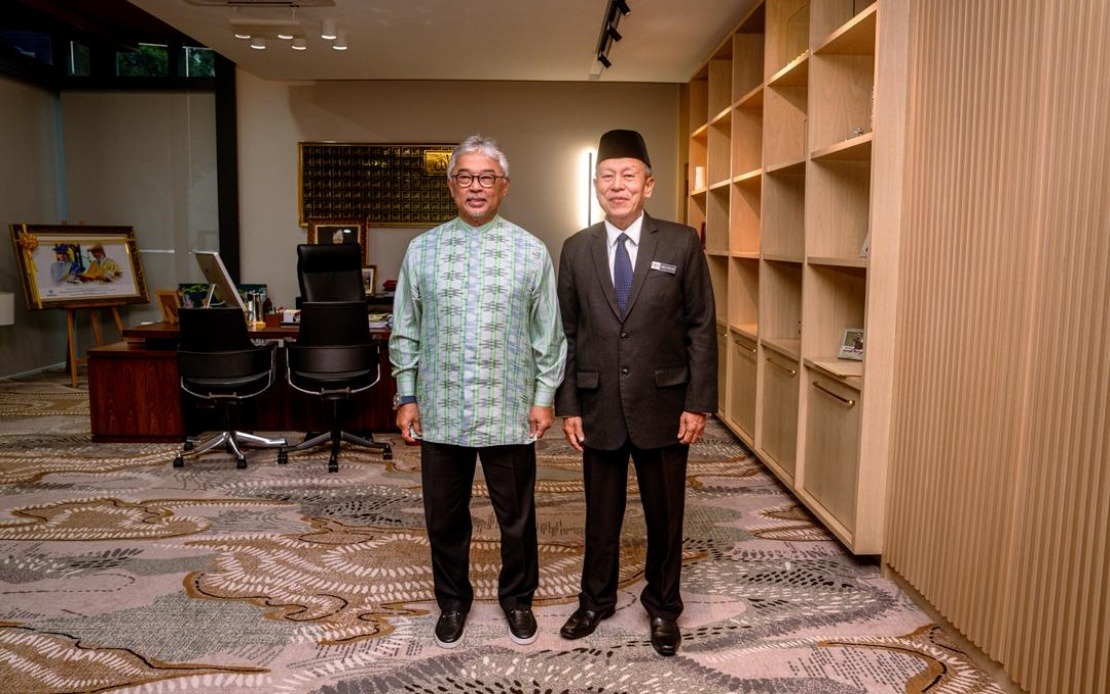
The Sultan of Pahang, Al-Sultan Abdullah Ri'ayatuddin Al-Mustafa Billah Shah, met with Malaysian Anti-Corruption Commission Chief Commissioner Datuk Seri Abd Halim Aman at Shahzan House in Ampang yesterday, providing a platform for the enforcement agency to brief the royal leadership on its operational progress and strategic direction. The hour-long session represented a significant engagement between the constitutional monarchy and Malaysia's primary anti-corruption body, underscoring the institutional importance placed on combating graft at the highest levels of state governance.
During the audience, the MACC presented a comprehensive overview of its recent institutional developments, offering Al-Sultan Abdullah insight into the commission's evolving mandate and operational priorities. The briefing encompassed the agency's latest enforcement actions, investigative outcomes, and strategic initiatives designed to strengthen the country's integrity ecosystem. This direct communication channel between the palace and the anti-corruption authority reflects the traditional constitutional framework in which the Sultan, as head of state, receives regular updates on matters affecting national governance and institutional performance.
A central theme of the meeting focused on reinforcing integrity standards and preventing corrupt practices across both public and private sectors. The MACC outlined various programmes and mechanisms being implemented to address corruption risks systematically, ranging from institutional reforms within government agencies to collaborative initiatives with civil society and the business community. The presentation likely addressed how the commission continues to adapt its strategies in response to emerging corruption typologies and evolving socioeconomic challenges facing Malaysia.
Governance and public confidence in enforcement institutions formed another critical discussion point during the audience. The MACC emphasized its role in ensuring transparent, accountable decision-making throughout government structures, which remains essential for maintaining public trust in state institutions. In an era where governance legitimacy depends significantly on demonstrated commitment to ethical standards, the commission's efforts to enhance its visibility and operational credibility take on heightened significance for the broader Malaysian political establishment.
The meeting also addressed contemporary issues affecting Malaysia's institutional landscape, though specific details remain undisclosed in official statements. Such audiences typically include candid exchanges about systemic challenges, resource requirements, and coordination mechanisms between the palace, law enforcement, and other governance bodies. For the MACC, direct access to the Sultan provides an opportunity to advocate for institutional strengthening and to contextualise its enforcement decisions within the broader framework of royal constitutional authority.
Datuk Seri Abd Halim expressed considerable appreciation for the Sultan's willingness to engage substantively with the commission's leadership and agenda. The MACC chief commissioner conveyed gratitude for Al-Sultan Abdullah's demonstrated concern for the anti-corruption body's mandate and his recognition of the importance of combating graft as a governance imperative. Such public expressions of royal support carry significant symbolic and practical weight in Malaysia's institutional hierarchy, potentially strengthening the MACC's position when advocating for policy changes or resource allocation within government.
The Sultan's reception of the MACC briefing aligns with Pahang's constitutional role in the federal system while also reflecting broader national commitments to institutional integrity. Pahang, as one of Malaysia's major states, maintains significant influence in federal governance structures, particularly through the Council of Rulers. A Sultan's engagement with anti-corruption initiatives signals to other state governments and federal agencies the importance of maintaining consistent standards in integrity and governance across all levels of administration.
From a Southeast Asian perspective, Malaysia's continued emphasis on institutional anti-corruption work through high-level engagement demonstrates the country's sustained commitment to addressing governance challenges. While corruption remains a regional concern across multiple Southeast Asian nations, Malaysia has maintained relatively robust institutional frameworks for detection and enforcement. The MACC's ability to brief royal leadership directly reflects this institutional maturity and the seriousness with which the country treats systemic graft.
The timing and nature of such engagements often carry subtle but important messaging about political priorities and institutional relationships. By granting a formal audience to the MACC chief commissioner, Al-Sultan Abdullah reinforces the principle that anti-corruption work enjoys strong constitutional backing and forms an integral component of contemporary governance. This is particularly relevant in Malaysia's context, where previous corruption scandals have necessitated strengthened institutional safeguards and clearer accountability frameworks across the civil service.
Looking forward, the outcomes of this audience may inform future MACC strategic planning and institutional development. Royal audiences often provide feedback loops through which constitutional authorities communicate expectations and concerns to agency leadership. For Malaysian citizens and regional observers, such engagements serve as visible indicators of institutional commitment to fighting corruption and upholding governance standards, contributing to broader perceptions of state capacity and political will in addressing systemic integrity challenges.

