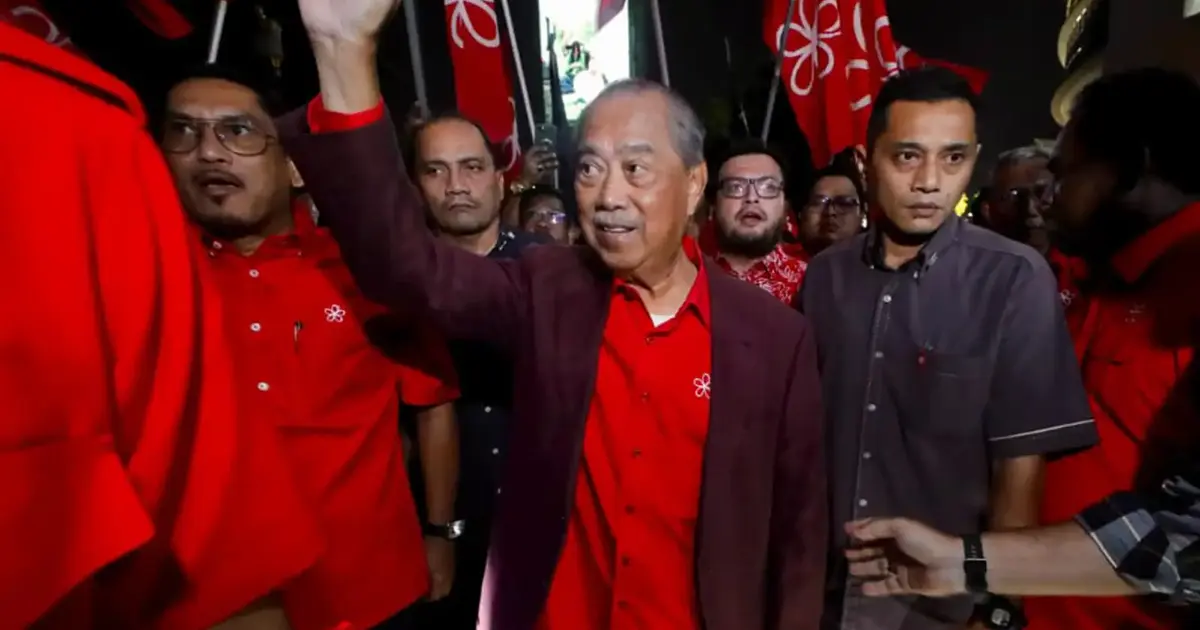
More than 200 supporters turned out to demonstrate backing for Muhyiddin Yassin ahead of a pivotal gathering for Bersatu, underscoring the party's attempt to project unity and organisational strength as it confronts multiple strategic challenges. The show of support reflects efforts to consolidate the party base amid shifting coalitional dynamics in Malaysian politics, particularly as Bersatu positions itself in the broader Perikatan Nasional framework.
The upcoming Bersatu meeting holds significance for the party's direction on several fronts, most notably the preparation for state elections scheduled in Johor and Negeri Sembilan. These contests represent critical opportunities for Bersatu to demonstrate electoral viability beyond its federal presence and to strengthen its grip on state-level governance in territories where it has established footholds. Success in these elections would validate Bersatu's claim to be a consequential political force capable of competing effectively against both PKR-led Pakatan Harapan and Umno-dominated Barisan Nasional structures.
The Johor state election holds particular importance for Bersatu's trajectory. As a state with significant economic weight and population, electoral performance in Johor would provide crucial momentum heading into broader political contests. Bersatu's strategy in the state will likely involve differentiating itself from both traditional opposition forces and the ruling establishment, a delicate balancing act that requires careful calibration of messaging and candidate selection. The party's ability to retain or expand its representation in the state assembly will serve as a bellwether for its regional influence.
Negeri Sembilan presents a somewhat different political landscape, where Bersatu must navigate its position within existing power structures while maximising its electoral reach. The state has historically seen fluid coalitional arrangements, and Bersatu's performance there will test its capacity to appeal across different demographic and geographic constituencies. The stakes extend beyond seat counts; state-level victories would provide platforms for party figures to build profiles and demonstrate administrative competence, factors essential for credibility at the national level.
The discussion of Bersatu's relationship with PAS represents another dimension of the meeting's significance. The two parties have been core components of Perikatan Nasional, yet their relationship has periodically exhibited tension rooted in competing organisational interests and differing strategic priorities. Clarifying this relationship ahead of state elections is crucial, as any ambiguity or public disagreement could undermine coordinated campaigning and confuse voters about party positioning. The meeting likely seeks to establish common ground on candidate selection, resource allocation, and campaign messaging in territories where both parties have presence.
PAS, as the other major Perikatan Nasional component, brings its own electoral machinery and voter base to the coalition. However, managing the balance between PAS's Islamist ideological emphasis and Bersatu's more centrist positioning requires ongoing negotiation. In Johor and Negeri Sembilan, where the voter demographics and political cultures differ from PAS's traditional strongholds in the northeast, the two parties must agree on how to present themselves to electorates that may not prioritise religious themes in state politics. Such coordination challenges are common in multi-party coalitions but become particularly acute when campaigns demand clear messaging.
The rally itself serves multiple purposes beyond symbolic demonstration of party support. It functions as a morale-boosting exercise for the party grassroots, signals to potential candidates that the leadership remains confident about electoral prospects, and communicates to coalition partners that Bersatu retains organisational capacity and member commitment. For Muhyiddin specifically, the gathering reinforces his position as party leader capable of mobilising supporters, an important credential given the competitive internal dynamics that have periodically roiled Bersatu since its formation.
Bersatu's electoral strategy in these state contests cannot be divorced from the broader national political context. The party's federal positioning within Perikatan Nasional, its relationship with the Umno-led Barisan Nasional at the national level, and the strength of Pakatan Harapan all influence state-level calculations. Victories in Johor and Negeri Sembilan would provide leverage in future national-level negotiations, while defeats could weaken Bersatu's bargaining position and raise questions about party viability among both supporters and potential coalition partners.
For Malaysian voters and observers tracking party dynamics, these state elections represent tangible tests of coalition strength and individual party capacity. The convergence of Bersatu's internal consolidation efforts, as evidenced by the rally, with practical electoral preparation suggests a party attempting to move beyond the organisational challenges and factional tensions that have periodically afflicted it. The success or failure of these efforts will have implications not only for state governance in Johor and Negeri Sembilan but for the broader trajectory of Malaysian coalition politics in the coming years.
The meeting also provides an opportunity to address internal party concerns and align the grassroots with leadership direction. Large rallies like this one can serve to energise supporters who may have grown uncertain about party direction or concerned about electoral prospects. By bringing together hundreds of supporters and focusing their energy on concrete electoral objectives, Bersatu's leadership demonstrates that despite periodic setbacks and changing political circumstances, the party retains capacity for mobilisation and purpose.