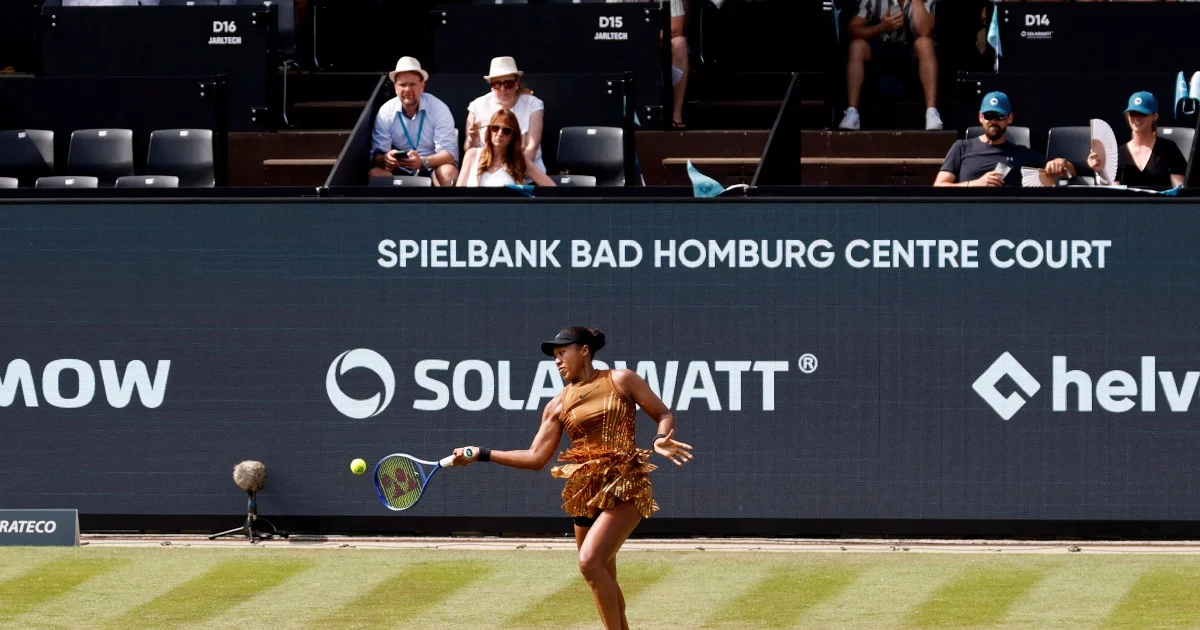
Naomi Osaka demonstrated her trademark resilience at the Bad Homburg grass-court tournament in Germany on Tuesday, advancing to the quarterfinals with a convincing 6-3, 6-3 victory over Belgian rival Elise Mertens despite facing challenging conditions and another sluggish start. The Japanese superstar's comfortable passage masks a recurring pattern that has dogged her recent campaign: difficulty finding rhythm in opening sets even as she ultimately dominates opponents.
Osaka's performance illustrated the paradox that has characterised much of her grass-court preparation. Though she eventually imposed her superior power and court control on Mertens, she spent considerable time in the opening phase playing tentatively, allowing her opponent to dictate exchanges and test her resolve on the verdant surface. This hesitancy in early stages has become sufficiently notable to warrant discussion among analysts tracking her form heading into the season's most prestigious grass tournaments.
The conditions at Bad Homburg, where Central European summer heat bears down relentlessly, presented another complication for Osaka's pursuit of consistent excellence. Managing physical demands whilst maintaining tactical discipline on grass represents a particular challenge, as the surface demands explosive movement and quick directional changes. Yet despite these obstacles—both environmental and self-imposed through her cautious early approach—Osaka found the necessary solutions as each match progressed, a quality that separates champions from merely accomplished competitors.
Mertens, a seasoned professional with considerable achievements across all surfaces, could not muster sufficient resistance once Osaka elevated her intensity and commitment. The Belgian player's credentials as a former top-five player and multiple Grand Slam finalist ensured this was a meaningful test, but Osaka's superior court coverage and penetrating shot-making eventually overwhelmed her opponent's defensive capabilities. The clinical nature of the 6-3, 6-3 scoreline understates neither player's abilities—it simply reflects the gulf that emerges when Osaka's concentration fully engages with her technical resources.
For Malaysian and Southeast Asian tennis enthusiasts, Osaka's progression holds particular interest given the region's emerging presence in women's professional tennis and the inspirational impact of established Asian champions. Her continued success across multiple surfaces and tournament formats demonstrates the pathway available to players developing from the region, whilst her occasional struggles during opening phases offer instructive lessons about mental preparation and consistency. Osaka's ability to adjust and dominate after slow starts suggests patterns of thinking and technical adaptation that younger players across Asia can study and potentially emulate.
The Bad Homburg tournament itself occupies an important position in the tennis calendar as a bridge event between the clay-court season and Wimbledon's grass-court championship. Success here carries meaningful implications for momentum and surface confidence, particularly for players like Osaka who have previously struggled with grass-court rhythms. Her trajectory through this tournament will indicate whether she has resolved some of the inconsistency that occasionally mars her performances, or whether it remains a manageable but persistent feature of her competitive makeup.
Mertens' defeat removes a capable obstacle from Osaka's path, though the quarterfinals will likely present stiffer challenges from other players sharpening their grass-court form. The draw shape and remaining competitors will determine whether Osaka faces additional first-set hurdles before potentially reaching a final. Regardless of how deep her Bad Homburg campaign extends, the pattern of overcoming sluggish starts to eventually impose dominance suggests her core abilities remain intact despite any lingering concerns about consistency.
Osaka's evolution as a player has involved learning to leverage her physical advantages—her serve velocity, baseline power, and court coverage—whilst simultaneously developing mental tools to maintain focus during phases when opponents remain competitive. This match against Mertens exemplified that synthesis: the Osaka of the second set, when she had settled into predictable rhythms and seized control of rallies, represents an increasingly reliable performer. The Osaka of the first set, searching for timing and direction, represents the fragility that occasionally derails her campaigns.
Looking forward, the quarterfinal stage at Bad Homburg will reveal whether this particular tournament proves a building block toward genuine grass-court consistency or merely another staging post en route to Wimbledon where such incremental improvements are frequently tested against the highest-seeded competitors. For tennis followers across Asia monitoring her progress, the trajectory from early tentativenesstoward commanding victories offers encouraging signs of a champion learning to harness her capabilities more reliably, even as occasional early-match vulnerabilities persist.

