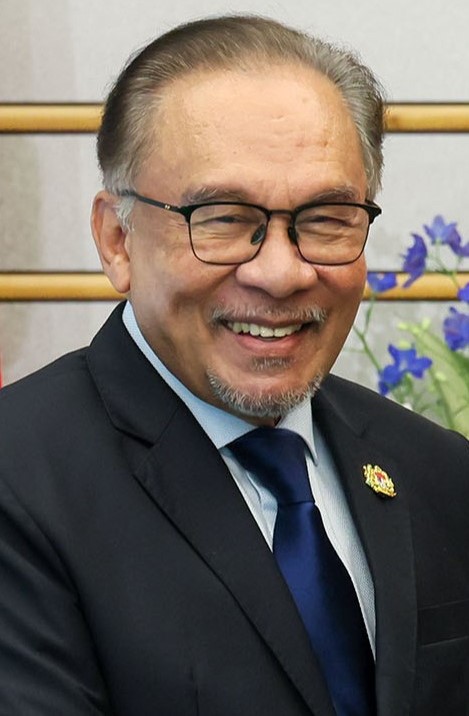
Opposition Members of Parliament including Hamzah were spotted attending a meeting at PAS headquarters, underscoring the fluid political landscape currently gripping Malaysia's opposition coalition. The visit occurred against a backdrop of significant upheaval within Perikatan Nasional following PAS's recent decision to sever its partnership with Bersatu, a rupture that has set off a chain reaction of strategic repositioning among opposition figures.
The gathering of MPs at the PAS office represents more than a routine political engagement. It signals the kind of backroom discussions that typically precede major shifts in parliamentary alignments, with various opposition factions seemingly reassessing their positions and exploring potential recalibrations within the broader opposition framework. Such meetings, often conducted away from public scrutiny, frequently precede announcements regarding parliamentary support arrangements or coalition restructuring.
PAS's decision last week to terminate its alliance with Bersatu marks a watershed moment for Perikatan Nasional, the opposition bloc that has served as the primary counterweight to the ruling Pakatan Harapan coalition. The split, unexpected in its timing despite mounting tensions between the two parties, has created uncertainty about the stability and future direction of the opposition's unified parliamentary presence. For Malaysian politics, where coalition mathematics directly determine government formation and legislative outcomes, such divisions carry profound implications.
The rupture between PAS and Bersatu reflects deeper ideological and strategic divergences that had been simmering beneath the surface of their partnership. PAS, anchored in its Islamic-based political ideology and increasingly strong in Malay-Muslim constituencies, has found itself at odds with Bersatu's more multiethnic positioning and its leadership's pragmatic approach to coalition-building. These fundamental differences in political direction have created friction that finally reached a breaking point, prompting the decisive separation.
Hamzah's presence at the meeting holds particular significance given his prominent role within the opposition ranks. His movements and strategic choices often signal the direction of other MPs, making his participation in discussions at PAS headquarters a barometer of potential broader realignments. The fact that multiple opposition MPs were gathered simultaneously suggests coordination among various opposition factions to assess the implications of the PAS-Bersatu split and determine optimal positioning moving forward.
For Malaysian voters and observers, such political activity raises questions about parliamentary stability and the coherence of opposition governance plans. When coalition partners fracture, the ability to present a unified alternative government becomes compromised, potentially affecting public confidence in opposition parties as viable governing entities. The current turmoil within Perikatan Nasional thus carries electoral consequences that extend beyond mere parliamentary arithmetic.
The timing of these meetings reflects the urgency opposition leaders feel in managing the fallout from PAS's decision. With parliament requiring majority support for government formation and legislative passage, every shift in coalition composition demands rapid assessment and tactical response. Opposition MPs are evidently engaging in intensive consultations to determine whether the PAS-Bersatu split fundamentally alters the balance of parliamentary forces or whether realignment can restore opposition coherence without requiring fresh elections.
Regionally, Malaysia's opposition turmoil attracts attention from neighbouring Southeast Asian democracies where coalition politics similarly shapes governance outcomes. The mechanics of how Malaysian opposition parties manage internal disputes and realign their parliamentary strength offer lessons relevant to regional political dynamics. Opposition bloc fragmentation typically weakens overall opposition effectiveness, a dynamic playing out across the region as ruling coalitions exploit divisions to consolidate power.
Bersatu's separation from PAS also raises questions about the party's future strategic direction and potential alignment options. As Bersatu reassesses its position outside the PAS alliance, the party faces critical decisions about whether to pursue independent opposition status, explore collaboration with other non-PAS opposition entities, or potentially seek accommodation with elements of the ruling coalition. Each option carries different implications for parliamentary balance and coalition composition.
The broader context of these meetings encompasses persistent concerns about parliamentary stability and legislative predictability. Malaysian businesses and investors monitor coalition configurations closely, as shifting parliamentary majorities can affect government policy implementation, budget passage, and long-term legislative agendas. Political uncertainty of the magnitude currently unfolding within Perikatan Nasional thus generates economic ramifications that ripple beyond purely political considerations.
Moving forward, the trajectory of opposition reconfiguration will likely depend on whether parties can establish new working arrangements that command sufficient parliamentary support while maintaining ideological coherence. PAS's withdrawal from its partnership with Bersatu has created space for various realignment scenarios, each with different consequences for Malaysia's overall political equilibrium. The meetings now occurring among opposition MPs represent early stages of what may become a prolonged process of coalition restructuring and strategic repositioning across the opposition landscape.