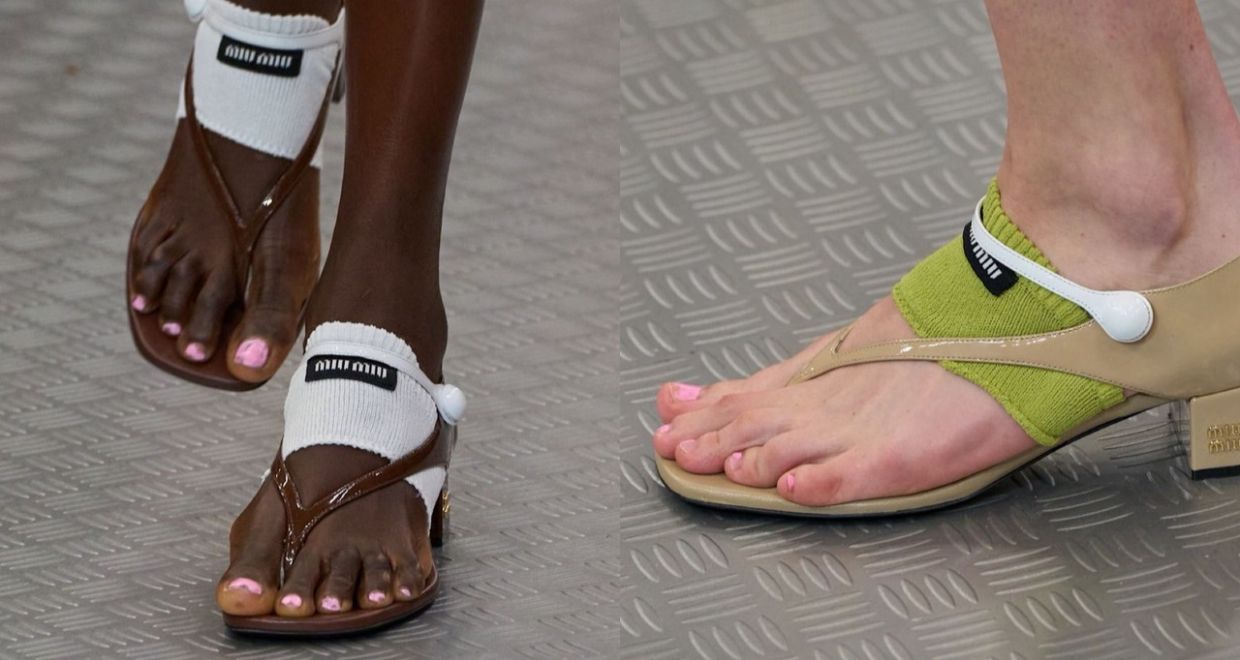
In what appears to be a counterintuitive fashion move for the warmer months, open-toe socks have emerged as a surprisingly popular styling solution for shoppers navigating the uncomfortable middle ground between exposing bare feet and wearing full socks in tropical heat. Retailers across the region are reporting that these unconventional hybrids, which cover the top and sides of the foot while leaving toes fully exposed, represent one of the season's most intriguing category growth stories—a development with particular relevance for Southeast Asian consumers accustomed to year-round warm weather and frequent monsoon seasons.
The trend gained notable momentum in South Korea following an early heat wave that compressed the traditional seasonal calendar, pushing sandal-season shopping forward and creating unusual demand patterns for open-toe and flip-flop oriented footwear. Between May 31 and June 7 compared to the prior year, summer shoe categories including mules, slides, and flip-flops experienced sales increases of approximately 80 percent. Yet more striking were the metrics for the hybrid socks category itself. Style commerce platform Ably reported that transaction values for socks designed to be worn with flip-flops skyrocketed by 1,664 percent during the May 14 to June 14 window, while search volumes climbed 3,227 percent, suggesting rapid consumer discovery and trial.
The movement traces its fashion credibility to luxury brand Miu Miu, which featured the unconventional silhouette in its 2025 Spring/Summer collection. Rather than presenting traditional socks, the Italian label showcased a deliberately minimal approach where sock material wrapped only around the arch and upper portions of the foot, leaving toes completely unencumbered. This designer-level validation proved crucial in transforming what might otherwise have seemed purely functional into a legitimate styling statement. Celebrity endorsement reinforced the concept when South Korean actor Cha Jung-won shared social media posts pairing sky-blue flip-flops with beige knit leg warmers, demonstrating how the pieces could work within an aspirational aesthetic.
What distinguishes contemporary open-toe socks from their heavy winter predecessors is a fundamental reimagining of materials and purpose. Modern versions prioritize breathability through sheer, mesh, and loosely knitted fabrics, transforming them from insulation tools into transparent styling accessories. This material evolution makes the category genuinely functional for warm climates rather than merely trendy. An official from online retailer 29CM described the appeal as a "summer cheat code" for adding visual interest to otherwise plain footwear choices, describing open-toe socks as occupying a sweet spot between bare minimalism and the perceived stuffiness of conventional socks.
Beyond aesthetics, the category offers practical advantages particularly relevant to Southeast Asian environments and lifestyles. By covering the top surfaces of the foot while leaving toes exposed, open-toe socks meaningfully reduce friction and skin irritation caused by flip-flop straps and sandal hardware—a genuine comfort consideration rather than pure fashion indulgence. During monsoon seasons common throughout Malaysia and the wider region, these socks function effectively when paired with rain boots, providing protective coverage that prevents moisture-related skin issues without trapping excess heat or humidity. This practical functionality suggests the trend may have longer-term staying power than purely aesthetic fads.
For first-time adopters, fashion consultants recommend starting with neutral foundations—grey, black, or white—which integrate seamlessly with existing summer wardrobes. A grey open-toe sock worn with black flip-flops or ballerina flats complements casual denim, Bermuda shorts, and satin skirts without demanding wholesale closet restructuring. Those seeking more adventurous expression can explore vivid palettes including yellow, pink, or sky blue, with deliberate mismatching between sock and shoe colors reading as intentional rather than accidental. The styling principle emphasizes restraint elsewhere; when socks and shoes command visual attention, the remainder of the outfit should remain understated—simple t-shirts and shorts, or basic shirts paired with skirts.
The versatility extends to pattern play. Open-toe socks featuring visible designs—dots, florals, or geometric motifs—pair particularly well with solid-colored shoes and minimalist outfits. This layering approach transforms humble socks from hidden essentials into legitimate statement pieces, inverting decades of fashion convention that treated socks as items deliberately concealed from view. Fashion editor Je Hye-yoon captured this philosophical shift, noting that "this summer, socks are no longer an item to hide," suggesting a broader acceptance of mixing textures, colors, and unexpected materials within contemporary casual dressing.
The trend's emergence carries interesting implications for Southeast Asian fashion consumption patterns. The region has traditionally demonstrated comfort with visible layering and unconventional styling combinations, and open-toe socks appear to align with this aesthetic sensibility. Malaysian, Singaporean, and Thai consumers already embrace mixing patterns, embracing visible undergarments as styling choices rather than wardrobe errors, and regularly pair unexpected color combinations in ways Western fashion traditionally discouraged. Open-toe socks represent a relatively accessible entry point into designer-influenced fashion, requiring minimal investment while delivering noticeable visual change.
Retailers tracking the trend suggest the explosive growth metrics reflect genuine consumer appetite rather than a fleeting viral moment. The 1,664 percent transaction value increase and 3,227 percent search volume surge indicate not merely curiosity but sustained purchasing behavior and continued interest. This pattern typically precedes category stabilization, where initial explosive growth moderates into sustainable demand as early adopters transition to mainstream adoption. For Southeast Asian markets with their distinct climatic conditions and established casual aesthetic preferences, open-toe socks may prove particularly resilient.
The broader context involves how fashion increasingly responds to climate pressures and authentic lifestyle needs rather than purely aspirational styling. Open-toe socks emerged not as pure designer fantasy but as a genuine answer to the specific problem of maintaining both comfort and visual interest during warm seasons. This pragmatic yet creative approach—solving real problems through unexpected means—increasingly characterizes contemporary fashion innovation. As regional temperatures continue rising and monsoon seasons intensify, such hybrid solutions addressing both comfort and style simultaneously may represent a growing category of thoughtful design rather than one-season novelties.

