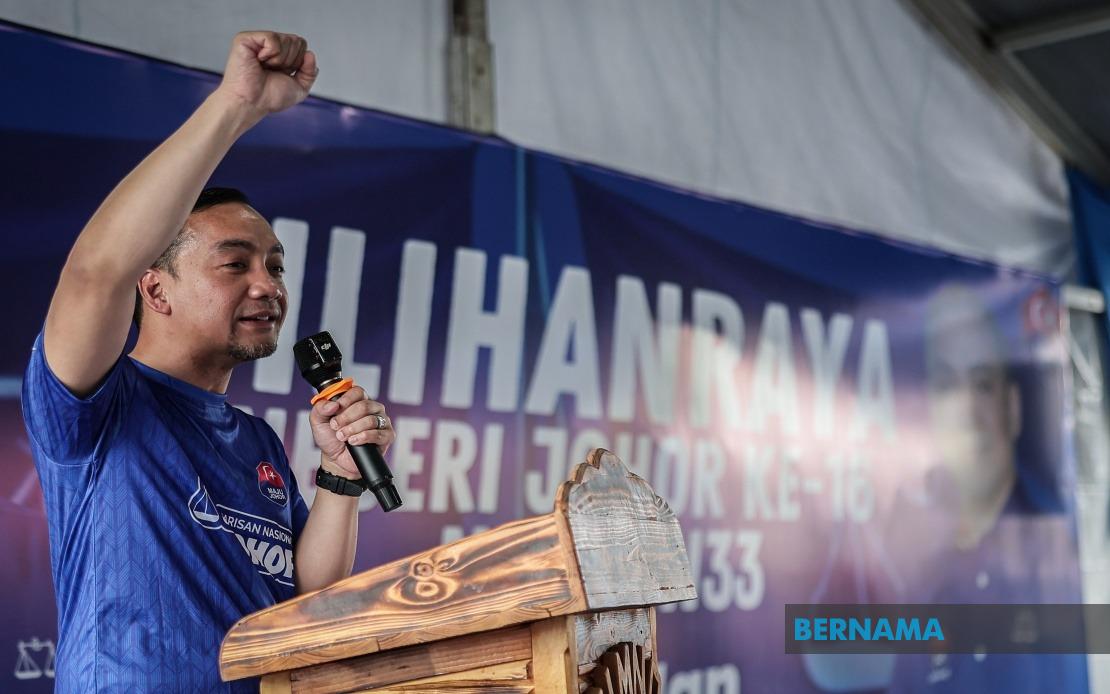
Barisan Nasional's top leadership in Johor has signalled optimism about the coalition's electoral prospects, banking on grassroots enthusiasm for its candidate in the Endau constituency as the state heads towards polling day on July 11. At a campaign event in Mersing on Saturday, BN chairman Datuk Onn Hafiz Ghazi expressed confidence that the warm reception from local voters towards Alwiyah Talib, popularly known as "Kak Awi", would translate into tangible gains for the coalition across two contested seats in the district.
The Johor Menteri Besar's public endorsement underscores BN's strategic investment in the Endau battleground, where Alwiyah's candidacy carries particular symbolic weight. Her decision to rejoin the coalition after a stint with the opposition represents a significant narrative for BN's election messaging, embodying themes of reconciliation and pragmatic realignment that party strategists hope will resonate with swing voters. Onn Hafiz framed her return within the broader context of UMNO president Datuk Seri Dr Ahmad Zahid Hamidi's "Rumah Bangsa" initiative, a framework designed to project BN as an inclusive tent accommodating diverse political currents united by a commitment to Johor's development.
Alwiyah's political journey illustrates the fluid nature of Malaysian electoral politics at the state level. She previously won Endau under the BN banner during the 14th General Election, only to join Bersatu and contest under the Perikatan Nasional banner in the 2022 Johor state election, where she retained the seat with a majority of 3,041 votes in a five-candidate race. Her reversion to BN now suggests confidence within the coalition that her personal standing among constituents remains sufficiently robust to overcome any perception of opportunism associated with multiple party switches. BN leadership has invested considerable political capital in welcoming her back, framing the move as principled rather than cynical.
Onn Hafiz's remarks at the "Santai ONN X ONN Bersama Menteri Besar Johor" event in Endau reflected a party apparatus buoyed by what officials characterise as smooth campaign operations and enthusiastic ground-level response. The Menteri Besar asserted that party machinery in both Endau and the neighbouring Tenggaroh constituency demonstrated full readiness and commitment to securing BN victories. Such declarations from the state's chief executive carry political weight, as they signal to party members and sympathetic observers that institutional resources and administrative machinery stand behind the coalition's candidates. However, campaign confidence expressed before elections must always be interpreted cautiously, as it reflects leadership aspirations rather than objective measurement of voter sentiment.
The framing of Alwiyah's candidacy as an expression of inclusivity through the Rumah Bangsa concept reveals BN's broader strategic challenge in the current electoral cycle. Having lost ground to Perikatan Nasional in the 2022 state election, the coalition is attempting to rebrand itself as a unifying force that transcends rigid ideological boundaries. This messaging seeks to appeal to voters fatigued by political polarisation while simultaneously signalling to party members that BN's tent remains capacious enough to accommodate talented individuals regardless of their recent partisan affiliations. The rhetorical emphasis on unity and collective purpose aims to project strength and coherence as the election approaches.
The Tenggaroh constituency, represented at the Mersing campaign event by BN candidate Mohd Youzaimi Yusof, forms part of the same electoral calculus. By campaigning jointly across these two seats and emphasising unified BN messaging, the coalition seeks to consolidate its support base and prevent leakage to rival factions. The decision to hold a grassroots engagement event in Endau—itself a relatively modest township in Mersing district—underscores how competitive state elections in Johor have become, requiring senior leadership to personally validate campaigns at the constituency level rather than leaving such work entirely to local operatives.
The institutional backdrop against which this campaign unfolds matters significantly for Malaysian and regional readers seeking to understand Johor's political trajectory. As Malaysia's second-most populous state and a traditional BN stronghold, Johor's electoral performance carries outsized symbolic importance for national coalition politics. Poor results in the state would accelerate perceptions of BN's decline and embolden opposition narratives about the coalition's waning relevance. Conversely, strong showings in Johor could provide evidence that BN remains competitive and capable of mobilising voters effectively, with implications for federal politics and the coalition's negotiating position should a change of government occur.
Early voting for the state election was scheduled for July 7, with main polling day set for July 11. This compressed timeline meant that when Onn Hafiz made his remarks, the campaign had entered its final stretch with less than two weeks remaining before ballots were cast. In such circumstances, public statements from senior leaders typically aim to mobilise party workers, project confidence to sympathetic media, and provide potential swing voters with last-minute reasons to support the coalition. Onn Hafiz's emphasis on campaign smoothness and absence of "untoward incidents" also served to contrast BN's conduct with any negative narratives the coalition might wish to associate with opponents.
The political context of Alwiyah's candidacy extends beyond Endau itself, touching on broader questions about party loyalty, personal ambition, and the conditions under which Malaysian politicians shift partisan allegiances. Her multiple moves between BN and Bersatu reflect both her own career calculations and the volatility of contemporary Malaysian state politics, where electoral uncertainties and factional struggles within major coalitions create opportunities for politicians to reposition themselves. The fact that BN welcomed her back suggests the coalition's confidence that such moves are now normalised within Malaysian political culture, or alternatively, that the party remains desperate enough for talented candidates to overlook concerns about demonstrated political loyalty.
As the campaign headed into its final days, the question remained whether voter enthusiasm identified by Onn Hafiz would materialise into actual support at the ballot box. Campaign dynamics shift constantly in response to ground-level developments, emerging issues, and the effectiveness of rival campaigns. The Menteri Besar's public confidence provided BN with useful messaging material, but electoral outcomes ultimately depend on factors extending far beyond leadership declarations and event atmospherics, including local economic conditions, community grievances, and the personal networks and organisational capacity of candidates and their teams across the entire state.

