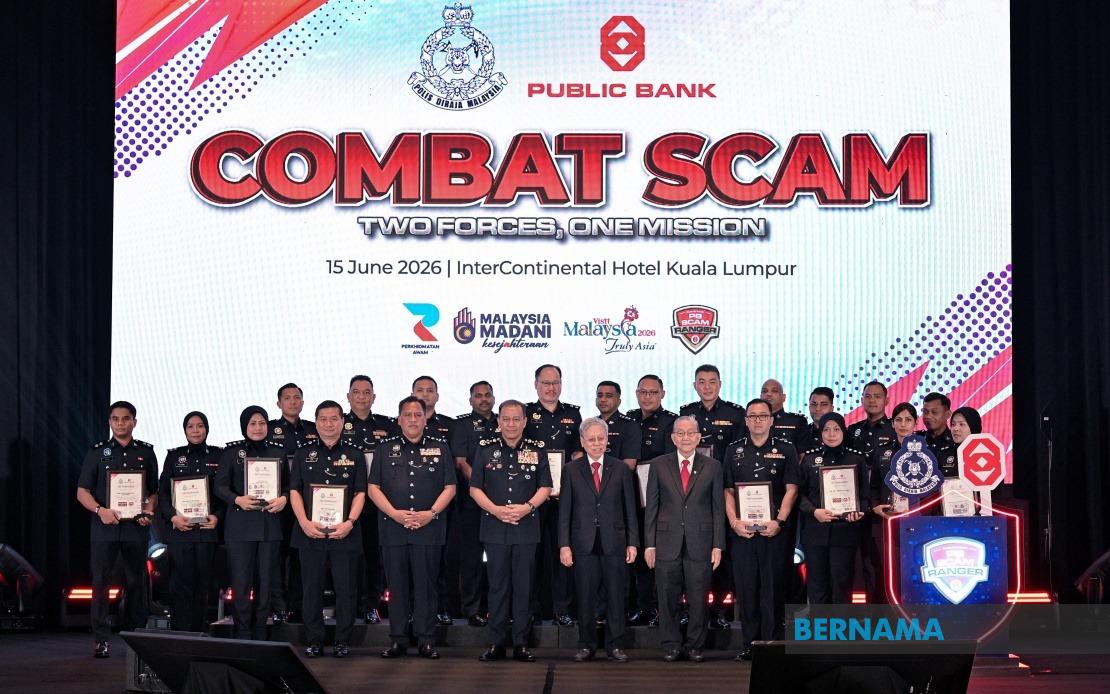
The scale of online fraud threatening Malaysian consumers has reached alarming proportions, with losses climbing nearly 89 percent year-on-year to RM2.97 billion in 2025. Inspector-General of Police Tan Sri Mohd Khalid Ismail disclosed the figure during the launch of the 'Combat Scam: Two Teams, One Goal' campaign in Kuala Lumpur on June 15, underscoring a cybercrime epidemic that shows no signs of abating. The jump from RM1.57 billion in 2024 represents not merely a statistical anomaly but a fundamental shift in how organised fraud syndicates are operating across the region.
At the heart of this surge lies a particularly insidious category: non-existent investment scams, which accounted for RM1.47 billion—nearly half of all losses. These schemes exploit the aspirations of ordinary Malaysians seeking better financial returns, often disguising themselves as legitimate cryptocurrency ventures, forex trading platforms, or property investments. The psychological manipulation involved is sophisticated, with fraudsters deploying fabricated testimonials, doctored financial statements, and carefully constructed online personas to build victim trust over weeks or months before executing the theft.
The volume of reported incidents compounds the severity of the crisis. A total of 66,204 online fraud cases were recorded across 2025, representing an 87 percent surge from 35,368 cases in 2024. This near-doubling of reported cases suggests either a dramatic escalation in criminal activity or improved public reporting—likely both. What remains concerning is the proportion of crimes that likely go unreported due to shame, confusion about where to lodge complaints, or victims' unfamiliarity with digital literacy.
Telephone-based scams constitute the largest subset of reported fraud, with 28,388 cases filed in 2025. These range from the traditional impersonation schemes—where callers pose as bank officials or tax authorities—to more elaborate social engineering attacks where criminals cultivate relationships over multiple conversations before requesting financial transfers. The accessibility of spoofing technology and the ease of international calling through VoIP services have democratised phone fraud, allowing criminal networks to operate with minimal infrastructure investment.
Mohd Khalid's characterisation of these statistics as representing "thousands of victims who had lost their sources of income and future" reflects the profound human toll underlying the numbers. Many affected individuals are retirees whose savings evaporated, small business owners whose emergency funds vanished, or young professionals whose financial momentum was derailed. The psychological trauma following victimisation often compounds the financial loss, with many survivors experiencing depression, anxiety, and diminished trust in legitimate financial institutions.
The evolving sophistication of criminal tactics poses an escalating challenge for law enforcement. Modern fraud syndicates exploit technological advances systematically, leveraging artificial intelligence to generate convincing deepfake videos, deploying secure encrypted communication channels to evade detection, and utilising cryptocurrency to launder stolen funds across borderless networks. The globalised nature of these operations means that perpetrators and victims may be separated by continents, complicating jurisdiction and recovery efforts.
Recognising the urgency of the situation, police and financial institutions are pivoting toward preventive strategies. The PB Scam Rangers Programme, a collaborative initiative between the Commercial Crime Investigation Department and Public Bank Berhad, represents a pragmatic acknowledgment that law enforcement alone cannot stem the tide. By embedding financial literacy and cybersecurity education within community outreach, the programme aims to build defensive awareness among vulnerable populations—the elderly, recent retirees, and digitally unsophisticated individuals who comprise the majority of fraud victims.
Public Bank's involvement signals the financial sector's recognition of its stake in combating fraud. Beyond suffering reputational damage when customers are defrauded, banks face increased regulatory scrutiny and operational costs associated with fraud prevention infrastructure. The strategic partnership also positions the banking sector as a trusted source of security information, potentially reaching customers through channels already embedded in their financial routines.
For Malaysian policymakers and security agencies, the 2025 figures demand urgent policy innovation. Enhanced Know Your Customer protocols for digital financial platforms, mandatory fraud reporting training for customer service staff, and accelerated investigation timelines could reduce both incidence and impact. Cross-border collaboration with regional counterparts in Singapore, Thailand, and Indonesia is essential, given that sophisticated syndicates often operate trans-nationally.
The campaign's messaging—emphasising public education, awareness cultivation, and societal resilience—reflects a maturation in anti-fraud strategy beyond reactive law enforcement. Building a digitally literate population capable of recognising manipulation techniques and verifying claims independently represents the most sustainable long-term defence. This requires sustained investment in public education programming, particularly targeting older demographics who, despite their relative wealth and thus attractiveness to fraudsters, often lack digital security knowledge.
Yet education alone cannot solve structural vulnerabilities in financial systems. Strengthening real-time transaction monitoring, establishing rapid victim compensation mechanisms, and improving international cooperation on fund recovery remain essential complements to awareness campaigns. The RM2.97 billion figure serves as a sobering reminder that Malaysia's cybercriminal challenge has evolved beyond isolated incidents into a coordinated, systematic threat requiring equally coordinated institutional responses across financial, law enforcement, and community sectors.