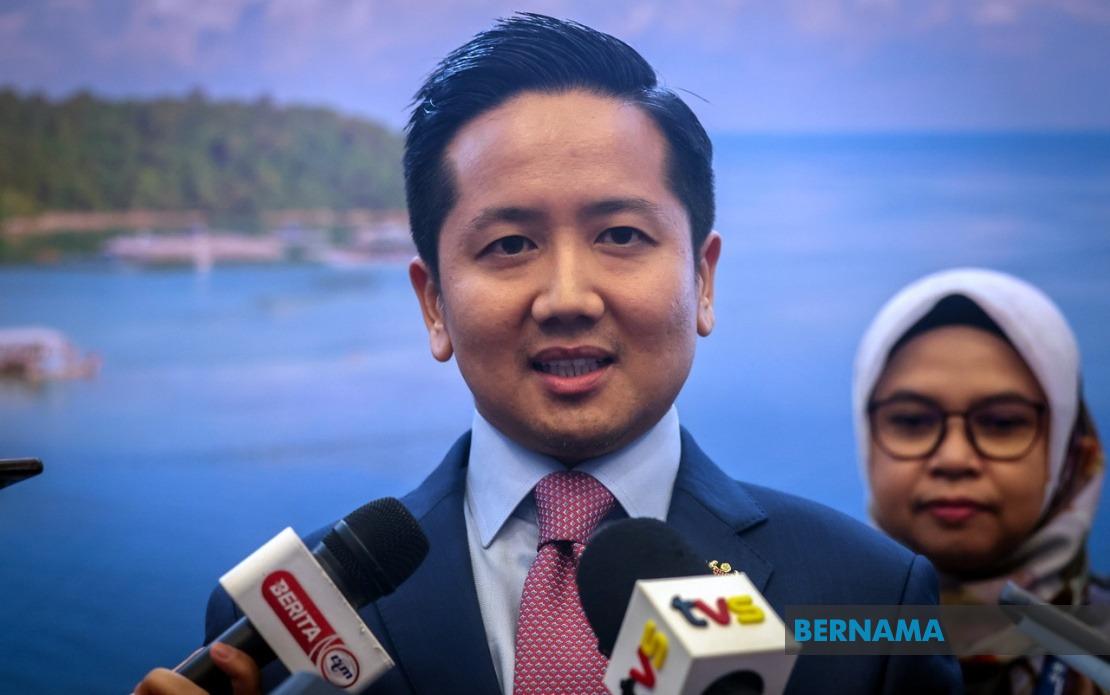
The Ministry of Natural Resources and Environmental Sustainability has committed itself to working closely with the Malaysian Anti-Corruption Commission as authorities examine the circumstances surrounding the relocation of three Asian elephants from Taiping Zoo to a Japanese facility. Minister Datuk Seri Arthur Joseph Kurup made the declaration on June 23, signalling the government's intent to ensure the probe proceeds without obstruction or interference. The investigation centres on the movement of Dara, Amoi, and Kelat—collectively known as DAK—from Taiping to Tennoji Zoo in Osaka, following mounting allegations of procedural irregularities and financial impropriety.
The ministry's statement underscores a commitment to the foundational principles that ought to guide public administration: transparency, accountability, and adherence to the rule of law. Kurup stressed that these values are non-negotiable when it comes to wildlife management and conservation efforts in Malaysia. By articulating this position at the outset of the investigation, the ministry appears intent on preventing any perception that it might prioritise institutional protection over legitimate scrutiny. This approach becomes particularly significant given Malaysia's ongoing efforts to enhance its governance standards and combat corruption across various sectors of public administration.
The MACC formally opened its investigation into the elephant transfer after receiving complaints alleging that the transaction involved leakages and procedural breaches. Wildlife rights organisation Hak Asasi Hidupan Liar Malaysia, known as Hidup, had initiated calls for the commission to examine the matter, raising concerns about financial irregularities connected to the relocation. The group further alleged that certain payments integral to the transfer process had not been properly channelled through government accounts, and pointed to transactions they estimated at approximately RM53 million that warranted scrutiny.
The investigation carries implications that extend beyond the immediate question of whether proper procedures were followed in this particular elephant transfer. Zoo management and wildlife relocation decisions increasingly face public and international scrutiny as societies become more aware of animal welfare considerations and the proper governance of such undertakings. The transparency with which Malaysian authorities handle this case could influence perceptions of how the country manages its wildlife resources and oversees transactions involving state institutions. For a nation that has positioned itself as a steward of biodiversity in Southeast Asia, demonstrating rigorous oversight mechanisms matters both domestically and internationally.
Hidup's involvement in prompting the investigation reflects the broader role that civil society organisations play in promoting accountability within the Malaysian system. The wildlife group's decision to escalate concerns to the MACC rather than confining them to Ministry channels suggests a level of scepticism about whether internal processes might adequately address the alleged irregularities. This dynamic—where external pressure becomes necessary to trigger formal investigation—hints at systemic challenges in whistleblowing and internal governance mechanisms that Malaysian institutions continue to grapple with across sectors.
The minister's explicit statement that the NRES will not shield any party found to have engaged in misconduct or procedural violations carries weight precisely because such assurances are not uniformly forthcoming from government ministries under similar circumstances. By articulating this position in advance, Kurup has created a public benchmark against which the ministry's actual conduct during the investigation will be measured. Should evidence emerge of attempted obstruction or selective cooperation, the contrast between the stated commitment and actual behaviour would become immediately apparent to observers and critics alike.
The international dimension of this matter adds another layer of complexity. The transfer involved coordination with Japanese authorities and a foreign zoo facility, meaning Malaysia's reputation for reliable governance and transparent administration is on display. Zoo partnerships and wildlife exchange programmes are increasingly scrutinised globally, and any hint that such arrangements might involve financial irregularities or circumvention of proper procedures could affect Malaysia's standing in international wildlife conservation networks. Japan and other developed nations typically maintain rigorous standards for partnerships involving animal welfare, making the credibility of Malaysia's oversight particularly consequential.
The estimated RM53 million associated with the transaction represents substantial public resources, making the financial dimension of the investigation particularly significant. Clarifying whether these funds were properly accounted for and whether they reached their intended destinations constitutes a core responsibility of the MACC. The scale of the amount suggests this is not a minor administrative oversight but potentially a consequential matter involving serious financial stewardship questions. Malaysian taxpayers have a legitimate interest in understanding how public money connected to government institutions is deployed and managed.
Moving forward, the investigation will likely examine documentation related to the transfer decision, communications between relevant authorities, payment flows, and the decision-making processes that led to relocating these animals to Japan rather than maintaining them in Malaysian facilities. The probe may also address questions about the criteria used in selecting the Japanese zoo as a recipient and whether proper environmental and animal welfare assessments informed the choice. Such inquiries, while focused on a specific transaction, can illuminate broader governance practices within wildlife management institutions that could benefit from reform or strengthened oversight mechanisms.

