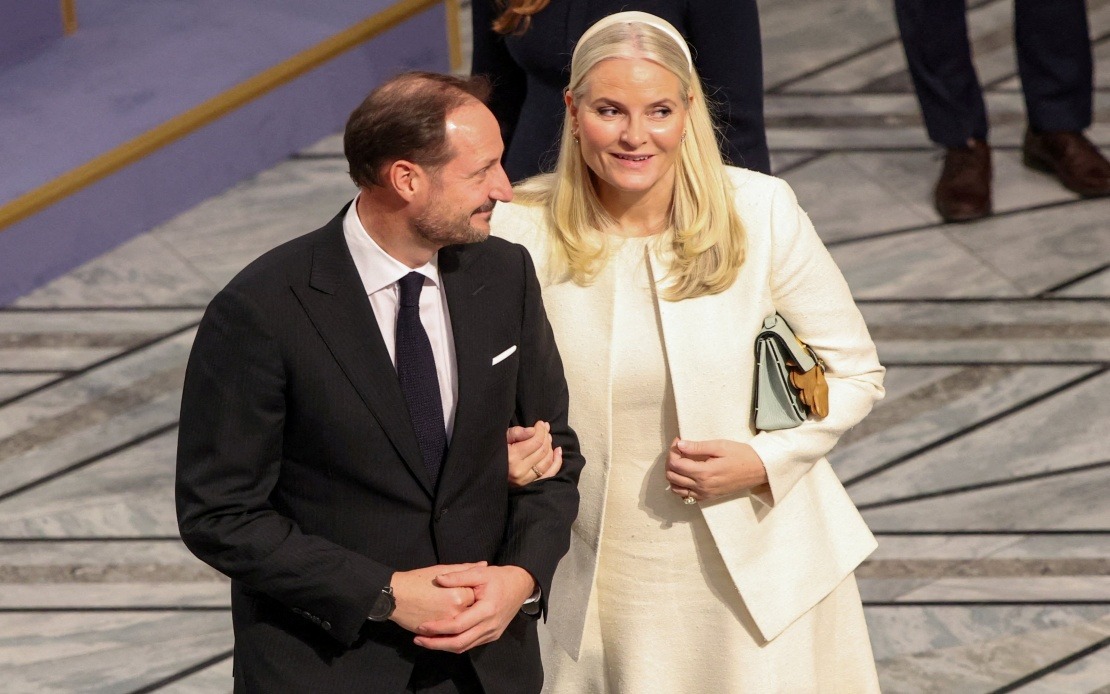
Crown Princess Mette-Marit of Norway has undergone a successful lung transplant operation, the Royal Palace in Oslo announced on Wednesday, bringing an end to her months-long wait for a donor organ. The 52-year-old wife of Crown Prince Haakon was battling pulmonary fibrosis, a progressive and irreversible condition that causes scarring and stiffening of lung tissue, gradually making normal breathing increasingly impossible. Her transplant represents a significant medical milestone for both the Norwegian royal family and the nation's healthcare system.
The Crown Princess had been managing the debilitating effects of pulmonary fibrosis for some time before her recent surgery. In her day-to-day life, she relied on portable oxygen equipment to support her breathing and maintain adequate oxygen levels in her bloodstream. The condition, which affects the lungs' ability to transfer oxygen efficiently to the body, had progressively limited her physical capacity and quality of life. The decision to place her on the transplant waiting list came after medical specialists determined that her condition had deteriorated to a critical threshold where organ replacement offered the best chance for survival and improved wellbeing.
On June 5, the Norwegian royal household made a public announcement that Mette-Marit had been formally registered on the lung transplant waiting list. This disclosure was significant not only for the royal family but also for the broader Norwegian public, who followed developments with intense interest and concern for their Crown Princess. The announcement marked a turning point in her medical journey, as it signified that doctors had concluded her remaining life expectancy without a transplant was approximately one year, the standard medical benchmark used to determine eligibility for such expensive and resource-intensive procedures.
Medical systems worldwide typically employ strict criteria for organ transplant candidacy to ensure fair allocation of scarce donor organs. Patients must demonstrate that they have a limited remaining lifespan without intervention, usually estimated at around twelve months, while also being physically robust enough to survive major surgery and withstand the ongoing immunosuppressive treatments required after transplantation. These requirements mean that only the most seriously ill patients, those facing imminent mortality, qualify for transplantation. Mette-Marit clearly met these stringent conditions, reflecting the advanced stage of her illness.
One of the most remarkable outcomes following the Crown Princess's public announcement was a striking increase in organ donor registrations across Norway. According to the country's Organ Donation Foundation, as reported by Norwegian news agency NTB, the number of citizens willing to donate their organs upon death surged dramatically in the weeks following the palace's June 5 statement. This phenomenon illustrates how high-profile medical cases involving sympathetic public figures can galvanize civic participation in organ donation programmes.
The surge in donor registrations underscores the critical shortage of available organs facing transplant programmes globally. In most developed nations, including Norway, the demand for transplantable organs far exceeds the supply, creating long waiting lists and tragic outcomes for patients whose conditions deteriorate before a suitable donor organ becomes available. The immediate spike in registrations following Mette-Marit's announcement demonstrates that public awareness campaigns and emotional connection to individual cases can effectively mobilize community participation in life-saving donation initiatives.
Pulmonary fibrosis presents unique challenges in the transplant context because it is an irreversible disease with no cure and limited treatment options to slow progression. The condition develops when lung tissue becomes scarred and stiffened, reducing the lungs' elasticity and ability to expand and contract effectively. This scarring process is often idiopathic, meaning doctors cannot identify its specific cause in many patients. As the disease advances, patients experience increasing breathlessness, fatigue, and eventually respiratory failure. Mette-Marit's case highlights how even advanced modern medicine cannot reverse the underlying damage, making transplantation the only viable option for patients at end-stage disease.
For Southeast Asian readers, the Norwegian Crown Princess's transplant offers important perspective on healthcare disparities across regions. Many Southeast Asian nations face even greater challenges in establishing functional organ donation programmes and transplant infrastructure compared to wealthy Scandinavian countries. Malaysia, Indonesia, Thailand, and other regional nations have been developing their transplant capabilities, but organ availability remains severely constrained by low donor registration rates, cultural attitudes toward organ donation, and limited surgical expertise in some areas. The Norwegian experience demonstrates how institutional frameworks and public engagement together create conditions where life-saving procedures become possible.
The successful completion of Mette-Marit's surgery represents a triumph of modern surgical technique and medical coordination. Lung transplantation ranks among the most complex organ transplant procedures, requiring expert pulmonary surgeons, specialized anesthesia teams, and sophisticated post-operative care protocols. The operation involves removing one or both diseased lungs and replacing them with donor lungs, requiring careful attention to blood vessel and airway connections. Following transplant, patients must adhere to lifelong immunosuppressive medication regimens to prevent their immune systems from rejecting the foreign organs, introducing ongoing risks of infection and other complications.
For the Norwegian royal family, the Crown Princess's successful transplant ends an anxious period of uncertainty and brings relief to the nation. Her recovery and rehabilitation will now focus on adapting to her new lungs while managing the immunosuppressive medications essential to prevent rejection. The coming months and years will test both her physical resilience and the quality of her donor organ. Her public health journey has inadvertently created a powerful teaching moment for Norway and beyond, demonstrating both the life-saving potential of organ transplantation and the continuing scarcity of available organs, a reality that affects countless patients across all nations regardless of social status or wealth.