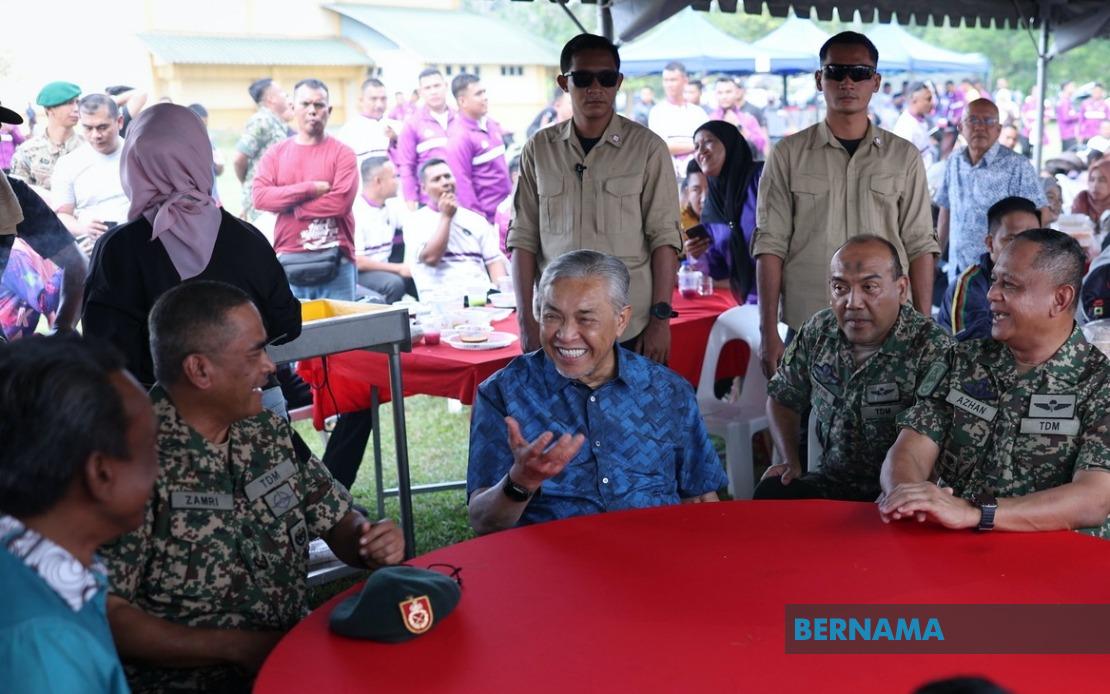
Deputy Prime Minister Datuk Seri Dr Ahmad Zahid Hamidi has given an unequivocal assurance that individuals implicated in the forthcoming Royal Commission of Inquiry report on Lembaga Tabung Haji will not be spared from legal consequences based on their position or status. Speaking at an event in Tampin, Ahmad Zahid, who also chairs Barisan Nasional, underscored the government's commitment to ensuring transparency in the disclosure of the RCI's findings and a rigorous application of the law should any misconduct be identified.
The Deputy Prime Minister emphasised that full transparency in publishing the RCI report is essential for public confidence in the process. Should the investigation uncover evidence of abuse of authority, procedural irregularities, breaches of fiduciary duty, or other unlawful conduct, he indicated that established legal mechanisms would be activated. This includes the lodging of police complaints, triggering formal investigations into potential commercial crimes, and pursuing appropriate judicial remedies through the courts. His remarks come as the government prepares to release findings that have been under wraps for some time, a delay that has fuelled public speculation about the contents and potential sensitivity of the report.
Ahmad Zahid's emphasis on legal process represents an important signal to the Malaysian public and international observers about the government's willingness to confront institutional failures at state-linked entities. The Lembaga Tabung Haji, which manages savings for Malaysian pilgrims undertaking the Hajj, has been a focal point of concerns regarding governance and financial stewardship in recent years. The Royal Commission's examination of the organisation's operations reflects broader efforts within the current administration to scrutinise the management of public institutions and holder entities that handle citizen funds.
When questioned about whether the RCI report's release might influence voter sentiment during Negeri Sembilan's upcoming state election, Ahmad Zahid projected confidence that electoral outcomes would not be substantially affected. He argued that voters in the state possess sufficient maturity and discernment to evaluate candidates and coalitions on their broader merits, independent of any damaging revelations that might emerge from the report. This characterisation of voter behaviour—as informed and deliberative rather than reactive to scandal—reflects a broader political calculation that negative findings, even if substantial, need not automatically translate into electoral punishment for the ruling coalition.
Prime Minister Datuk Seri Anwar Ibrahim had previously signalled the Cabinet's readiness to approve the public release of the RCI report after formal presentation of the document to Cabinet. Anwar, who concurrently holds the Finance Ministry portfolio, offered a rationale for the previous hesitation to publish the findings. He attributed the delay to official concern that premature disclosure might undermine public confidence in the institution itself. However, the Prime Minister contended that circumstances have since evolved substantially. The Lembaga Tabung Haji has undergone strengthening measures, he maintained, and has secured recognition from international bodies, thereby placing it on a more stable footing capable of weathering critical scrutiny without suffering institutional collapse or loss of public trust.
The timing of the RCI report's anticipated release carries particular political significance given that the Negeri Sembilan state election cycle is entering its final phase. Early voting is set for Tuesday, with the main polling day scheduled for August 1. While Ahmad Zahid expressed confidence that the report would not materially influence voter preferences, political analysts recognise that damaging revelations implicating prominent figures could create complications for coalition campaigning, particularly if any individuals connected to the state or federal leadership are named. The government's decision to proceed with publication despite this electoral proximity suggests a prioritisation of transparency and accountability over short-term political convenience.
The RCI into Tabung Haji's affairs represents one component of a broader government initiative to examine the governance structures and financial practices of state-linked enterprises and public institutions. Similar reviews and inquiries have been launched into other entities, reflecting a stated commitment to restoring public confidence in institutional management following periods of alleged misgovernance. These efforts align with the current administration's political messaging around clean governance and the rule of law, which distinguishes its positioning from its predecessors.
The emphasis on legal process and due procedure in Ahmad Zahid's remarks serves a dual function: it reassures the public that findings will be acted upon seriously, while simultaneously anchoring any subsequent actions within established judicial and investigative frameworks. This approach acknowledges that while political pressure for accountability exists, the actual enforcement of that accountability must remain grounded in legal authority and procedural safeguards. Alternatively framed, no individual—regardless of rank or influence—can be exempted from investigation or prosecution based on administrative fiat alone; formal legal channels must be traversed.
The Lembaga Tabung Haji's significance extends beyond its immediate operational remit. As an institution managing savings accumulated by millions of Malaysian Muslims preparing for religious pilgrimage, it carries symbolic and practical importance within Malaysian society. Any findings of systemic failure or individual malfeasance therefore resonate not merely as matters of corporate governance, but as questions touching on the state's fiduciary responsibility toward its citizens. This broader context helps explain the government's willingness to confront and publicise critical findings, despite the political risks.
The anticipated release of the RCI report and the government's stated commitment to consequential action based on its findings will be closely monitored by civil society organisations, opposition parties, and international observers tracking Malaysia's governance trajectory. The actual implementation of accountability measures—whether through law enforcement agencies, regulatory bodies, or the courts—will ultimately determine whether the current assurances of impartial legal application represent genuine institutional reform or rhetorical positioning. For now, Ahmad Zahid's unequivocal statement that no one stands above the law has set a standard against which the government's subsequent conduct will be measured.

