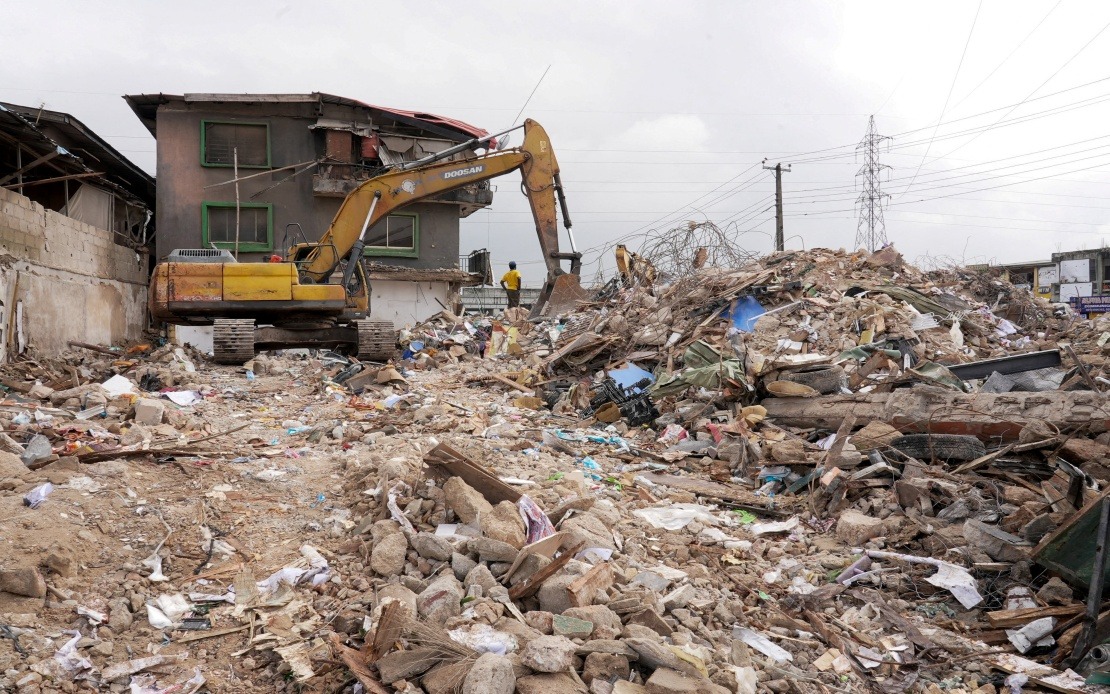
A tragic building collapse in Nigeria's Lagos State has left nine people dead and 27 others hospitalized with injuries after a three-storey shopping complex came down without warning on Thursday morning. The incident occurred in Alakija, a rapidly expanding residential and commercial area situated along the Lagos-Badagry Expressway, one of the state's major thoroughfares connecting the megacity to neighbouring communities. Rescue operations stretched through the night and into Friday as emergency teams worked systematically to locate and extract survivors trapped beneath tonnes of concrete and debris.
The multi-agency response mobilized within hours of the collapse, drawing personnel and equipment from various government and private entities. Lagos State Emergency Management Agency permanent secretary Olufemi Oke-Osanyintolu confirmed that rescue teams operated continuously to identify victims and clear rubble, a process that concluded early Friday morning once all trapped individuals had been evacuated. The China Civil Engineering Construction Corporation, currently executing a railway development project in the region, contributed machinery and trained personnel to the rescue effort, underscoring the involvement of international players in Nigeria's infrastructure sector and emergency response capabilities.
The majority of those affected were merchants and their customers who had begun normal trading activities when the structure gave way without apparent warning. Shop owners had arrived to open businesses for the day's commerce when the building suddenly failed, trapping people inside and underneath collapsed sections. Additionally, residents from neighbouring properties in the densely populated Alakija district were also caught in the disaster, expanding the scope of the humanitarian crisis beyond those directly using the commercial facility.
The 27 survivors sustained injuries ranging from minor to severe, with all receiving immediate medical attention at healthcare facilities across Lagos. Emergency services triaged casualties at the scene before transporting them to appropriate treatment centres. The rapid evacuation and medical intervention likely prevented the death toll from rising further, demonstrating the value of swift coordinated response in catastrophic structural failures.
Investigators have launched formal inquiries into the collapse's cause, though preliminary findings remain unconfirmed at this stage. Officials emphasized that determining why the structure failed is essential for understanding whether the incident resulted from design flaws, construction defects, inadequate maintenance, or other factors. This investigation will carry broader significance given Nigeria's troubling history of building disasters across major urban centres.
Building collapses represent a recurring public safety challenge throughout Nigeria, particularly in rapidly urbanizing areas like Lagos where construction activity outpaces regulatory oversight. Structural failures stem from several interconnected problems that persist despite awareness among authorities. Aging buildings constructed decades ago without modern standards increasingly deteriorate without proper maintenance or reinforcement. Many structures violate established building codes through unauthorized modifications, illegal extensions, or failure to obtain proper permits. Additionally, developers frequently source substandard materials to reduce construction costs, compromising structural integrity from the foundation upwards.
The Alakija incident reflects patterns seen across Lagos and Nigeria's other major cities, where informal construction practices and weak enforcement create dangerous conditions for residents and workers. Rapid urbanization has driven housing and commercial demand faster than regulatory frameworks can manage, creating a backlog of structures built with minimal oversight. Corruption and inadequate inspection regimes allow problematic buildings to remain operational despite obvious safety concerns.
For Malaysian observers, this disaster offers sobering lessons about the importance of stringent building code enforcement and regular structural inspections. Malaysia's regulatory framework and construction standards, while imperfect, generally exceed those in many developing nations. The Alakija collapse demonstrates how shortcuts taken during construction compound over time, transforming buildings into ticking time bombs. Malaysian authorities charged with building management should recognize that consistent investment in inspection regimes and enforcement mechanisms ultimately saves lives and prevents economic losses.
The incident also highlights infrastructure vulnerabilities across West Africa more broadly. As the region experiences rapid urbanization and industrialization, construction activity outpaces regulatory capacity in numerous countries. International companies operating in these markets, such as the Chinese firm that assisted in the Lagos rescue, should consider how their presence and standards-setting might influence local practices. The presence of foreign corporations in rescue efforts underscores both their resources and their potential influence on improving construction practices.
Lagos authorities face mounting pressure to strengthen building safety protocols as the metropolitan area continues expanding toward 20 million residents. Each collapse generates political demands for investigations and reforms, yet systemic change requires sustained funding, trained inspectorates, and political will to prosecute violators. The gap between regulations on paper and enforcement on the ground remains the persistent challenge. Without addressing this implementation deficit, Nigeria's disaster cycle will continue cycling through preventable tragedies.
This tragedy serves as a regional reminder that developing nations sharing similar economic pressures, rapid urbanization, and regulatory challenges must prioritize building safety as critical infrastructure. The cost of rescue operations, medical treatment, and economic disruption far exceeds the cost of preventive inspection and enforcement. For Malaysia's property sector and urban planners, the Lagos collapse reinforces why maintaining rigorous construction standards and inspection regimes represents an investment in public safety and social stability rather than merely regulatory burden.

