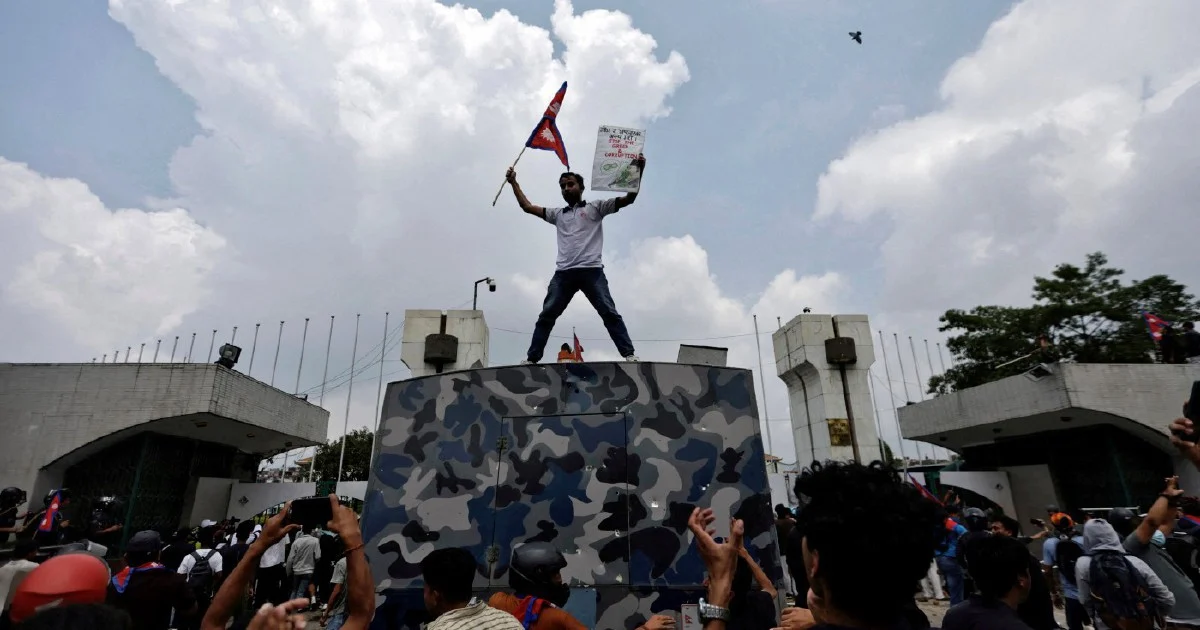
Nepal's former finance minister Bishnu Prasad Paudel found himself in custody late Monday following his arrest on allegations of money laundering, marking a significant escalation in the crackdown on financial impropriety within the corridors of Kathmandu's political establishment. The arrest, confirmed by Nepali police, comes as the current administration—led by the country's Generation Z political movement—continues to pursue high-profile accountability measures against officials from previous governments.
The detention of Paudel represents one of the most prominent prosecutions in Nepal's ongoing anti-corruption campaign, reflecting broader efforts by the incumbent government to demonstrate its commitment to financial transparency and institutional reform. As a former custodian of the nation's treasury during preceding administrations, Paudel's case carries significant political weight and symbolic importance for the younger generation of political leaders now holding power in Kathmandu.
Money laundering allegations in Nepal have historically been difficult to prosecute, given the country's complex financial system and the challenges authorities face in tracing illicit capital flows. The charge against Paudel suggests that investigators have gathered sufficient evidence to move beyond preliminary inquiries and establish concrete grounds for criminal prosecution. This development signals that Nepal's law enforcement agencies are increasingly equipped or emboldened to pursue cases involving senior political and economic figures.
The timing of Paudel's arrest underscores a strategic pivot by Nepal's current political dispensation toward addressing what many ordinary Nepalis perceive as systemic corruption. The Gen Z-oriented government has leveraged public frustration with legacy political parties and their perceived tolerance of financial misconduct, making anti-corruption drives a cornerstone of its political messaging. By moving decisively against high-profile targets from predecessor regimes, the administration aims to consolidate support among younger voters who form its electoral backbone.
For Malaysian and Southeast Asian observers, Nepal's approach carries relevance in understanding how emerging democracies in the region grapple with institutional accountability. Like several nations in South Asia and Southeast Asia, Nepal faces the tension between pursuing genuine anti-corruption reforms and employing selective prosecutions as political tools. The ability to distinguish between legitimate accountability and politically motivated charges will substantially influence Nepal's trajectory toward strengthened governance.
The financial crimes sector in Nepal has expanded considerably over recent decades, partly due to growing integration with regional and global financial networks. Money laundering through Nepal has increasingly involved the movement of illicit funds originating from drug trafficking, human smuggling, and other transnational criminal enterprises. Former government officials have occasionally been implicated in facilitating or ignoring such activities, creating conditions where personal enrichment intersected with organized criminal networks.
Paudel's case will likely face scrutiny regarding the specificity of allegations and the evidentiary standards employed by prosecutors. International observers monitoring judicial independence in Nepal have expressed concerns about the fairness of trials involving politically significant defendants. The coming weeks will reveal whether the investigation against Paudel adheres to established legal procedures or whether it reflects the political motivations sometimes attributed to anti-corruption drives in developing democracies.
The broader implications for Nepal's investment climate and institutional confidence merit consideration. While anti-corruption enforcement generally strengthens financial stability and attracts responsible capital, highly publicized prosecutions of former officials can create uncertainty if they appear arbitrary or weaponized. Businesses and foreign investors often monitor whether judicial systems apply consistent standards across political affiliations and social hierarchies.
Nepal's financial sector will require genuine institutional strengthening alongside these high-profile arrests. Addressing corruption comprehensively involves enhancing transparency in government contracting, implementing robust asset declaration requirements, and establishing independent oversight bodies insulated from political interference. Prosecutions of individual officials, while symbolically important, cannot substitute for systemic reforms that prevent misconduct at its source.
The arrest also reflects Nepal's efforts to comply with international anti-money laundering standards, as the Financial Action Task Force and other global bodies increasingly scrutinize South Asian nations' capacity to combat financial crimes. Nepal's willingness to pursue senior political figures on such charges may facilitate improved bilateral cooperation with countries concerned about illicit financial flows transiting through the region.
As the investigation proceeds, the case will test Nepal's courts and law enforcement agencies' professionalism and independence. The outcome will send powerful signals about whether the country's commitment to accountability extends beyond populist rhetoric to substantive institutional transformation. For Nepal's young government, successfully prosecuting this case while maintaining procedural integrity represents a critical opportunity to build lasting legitimacy and demonstrate that governance reform constitutes more than mere political theater.

