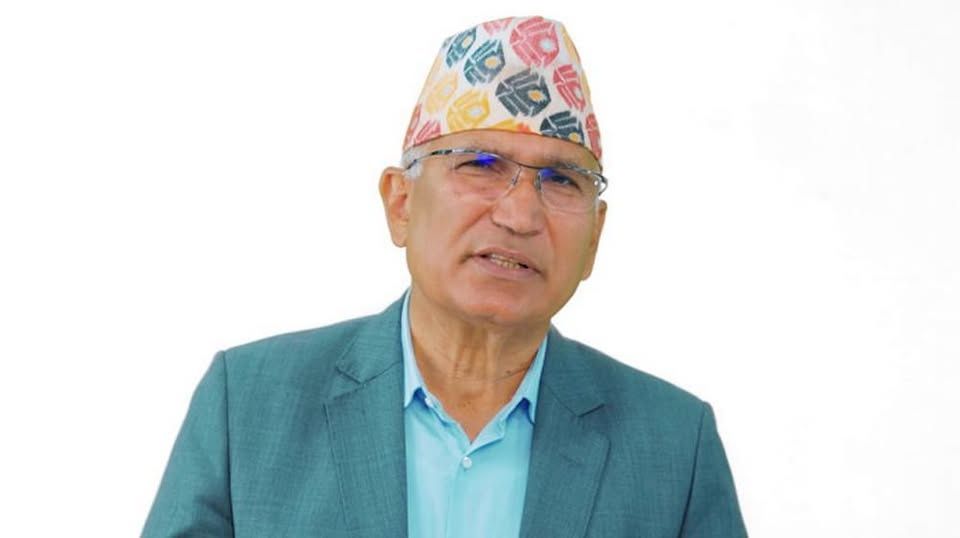
Nepal police arrested former finance minister Bishnu Paudel this week in connection with a money-laundering investigation, marking another significant escalation in the country's anti-corruption efforts that have gathered pace since populist Prime Minister Balendra Shah took power in March. Paudel, who also serves as vice-chair of the Communist CPN-UML party that once governed Nepal, was taken into custody on Monday as investigators prepare to examine his alleged involvement in illicit financial activities. The arrest represents a continuation of the new administration's aggressive posture toward high-ranking officials implicated in financial malfeasance, a stance that has already drawn scrutiny from opposition leaders who question whether these prosecutions serve justice or political revenge.
The timing of Paudel's detention cannot be separated from the dramatic political upheaval that brought Shah to power. In September 2025, sustained public demonstrations against a temporary social media restriction evolved into a broader uprising against endemic corruption and economic stagnation, forces that ultimately toppled the previous government led by KP Sharma Oli. During two days of particularly violent clashes, the crackdown claimed at least 76 lives and left more than 2,500 injured, constituting one of the deadliest episodes in Nepal's recent political history. The anti-corruption sentiment that fueled those protests became a central platform for Shah, a musician-turned-politician who ran on explicit promises to hold the old guard accountable and restore public confidence in institutions.
Paudel's case arrives amid an intensifying pattern of arrests targeting former officials from Oli's administration. Just days after assuming office in March, Shah's government detained Oli himself along with former interior minister Ramesh Lekhak, who faced questioning regarding their potential culpability in the violent suppression of the 2025 protests. Both men spent roughly two weeks in custody before being released without formal charges, and each has consistently denied responsibility for the bloodshed. That sequence of events—swift arrest, interrogation, and release without prosecution—has raised questions among international observers about whether Nepal's legal system is moving with adequate transparency and due process.
The opposition CPN-UML has mounted a forceful challenge to what it characterizes as a pattern of politically motivated persecution. Party officials contend that the Shah government is employing the machinery of law enforcement to systematically disadvantage rivals rather than pursuing genuine accountability. Niraj Acharya, the party's publicity spokesperson, acknowledged that leaders would comply with legal procedures but pointedly accused the administration of demonstrating "discriminatory behaviour" in its investigation targets. Oli himself was even more direct, dismissing Paudel's arrest as a "political stunt" and condemning what he termed authoritarian conduct by Shah's government. These accusations touch on a fundamental anxiety in Nepal's fragile democracy: the risk that anti-corruption campaigns become instruments of factional dominance rather than genuine reform.
Nepal Police spokesman Abhi Narayan Kafle provided minimal detail about the specific allegations against Paudel, stating only that the department would investigate his involvement in money-laundering. The sparse official commentary reflects either the early stage of the investigation or a deliberate strategy to avoid disclosing operational details. Money-laundering probes typically involve complex tracing of financial flows across borders and institutions, suggesting that Paudel's case may take considerable time to develop. Whether the investigation will culminate in formal charges against the former minister remains unclear, though his arrest signals that prosecutors believe they have sufficient grounds to proceed.
Separately, Nepal's anti-corruption authority has filed charges against a considerably larger group implicated in what officials describe as a $66 million embezzlement scheme centered on electronic passport procurement. The Commission for Investigation of Abuse of Authority has targeted 16 individuals, among them the chief of the passport department itself, reflecting how corruption allegations permeate multiple levels of Nepal's state apparatus. Spokesman Suresh Neupane characterised the case as involving "embezzlement in e-passport procurement," indicating that officials may have diverted public funds intended for modernizing identity document systems. The scale and scope of this alleged fraud underscores why public anger over institutional corruption reached such intensity that it catalyzed the 2025 uprising.
The convergence of multiple high-profile corruption cases creates a complex landscape for Nepal's justice system and political culture. On one hand, the visible prosecution of senior figures from a recently ousted government can demonstrate that no official sits above accountability—a message that resonates with citizens exhausted by impunity. The public visibility of these arrests, their coverage by international news agencies, and the involvement of formal anti-corruption bodies signal an effort to move toward institutional remedies for graft. For Nepali citizens who sacrificed safety and risked injury during the 2025 protests, seeing tangible consequences for officials they held responsible for violence and mismanagement may validate their sacrifice.
Yet the selective nature of the prosecutions, combined with the release without charges of Oli and Lekhak, generates reasonable skepticism about whether this campaign represents principled anti-corruption work or tactical political settling. Nepal's opposition parties are not wrong to note that justice systems can be weaponized in newly stabilized political environments, particularly where electoral competition remains intense and informal power networks retain considerable influence. International observers of South Asian politics will recognize this dynamic from other democracies in the region, where cycles of anti-corruption crackdowns have sometimes masked partisan vendettas. The coming months will prove revealing: if Shah's government prosecutes only former officials from Oli's party while leaving its own associates unscathed, the accusations of political selectivity will strengthen considerably.
For Malaysia and other Southeast Asian democracies watching Nepal's political evolution, the unfolding situation offers instructive lessons about the dual-edged nature of anti-corruption campaigns. Nepal has demonstrated that public pressure against institutional malfeasance can indeed topple governments and compel accountability measures that would have seemed impossible months earlier. Yet the country is also illustrating how rapidly such movements can be redirected toward partisan ends, particularly when the political winners define the investigative agenda. As Malaysia itself navigates ongoing debates about corruption, judicial independence, and the relationship between government power and public accountability, Nepal's experience underscores the importance of maintaining institutional safeguards that distinguish genuine reform from opportunistic prosecution. The international community's attention to these developments will likely shape whether Nepal's anti-corruption moment translates into durable systemic change or dissipates into another chapter of factional struggle.

