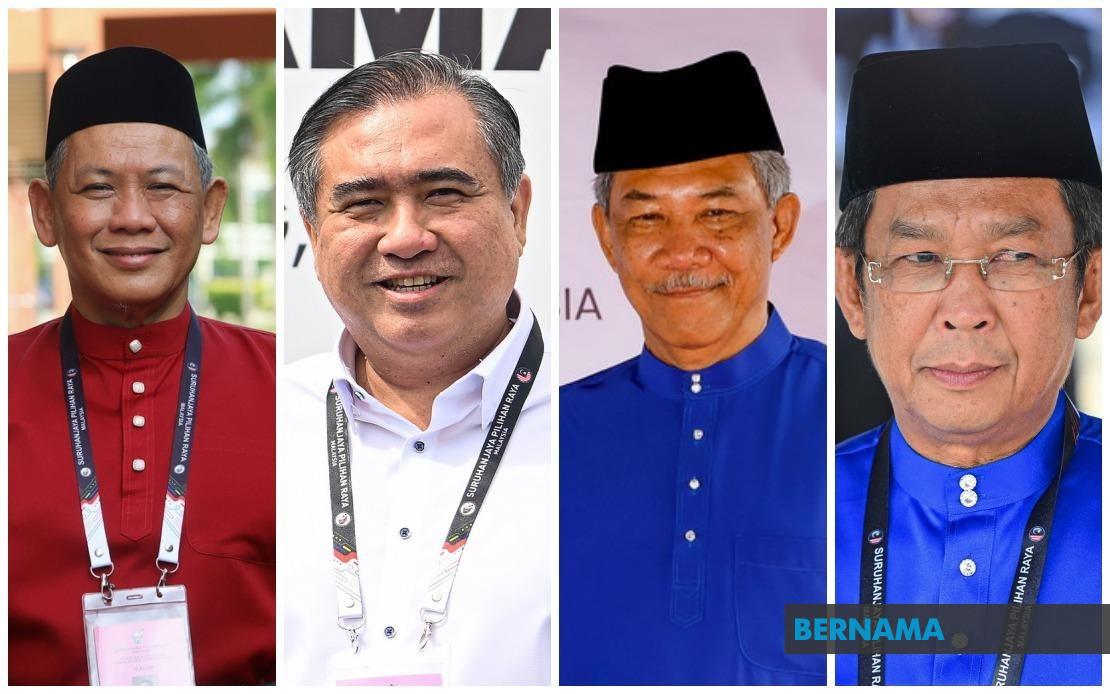
The 16th Negeri Sembilan state election is emerging as a highly competitive affair, with established political figures across multiple parties finding themselves in unexpectedly tight races that could reshape the state's political landscape. Polling scheduled for August 1 will determine control of the 36-seat assembly, but early indicators suggest that traditional strongholds are being vigorously contested and incumbency alone offers no guarantee of victory.
Among the most significant battles unfolding is the three-way contest for Linggi, where Datuk Seri Aminuddin Harun, who serves as both Pakatan Harapan's state chairman and the caretaker Menteri Besar, confronts pressure from two determined rivals. The incumbent Barisan Nasional representative Datuk Mohd Faizal Ramli will defend his seat while Bersatu fields its own candidate, Datuk Zamri Md Said. Aminuddin, also PKR's vice-president at the national level, must navigate this fractured contest amid broader questions about PH's ability to maintain its recent state control. The three-cornered dynamic introduces considerable uncertainty, as vote-splitting could prove decisive in what PH considered a safe seat.
The Chennah constituency represents another telling indicator of the contest's intensity. Held continuously by the Democratic Action Party since 2013, this traditional DAP stronghold now sees secretary-general Anthony Loke, who simultaneously holds the Transport Ministry portfolio in the federal government, fending off a direct BN challenge from MCA Youth chief Siow Kong Choon. That a DAP veteran of Loke's stature faces a genuine threat in a seat his party has dominated demonstrates shifting voter sentiment within the constituency, possibly reflecting dissatisfaction with federal governance or local administration issues that have accumulated over the past decade.
In Rantau, a constituency that carries symbolic weight for Barisan Nasional, Foreign Minister and UMNO deputy president Datuk Seri Mohamad Hasan, popularly known as Tok Mat, confronts his most precarious political moment in nearly two decades. Representing the state seat continuously since 2004, Mohamad faces a direct challenge from Pakatan Harapan's Dr Azizul Hakim Mahdi. The generational contrast—Mohamad is 70 while his opponent is roughly half his age—underscores broader demographic and attitudinal shifts that may disadvantage long-serving politicians. For UMNO specifically, Rantau's outcome will signal whether the party retains its traditional rural support base or whether PH's message resonates more strongly with constituents who have witnessed Mohamad's tenure.
Pertang presents another closely watched three-cornered contest where UMNO's Datuk Seri Jalaluddin Alias, who secured the seat in 2013, must fend off simultaneous challenges from PH's Mohd Umry Abdul Khois and Bersatu's Mohd Faizal Fadli Mohd Idrus. Jalaluddin's loss would represent a significant symbolic blow to BN, while a victory would offer the coalition confidence heading into the campaign's final phase. This constituency exemplifies the complexity of modern Malaysian electoral politics, where coalition fragmentation on both sides creates unpredictable outcomes and denies any candidate a clear path to victory.
Multiple constituencies feature contests involving five or more candidates, fundamentally altering electoral mathematics. Nilai's five-way contest places DAP national deputy chairman J. Arul Kumar, the incumbent PH representative, against BN's Datuk Lai Chien Kong, Bersatu's Datuk V. Saravana Kumar, Berjasa's Zamani Ibrahim, and independent candidate Omar Mohd Isa. With such fragmentation, even a plurality of votes may determine the outcome, potentially delivering the seat to a candidate who captures merely 25 to 30 percent of votes cast. Sri Tanjung's five-cornered battle is particularly notable for featuring Leevineshwaraan Murugan, a 23-year-old Bersatu candidate who ranks as the state election's youngest contender, indicating that parties are attempting to inject fresh energy and appeal to younger electorates through unconventional candidates.
The nomination process concluded on July 18, with 103 candidates contesting the 36 available seats across eight nomination centres. Pakatan Harapan fielded the maximum possible complement with candidates in all 36 constituencies, reflecting confidence in its coalition despite facing palpable challenges in several seats. Barisan Nasional, fielding 25 candidates, adopted a more selective strategy, while Bersatu mobilized 24 contenders and Perikatan Nasional provided 11 candidates. Smaller parties including Berjasa, ASLI, and PSM collectively contributed three more candidates, while four independent candidates also entered the fray. This distribution reflects PH's broad organizational reach but also hints at vulnerability, as spreading candidates across all seats sometimes dilutes resources in critical battlegrounds.
The 14-day campaign period, which commenced immediately after nominations closed and extends until July 31, will significantly shape voter perceptions and determine which narratives dominate. Candidates and party leadership will emphasize local development concerns, federal government performance, and broader governance questions. For Malaysian observers beyond Negeri Sembilan, the election carries broader implications for coalition stability at both state and national levels. Should Pakatan Harapan lose control of the state assembly, questions about its longer-term viability would intensify. Conversely, should Barisan Nasional reclaim the state, the coalition's narrative of political resurgence would gain considerable momentum heading toward the next federal general election.
Early voting is scheduled for July 28, permitting voters unable to cast ballots on polling day to participate beforehand. August 1 represents the decisive date when Negeri Sembilan's electorate will determine not merely which party controls the state government, but whether established political hierarchies remain secure or whether voters are fundamentally reshaping the state's political alignment. The absence of any constituency where the incumbent or front-runner candidate appears entirely comfortable suggests that Negeri Sembilan will deliver a genuinely competitive election, one in which campaign messaging, local issues, and coalition performance will prove decisive rather than historical voting patterns alone.

