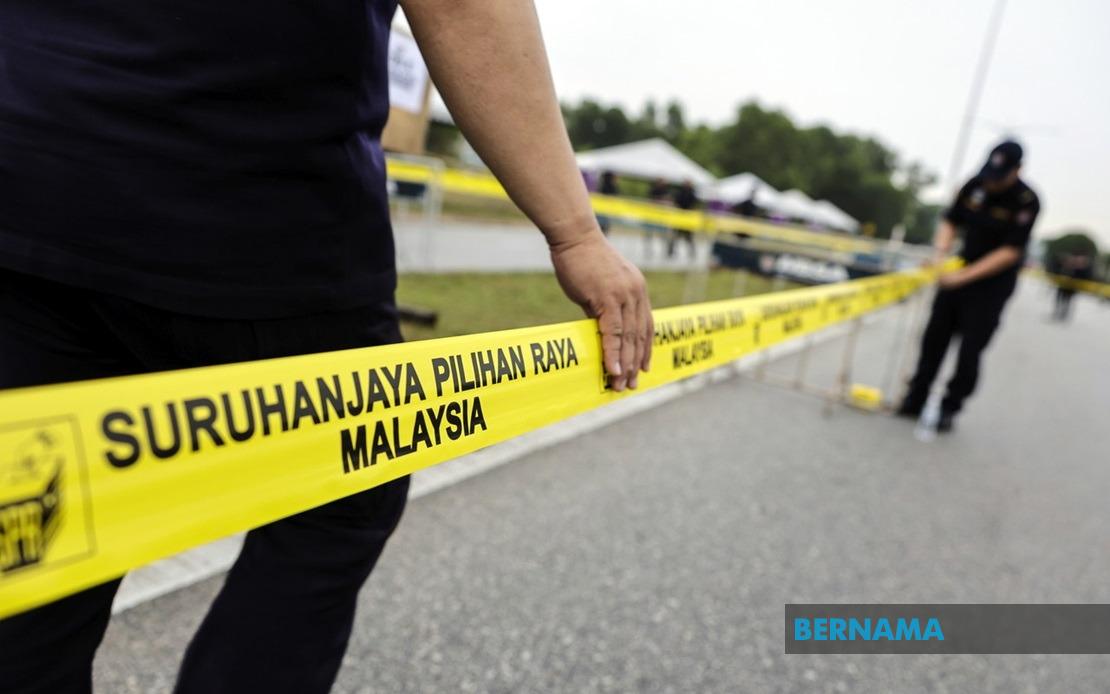
Negeri Sembilan residents preparing for the state's 16th election can expect generally favourable conditions during the crucial nomination process on July 18, according to the Malaysian Meteorological Department, though weather patterns will shift towards convective activity as the day progresses. MetMalaysia director-general Dr Mohd Hisham Mohd Anip indicated that the morning hours should present predominantly clear skies across most of the state, creating suitable conditions for the eight nomination centres to operate smoothly between 9 am and 10 am.
The meteorological outlook reveals significant regional variation across Negeri Sembilan's administrative divisions. Areas including Jelebu, Jempol, Kuala Pilah, Rembau and Tampin are anticipated to experience fine weather throughout the morning period, providing candidates and supporters with comfortable conditions for participation in the nomination exercise. By contrast, Port Dickson and Seremban—the state capital where heightened activity is typically concentrated—face the prospect of morning rainfall, requiring election officials and voters to prepare contingency measures for the initial hours of the nomination process.
The atmospheric conditions are expected to undergo substantial transformation during afternoon hours, with MetMalaysia projecting thunderstorm development across the majority of districts in Negeri Sembilan. This diurnal heating pattern is characteristic of Malaysia's tropical maritime climate, where differential warming between land and sea surfaces generates cumulus convection. However, Dr Mohd Hisham stressed that projected precipitation carries distinctly temporary characteristics, emphasizing that rainfall is expected to manifest as brief isolated showers rather than sustained heavy downpours that might disrupt election administration.
Temperature patterns will remain within typical ranges for mid-July in the state, with minimum overnight temperatures forecast between 23 and 24 degrees Celsius, while daytime maxima are anticipated to reach 32 to 33 degrees Celsius. These conditions, while warm and humid, fall within the normal envelope for this period and should not present unusual physiological challenges for election personnel or the voting public, though adequate hydration and sun protection remain advisable given the intensity of equatorial radiation during midday hours.
The nomination day marks the formal commencement of electoral proceedings following the dissolution of the Negeri Sembilan State Legislative Assembly on June 5. The Election Commission has structured the election timeline with strategic spacing, designating July 28 for early voting and August 1 as the principal polling day. This extended campaign schedule reflects electoral best practices, providing candidates and political parties sufficient opportunity for grassroots mobilization and voter engagement across the state's 36 contested seats.
The electoral landscape presents a multi-cornered contest involving five significant political coalitions and independent groupings. Pakatan Harapan has committed to contesting all 36 seats through its component parties, with PKR fielding 16 candidates, DAP twelve, and Amanah nine, representing a comprehensive grassroots challenge. Barisan Nasional has adopted a more selective strategy, committing to 25 seats distributed among UMNO (16), MCA (7) and MIC (2), reflecting strategic seat allocation decisions within the coalition framework.
Perikatan Nasional has declared participation in 11 seats, with PAS contributing five candidates alongside Wawasan (4), Gerakan (1) and MIPP (1), representing a diversified coalition approach. Beyond the major coalitions, smaller political entities including ASLI, PSM, and Berjasa have each announced single-candidate nominations, broadening the competitive field. Bersatu's candidate list was anticipated for announcement on the nomination day itself, suggesting last-minute coalition dynamics and negotiating processes.
The electoral roll compiled by the Election Commission encompasses 889,490 eligible voters distributed across Negeri Sembilan's demographic and geographic constituencies. This voter base comprises 867,151 ordinary citizens, supplemented by 16,884 military personnel and their spouses, and 5,455 police officers designated for early voting participation. The presence of security personnel voting pools reflects the Election Commission's institutional framework accommodating uniformed services across Malaysia's electoral system, a mechanism particularly relevant given these groups' deployment exigencies.
MetMalaysia's guidance to the public, candidates, election workers and supporters reflects the department's institutional responsibility for providing actionable meteorological intelligence to stakeholders undertaking significant outdoor activities. Recommendations to access real-time weather updates through MetMalaysia's digital platforms acknowledge the rapid evolution of tropical weather systems and the necessity for dynamic decision-making during the nomination process. Given the condensed four-hour nomination window, accurate weather forecasting assumes particular operational significance for election logistics and public participation.
The nomination day's weather conditions carry broader implications for election dynamics, as atmospheric factors influence voter turnout patterns during subsequent voting phases. Fine morning conditions during nomination may establish positive associations with electoral participation, potentially enhancing engagement during the early voting period on July 28 and principal polling on August 1. Conversely, afternoon thunderstorm development might impact campaign activities and voter movement patterns during the campaign period intervening between nomination and election days.
The Negeri Sembilan election represents a significant political test for Malaysia's coalition structures following evolving national political configurations. Weather-related disruptions could theoretically favour particular coalitions with superior organizational infrastructure for managing logistical challenges, though such advantages remain marginal relative to substantive campaign messaging and political narratives. MetMalaysia's forecast essentially suggests that meteorological factors should impose minimal constraints on the nomination process itself, allowing the electoral exercise to proceed according to institutional schedules and procedures.
The state's 36-seat assembly constitutes a moderately scaled electoral battleground in Malaysian terms, offering opportunities for detailed localized campaigning unavailable in larger federal contexts. The extended campaign period from nomination through early and principal voting provides stakeholders with extended grassroots mobilization windows. Weather conditions facilitating outdoor campaign activities and voter accessibility assume measurable significance in this context, making the meteorological forecast's emphasis on afternoon rather than morning disruption particularly relevant for campaign scheduling and strategic decision-making during the ensuing fortnight.

