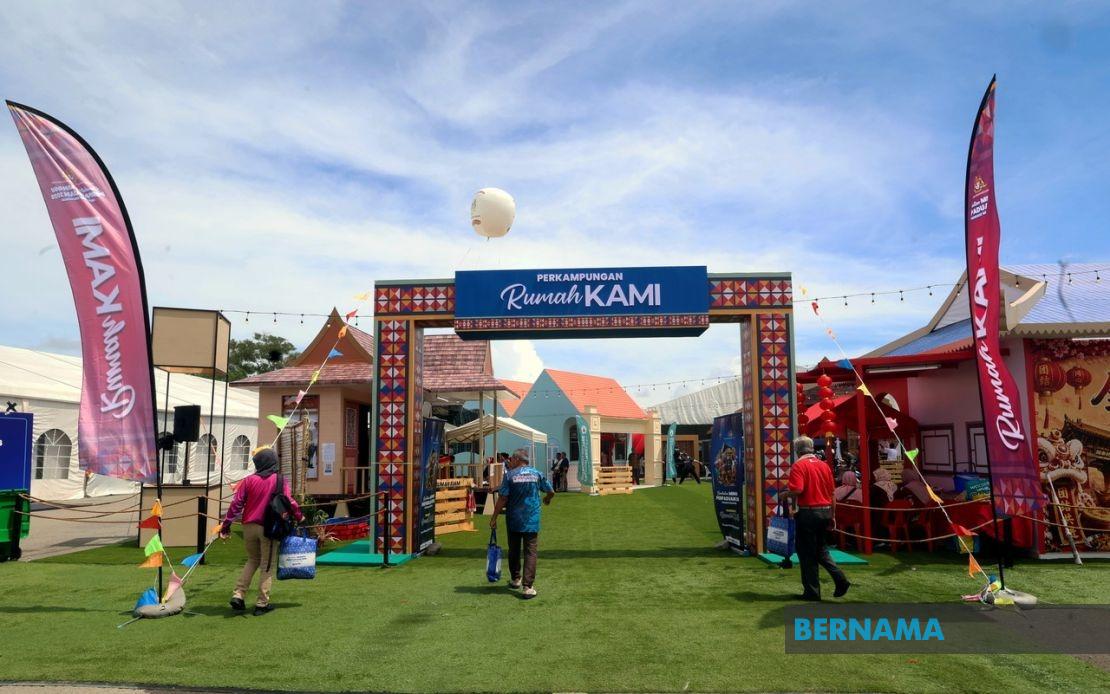
The National Unity Week 2026 celebration concluded in Kota Kinabalu this month with unprecedented attendance figures, drawing 284,448 visitors across its four-day run from June 11 to 14. The achievement marks the highest turnout since the Ministry of National Unity introduced the programme in 2023, signalling growing enthusiasm among Malaysians to engage with the nation's rich tapestry of cultures and traditions at the grassroots level.
Datak Aaron Ago Dagang, the National Unity Minister, attributed the surge in participation to an expanding recognition among ordinary Malaysians of how cultural diversity and heritage form the bedrock of national strength and social cohesion. He underscored that such overwhelming public response demonstrates a tangible appetite across the country to celebrate and learn from one another's backgrounds, transcending the typical top-down approach to nation-building by creating spaces where communities naturally converge and interact.
The ministry has committed to perpetuating the National Unity Week as an annual fixture on Malaysia's national calendar, viewing it as an essential mechanism for assembling citizens across all demographics. Rather than allowing the initiative to remain episodic, planners envision the week as a recurring opportunity that becomes embedded in the nation's civic consciousness, much like other established commemorative events that have become part of the Malaysian identity over generations.
Three exhibition components proved particularly magnetic to visitors throughout the event. The Ethnic Village functioned as an immersive window into everyday practices and routines of Malaysia's principal communities, allowing attendees to witness firsthand how different groups structure their daily existence. This experiential approach transcends passive observation, instead encouraging visitors to engage with cultural practices in genuine contexts rather than abstract displays.
The Ethnic Houses exhibition concentrated specifically on the distinctive architectural and material heritage of smaller and historically underrepresented communities including the Bajau, Melanau, Banjar, Kedayan and Portuguese communities. By spotlighting these groups alongside more prominently featured cultures, the exhibition acknowledged Malaysia's full spectrum of diversity while providing lesser-known communities with platforms to assert their place within the national narrative and historical consciousness.
The Negara Bangsa and Raja Kita Exhibition proved instrumental in cultivating younger Malaysians' connection to national history and contemporary governance structures. Officials noted that young people showed particular enthusiasm for this component, suggesting that properly curated historical exhibitions can successfully penetrate younger demographics when designed with their learning styles and interests in mind, rather than relying on conventional pedagogical approaches.
However, Aaron's remarks contained a crucial caveat regarding the limitations of periodic programming. He stressed that substantive national integration cannot materialise through isolated annual events alone, no matter how well-attended or engaging. Rather, sustained unity demands continuous, multiyear commitment mechanisms that become woven into educational curricula, workplace policies, community organisations and family practices, allowing successive generations to inherit strengthened bonds rather than beginning afresh each year.
Accordingly, the Ministry of National Unity signalled intentions to expand and diversify its platforms and opportunities for cross-cultural interaction throughout the calendar year. This suggests potential expansion beyond the annual week-long event into sustained programming that maintains momentum and deepens relationships forged during the flagship celebration, potentially including school-based initiatives, workplace forums and community-level engagement activities.
Aaron framed the initiative squarely within the Malaysian government's broader MADANI agenda, which posits that durable national unity emerges through articulating and pursuing genuinely shared aspirations that supersede narrow ethnic, religious or geographic interests. This philosophical positioning attempts to move beyond multiculturalism as tolerance toward something more aspirational—a framework where diverse groups recognise mutual benefit and common purpose.
The minister articulated that fortifying national unity demands genuine commitment extending well beyond government structures alone. He specifically identified the private sector, civil society organisations and individual Malaysians as essential partners in constructing the institutional and social infrastructure necessary for harmony. This diffusion of responsibility acknowledges that government initiatives, however well-resourced, cannot succeed without complementary investments and cultural shifts within business communities, grassroots organisations and families.
For Malaysian policymakers and regional observers, the record attendance carries implications beyond the Sabah capital. The strong turnout suggests receptiveness within the Malaysian public to structured opportunities for cultural exchange when properly marketed and programmed with substantive, engaging content. Similar regional governments attempting to build national cohesion within increasingly plural societies may find Malaysia's approach instructive, particularly the emphasis on experiential, community-level engagement over abstract rhetoric about unity.