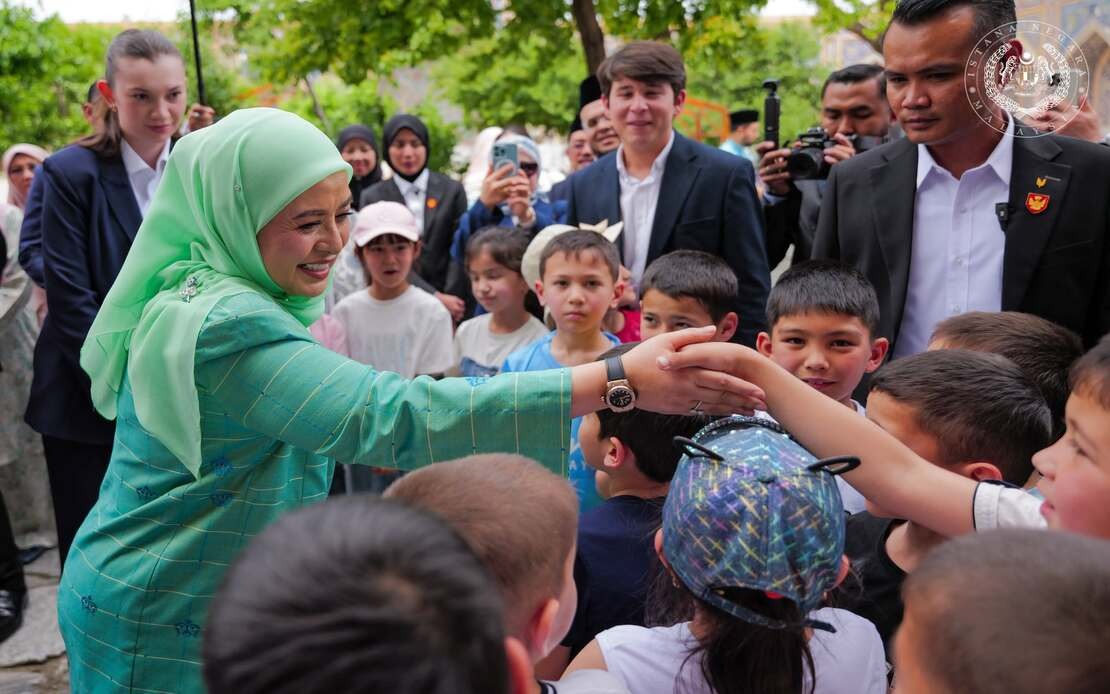
Queen Raja Zarith Sofiah has underscored the critical importance of mutual respect in maintaining the fabric of Malaysian society, identifying it as one of the enduring principles that have allowed the nation to sustain cohesion and stability. Speaking through a message shared on the official Facebook page of Sultan Ibrahim Sultan Iskandar, the Queen articulated how this value has been instrumental in fostering national unity and contributing to the overall well-being of Malaysians across different backgrounds and communities.
The Queen's remarks come at a time when societies globally grapple with polarisation and social fragmentation, making her emphasis on courtesy and reciprocal esteem particularly resonant. By drawing attention to the importance of honouring one another in everyday interactions—both within domestic spheres and in broader public engagements—the Queen has reinforced the notion that harmony is not merely a political construct but a lived practice rooted in personal conduct and interpersonal relationships. This grassroots approach to unity reflects a nuanced understanding of how national cohesion is built and maintained through the cumulative effect of individual choices and behaviours.
In her message, the Queen made a deliberate choice to invoke Islamic teachings, citing a hadith transmitted by the revered scholar Al-Bukhari. The hadith, narrated through Abu Hurairah RA, preserves the words of Prophet Muhammad on the subject of neighbourly conduct and respectful treatment. The prophetic guidance encompasses three interconnected principles: the prohibition against causing harm to one's neighbour, the obligation to honour guests with dignity, and the imperative to communicate with kindness or maintain thoughtful silence. By referencing these teachings, the Queen grounded her message in a religious and moral framework that carries profound weight within Malaysia's Muslim-majority society, which comprises roughly 70 percent of the population.
The selection of this particular hadith is instructive, as it addresses the practical dimensions of respect in daily life rather than abstract philosophical concepts. The teaching emphasises that genuine faith is inseparable from ethical treatment of others, establishing a direct link between spiritual conviction and social responsibility. For Muslims in Malaysia, this reminder serves as both a spiritual refresher and a call to introspection about how their conduct aligns with their professed beliefs. The Queen's highlighting of this message suggests a pastoral concern for reinforcing values that might be at risk of erosion in contemporary society.
During a February visit to Istana Negara, the Queen demonstrated her commitment to these principles through direct engagement with visitors. She warmly interacted with more than 100 international tourists at the main entrance of the palace, an act that transcended ceremonial protocol and embodied the values she articulated in her message. This encounter illustrated how the institution of the monarchy can model the very behaviours and attitudes it advocates, creating a tangible example for the nation to emulate. The warmth and accessibility she displayed towards foreign visitors also conveyed an important message about Malaysian hospitality and openness to the world.
The Queen's graciousness extended beyond perfunctory greetings, reflecting what observers characterised as a genuine concern for both local citizens and international guests. In a nation that derives significant economic benefits from tourism and international relations, this public demonstration of welcoming hospitality carries practical implications. It signals to international visitors that Malaysia values respectful cross-cultural engagement, thereby enhancing the country's soft power and reputation as a destination that prizes courtesy and mutual understanding. The palace's subsequent characterisation of the encounter as reflecting the Queen's concern underscores how royal actions serve as cultural statements with broader implications for national identity and values.
The timing of the Queen's message is noteworthy in the Malaysian context, where questions about social cohesion periodically emerge in public discourse. Malaysia's multicultural and multireligious composition—encompassing Malays, Chinese, Indians, indigenous communities, and others—has generally been sustained through careful constitutional arrangements and a cultural emphasis on tolerance. However, periodic tensions around religious sensitivities, economic inequality, and communal narratives can test this equilibrium. By emphasising mutual respect at the institutional level through the monarchy, the Queen contributes to reinforcing the narrative that diversity need not be a source of discord but rather an opportunity for enriched community life.
The invocation of Islamic teachings while addressing the broader Malaysian population reflects the delicate constitutional position of Islam in Malaysia. As the official religion of the Federation, Islam holds a special status, yet the nation's social contract requires respect for the rights of adherents of other faiths. The Queen's approach—using Islamic sources to advocate for universal values of respect and courteous conduct—demonstrates how religious particularity and civic pluralism can be harmonised rather than viewed as contradictory. This synthesis has been a hallmark of Malaysia's approach to managing religious diversity, and the Queen's reaffirmation of it carries constitutional and social significance.
For Southeast Asia more broadly, the Queen's message offers a counterpoint to narratives about rising intolerance or declining civility in the region. Malaysia, as the region's most religiously diverse major economy and a key player in regional organisations like ASEAN, provides a model—albeit an imperfect one—of how societies might navigate the challenges of maintaining social cohesion in plural contexts. The Queen's emphasis on practical ethics rooted in religious tradition suggests that appeals to respect need not rely solely on secular liberal arguments but can draw strength from the moral resources embedded within communities' own traditions.
The palace's framing of the Queen's remarks as reminders to Muslims in the country does not diminish their relevance to the broader population. The universal principles articulated—avoiding harm to neighbours, honouring guests, and speaking kindly or remaining silent—transcend sectarian boundaries and reflect ethical principles found across Malaysia's various religious traditions and cultural communities. Whether grounded in Islamic ethics, Confucian philosophy, Buddhist compassion, or other moral frameworks, the commitment to treating others with dignity emerges as a shared value that can anchor national unity.
Moving forward, the Queen's message may serve as a touchstone for public discourse around social values and national identity in Malaysia. As the institution of the monarchy plays an important symbolic and unifying role in Malaysian constitutional democracy, statements from the royal household carry weight in shaping national conversations. By positioning mutual respect and courtesy as non-negotiable foundations of Malaysian society rather than optional virtues, the Queen has reinforced their importance at a moment when these qualities face pressures from various sources—social media polarisation, economic anxiety, and competing political narratives.
The emphasis on both respecting neighbours and honouring guests also carries implications for Malaysia's international standing and regional role. As the country seeks to strengthen economic partnerships, enhance its diplomatic influence, and attract investment and tourism, the cultural attributes of respect and hospitality become strategic assets. The Queen's articulation of these values, combined with her public demonstration of them through her interactions with foreign visitors, contributes to the projection of a Malaysian identity characterised by openness and civility—qualities increasingly valued in an interconnected world where soft power and cultural reputation matter significantly.

