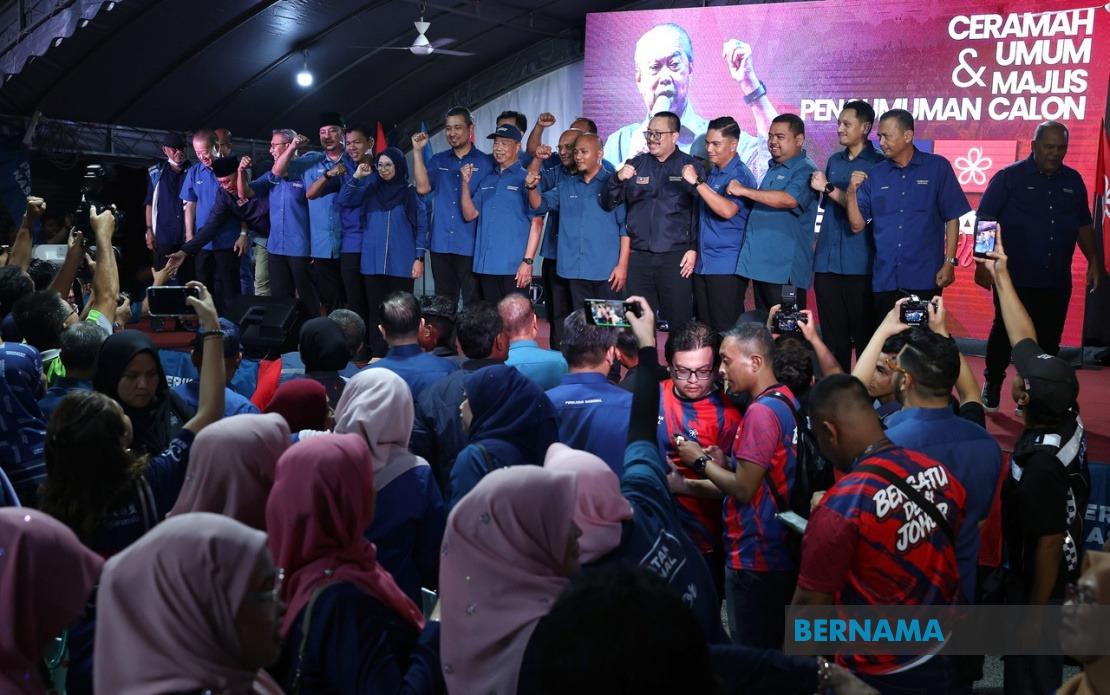
Tan Sri Muhyiddin Yassin, president of Parti Pribumi Bersatu Malaysia, has formally announced the party's 16 candidates contesting in the forthcoming Johor State Election, marking a significant moment in the state's political calendar as the campaign season intensifies. The announcement came during a candidates declaration and public ceramah held at the Pagoh Parliamentary Service Centre in Taman Pagoh Jaya, Muar, bringing together party loyalists and local residents eager to hear from their prospective representatives.
The timing of Bersatu's candidate unveiling reflects the compressed electoral schedule set by the Election Commission, which designated June 27 as nomination day for the election. This tight timeline gives campaigners just over two weeks from candidate registration to election day on July 11, requiring parties to move swiftly in mobilising their ground machinery and public engagement efforts. The accelerated pace underscores the urgency that all participating coalitions face in reaching voters across Johor's diverse constituencies.
With the Johor State Assembly having been dissolved on June 1, the state has been operating in a caretaker capacity during what proved to be an extended interim period. This dissolution triggered the need for fresh elections across all state seats, presenting Bersatu with an opportunity to test its electoral appeal in one of Malaysia's most significant states. The party's decision to field candidates across the full complement of constituencies demonstrates its ambition to expand its presence and influence within Johor's legislative body.
Among the candidates announced was Mohd Idzharruddin Mohd Nasirruddin, who will represent the N8 Bukit Pasir constituency. This particular seat carries historical and demographic significance within the state assembly, and Bersatu's selection reflects strategic considerations about where the party believes it can consolidate or gain ground. The composition of the broader candidate slate, while not fully detailed in the announcement, would typically reflect a mix of incumbents seeking re-election, rising party figures, and community representatives chosen to broaden the party's appeal.
For Malaysian observers and political analysts, Bersatu's electoral positioning in Johor carries implications beyond the state level. As a component of the governing Perikatan Nasional coalition at the federal level, the party's performance in Johor will be closely scrutinised as a barometer of public sentiment toward the current administration. Strong results could reinforce Perikatan's legitimacy, while poor showings might signal voter dissatisfaction with federal policies or governance.
The Johor election also presents a crucial test for Bersatu's organisational capacity and grassroots networks. Since its formation, the party has undergone various phases of evolution, and state elections remain vital platforms for demonstrating party cohesion and electoral viability. The scale of Bersatu's campaign machinery, the resonance of its messaging, and the ability of candidates to connect with constituents will all factor into how the party fares relative to competing coalitions.
Bersatu's participation in the Johor polls also reflects the broader competitive landscape of Malaysian electoral politics, where multiple coalitions vie for voter support. The announcement of candidates typically triggers responses from rival parties, leading to a cascade of campaign activities across the state. Voters in Johor constituencies can expect intensive ground-level engagement, door-to-door canvassing, and public forums as candidates and their supporters attempt to build momentum.
From a regional perspective, the Johor election holds significance for Southeast Asia's political observers, as the state represents one of Malaysia's economic and demographic powerhouses. How voters in Johor respond to the various parties and coalitions contesting the election may offer insights into broader trends within Malaysian society, including attitudes toward political representation, economic management, and social issues that resonate across the region.
The compressed campaign period also means that candidate quality, name recognition, and established community relationships will likely weigh more heavily than extended public engagement. Voters may have less time to assess new candidates, potentially advantaging those with existing visibility or strong local networks. This dynamic may have influenced Bersatu's selection process as the party aimed to balance factional interests within the party hierarchy with the practical necessity of fielding competitive candidates.
As the election campaign unfolds, Bersatu's 16-candidate slate will compete against representatives from other coalitions and independent candidates, each hoping to secure seats in the 56-member Johor State Assembly. The electoral contest will ultimately determine the composition of the state government and the direction of policy in a region that contributes substantially to Malaysia's economic output and serves as home to millions of citizens whose livelihoods depend on effective state governance.
The June 27 nomination day will formalise the full slate of candidates across all constituencies, allowing Johor voters to see the complete picture of who is contesting. Between that formal registration date and the July 11 polling day, the political landscape will crystallise further as parties make their final pushes and voters make their choices. Bersatu's performance will be one of several outcomes that determine the state's political direction and the broader implications for national politics in the months ahead.

