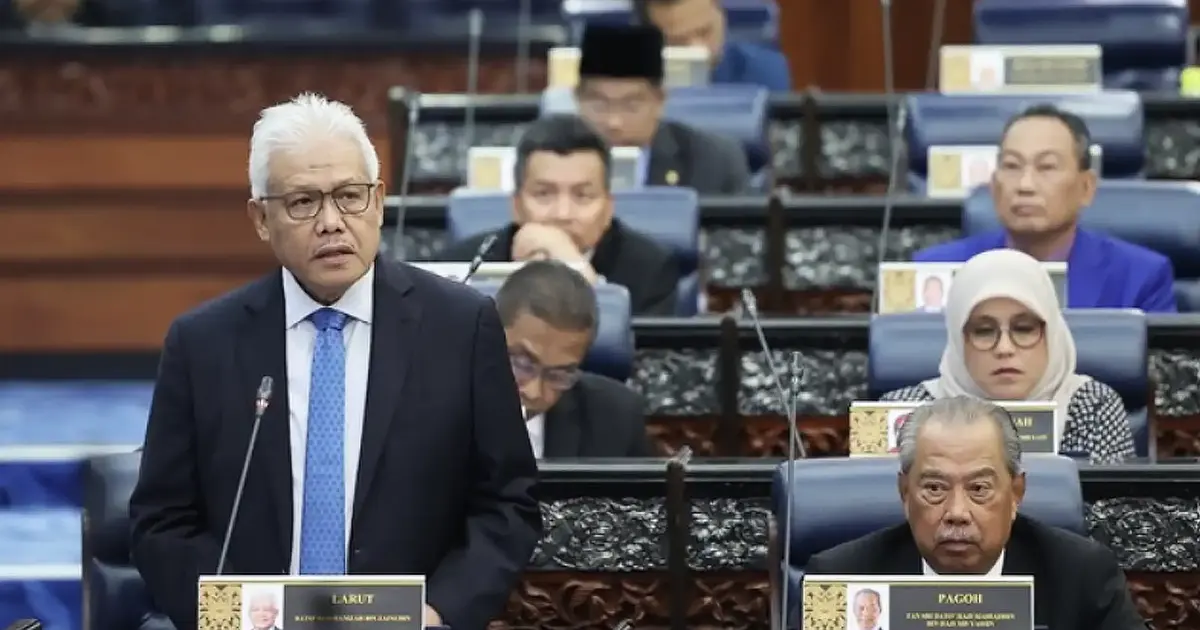
Dewan Rakyat Speaker Johari Abdul has disclosed that Tan Sri Muhyiddin Yassin made a formal request for a change in his seating arrangement within the chamber, adding another layer to the ongoing political reconfiguration in Malaysia's Parliament. The speaker's revelation comes as Parliament continues to navigate shifting alliances and factional reorganisation following recent developments in the ruling coalition and opposition ranks.
Johari Abdul, who holds the constitutional responsibility of overseeing parliamentary proceedings and maintaining order within Dewan Rakyat, did not elaborate on the specific reasons Muhyiddin cited for seeking the relocation. However, such requests are not entirely uncommon in parliamentary practice, though they typically reflect underlying changes in a lawmaker's political standing or affiliation. Seating arrangements in legislatures frequently carry symbolic significance, particularly when members move between government and opposition benches or experience shifts in their factional positioning within broader political groupings.
Muhyiddin, who served as Prime Minister from March 2020 to August 2021 under the Perikatan Nasional administration, has maintained his seat in Dewan Rakyat as the MP for Pagoh. His request for a seat change arrives during a period of considerable flux within Malaysian politics, where coalition alignments have undergone substantial restructuring. The former premier's faction within Perikatan Nasional has faced various pressures and realignments in recent months, contributing to the broader instability characterising the current Parliament.
The timing of such a request often reflects internal party dynamics or broader coalitional shifts. Since the 2022 general election, Malaysian politics has been marked by fluid alliances, with various blocs jostling for influence and negotiating their positions within the broader parliamentary ecosystem. Muhyiddin's political positioning has proven particularly volatile during this period, as the Perikatan Nasional coalition he led has struggled to maintain cohesion against the government coalition's attempts to consolidate power.
Simultaneously, Johari Abdul has formally acknowledged receipt of correspondence confirming the opposition leadership designation of Hamzah Zainudin, the Member of Parliament representing Larut. This official recognition represents an important procedural development, as the speaker's acknowledgment of opposition leadership carries constitutional weight in parliamentary operations. The role of opposition leader comes with specific parliamentary functions and privileges, including the right to lead questioning during question time and represent the opposition in broader parliamentary negotiations.
Hamzah Zainudin's appointment as opposition leader reflects organisational changes within the opposition benches themselves. As a senior figure with extensive parliamentary experience, his assumption of this formal role suggests the opposition is seeking to strengthen its institutional framework and present a more unified alternative government structure to the electorate and current administration. The Larut MP's elevation underscores attempts by opposition factions to consolidate their positioning ahead of what many observers anticipate could be an earlier-than-scheduled election.
For Malaysian political observers, these developments illuminate the fundamentally unstable nature of the current parliamentary composition. Unlike many democratic systems with more structured electoral cycles, Malaysia's Parliament has operated with persistent uncertainty regarding government stability and coalition viability. The combination of Muhyiddin's seat relocation request and the formalisation of opposition leadership suggests ongoing repositioning among key political actors as various blocs attempt to secure tactical advantages.
The broader implications for Southeast Asian politics remain noteworthy. Malaysia's parliament continues to attract international attention as a case study in coalition management and institutional adaptation under conditions of political fragmentation. How the government and opposition utilise their respective organisational structures—as reflected in these procedural matters—may influence strategic calculations regarding parliamentary support and electoral positioning in coming months.
From a governance perspective, these administrative and procedural developments highlight the work of parliamentary institutions in accommodating legitimate requests from lawmakers while maintaining chamber decorum and operational efficiency. Speaker Johari Abdul's management of such matters reflects the delicate balance required when presiding over legislatures characterised by shifting factional boundaries and competing visions for national direction.
Looking forward, the formal recognition of opposition leadership and any subsequent changes to parliamentary seating may serve as barometers for broader political developments. Observers monitoring Malaysian politics should note that such seemingly technical parliamentary matters often presage more substantive coalition negotiations or electoral positioning that become apparent to the public only after several months of behind-the-scenes manoeuvring.

