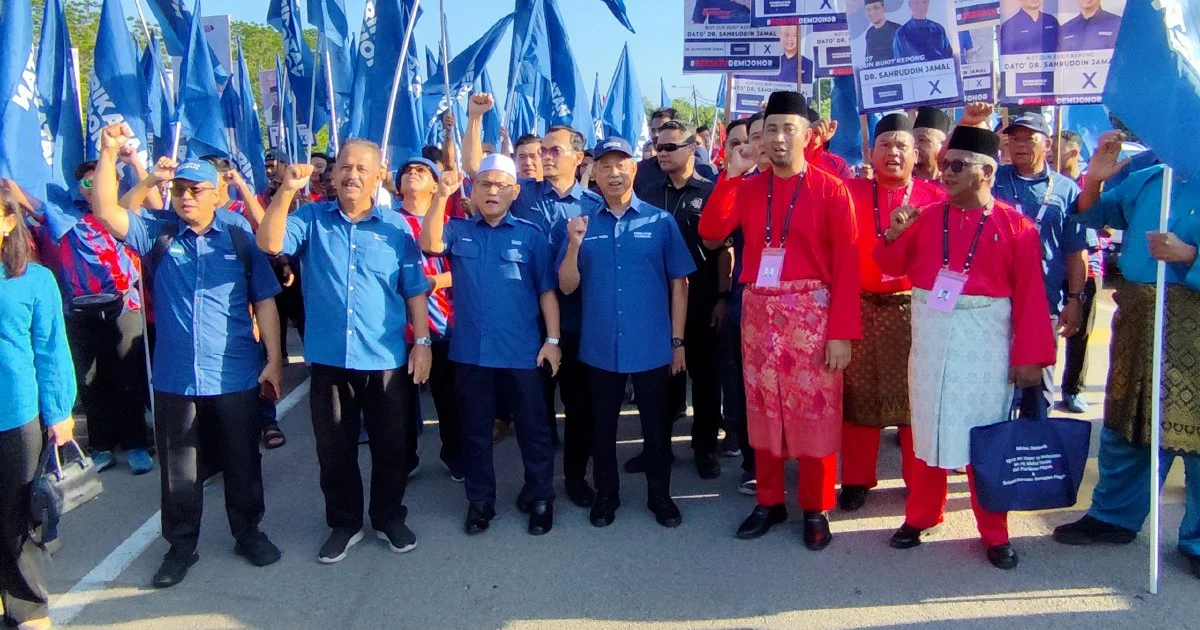
Tan Sri Muhyiddin Yassin, president of Bersatu, made a high-profile appearance at the Pagoh Sports Complex Hall nomination centre early Thursday morning, arriving just before 8.45 am to publicly endorse Sahruddin's candidacy in the Bukit Kepong constituency. The move represents a visible show of party unity and confidence in the candidate as polling approaches for the state election.
The timing of Muhyiddin's attendance underscores the strategic importance Bersatu places on the Bukit Kepong seat. By personally accompanying Sahruddin through the nomination process, the party leader is sending a clear signal to grassroots supporters that this contest warrants serious investment of organisational resources and high-level political capital. Such gestures carry particular weight in Malaysian electoral politics, where ceremonial party support often translates to mobilisation on the ground.
Bukit Kepong's significance extends beyond a single constituency race. The seat represents part of Johor's broader political landscape, where control of state government and parliamentary influence remains contested among major coalitions. Bersatu's performance here will contribute to the party's overall standing in the state and potentially affect coalition dynamics at the federal level, making even individual candidacy endorsements matters of consequence.
Muhyiddin's personal engagement with nominations matters reflects the competitive pressures facing Bersatu. As a political force that rose to prominence through the Sheraton Move in 2020 and later helped form the current federal government coalition, the party maintains considerable stakes in demonstrating electoral viability. Johor contests provide a testing ground for the party's appeal beyond its historical strongholds and its ability to compete against established rivals.
Sahruddin's candidacy under the Bersatu banner comes amid broader realignments in Malaysian politics. The candidate's acceptance by party leadership and Muhyiddin's visible support suggest confidence in his electoral prospects, though Johor elections have historically produced unpredictable results. Voters in the state have shown willingness to shift allegiances based on local issues, development promises, and candidate credibility rather than purely national political trends.
The Pagoh nomination centre served as the physical focal point for this political theatre, with the sports complex hall converted into an official venue for candidate registration and vetting. Such centres become temporary hubs of political activity during election periods, attracting party machinery, media scrutiny, and supporter turnouts that serve as informal indicators of organisational strength and public sentiment.
Bersatu's strategy of deploying Muhyiddin at nomination centres reflects the party's understanding that early campaign momentum matters. The presence of a national party president at a constituency-level event generates media coverage that amplifies the candidate's profile beyond local awareness, providing free publicity and suggesting that the candidate enjoys backing from those with access to decision-making power and government resources.
For Malaysian and Southeast Asian observers tracking political developments in the region's largest democracy, such moments reveal how coalition politics operates at ground level. The personal investment by senior figures in individual candidacies illustrates the importance of maintaining internal party cohesion and managing the expectations of diverse interest groups within broader political alliances. This practice contrasts with more centralised systems and highlights Malaysia's reliance on multi-layered consensus-building.
The broader context of Johor elections carries implications for national governance. The state government controls significant resources and has historically served as a power base for various national political figures. Bersatu's performance in Johor directly affects its leverage within federal coalitions and its credibility when negotiating ministerial portfolios, policy direction, and patronage allocation at the national level.
Muhyiddin's appearance also reflects the ongoing evolution of Bersatu's political identity. Since its formation, the party has sought to establish itself as a serious competitor rather than merely a splinter faction or coalition partner. Competitive performances in state-level elections, particularly in a major state like Johor, contribute to building that independent brand and attracting candidates of quality who might otherwise gravitate toward established parties with deeper organisational infrastructure.
The nomination process itself carries ceremonial and practical significance. Beyond the registration requirements, the public appearance of party leadership alongside candidates sets expectations for campaign intensity and resource allocation. Constituents and party members interpret such signals as indicators of which seats party headquarters considers winnable, deserving of investment, and central to broader electoral strategy.

