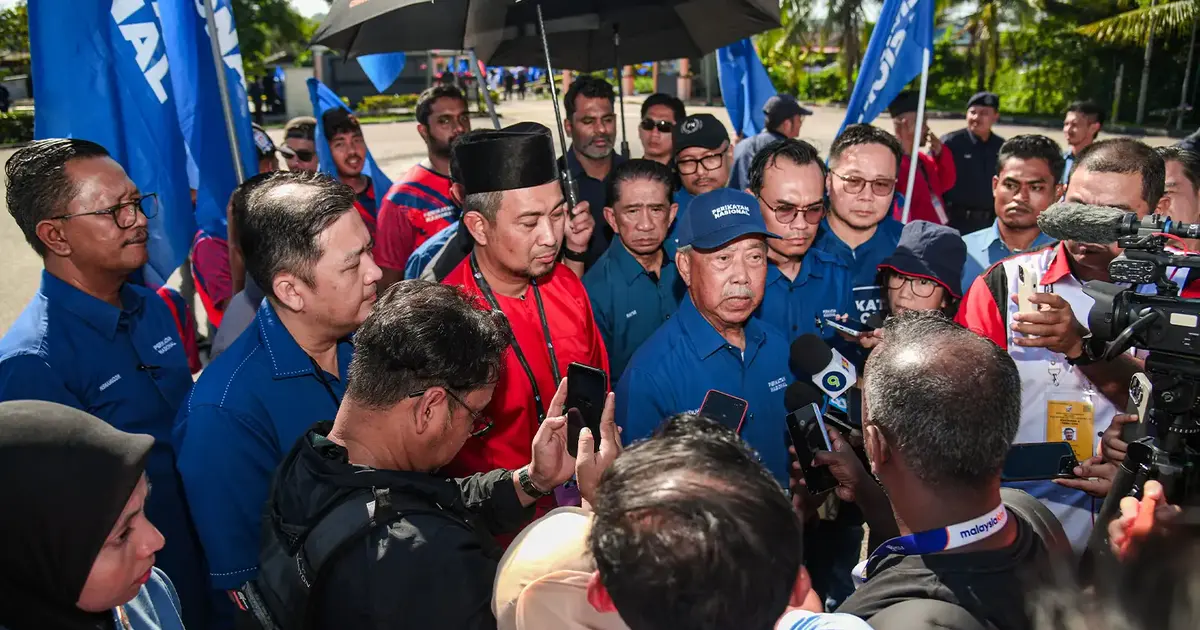
Perikatan Nasional's ability to form governments at the state level appears strengthened by the coalition's expanding network of political allies, according to Bersatu president Muhyiddin Yassin, who expressed confidence in the bloc's near-term prospects for expansion beyond its current territorial holdings.
Muhyiddin's optimistic assessment reflects a deliberate repositioning of Perikatan Nasional within Malaysia's fragmented political landscape, where state governments have become critical power bases for opposition coalitions seeking to challenge federal authority. The Bersatu leader's public confidence may signal preparedness for state-level contests or, alternatively, negotiations aimed at securing defections from rival coalitions that would deliver government control without requiring electoral contests.
The coalition's strength derives not solely from its three core members—Bersatu, PAS, and Gerakan—but increasingly from relationships cultivated with parties operating outside formal coalition structures. This external network substantially expands the parliamentary mathematics available to Perikatan Nasional when pursuing state-level ambitions, effectively multiplying the coalition's leverage in fragmented state legislatures where single-party dominance has become less common.
Muda's inclusion as a potential ally represents a particularly significant development. The youth-focused party, though modest in its current parliamentary representation, commands considerable appeal among younger urban voters and possesses organizational capacity in demographic segments where traditional Perikatan Nasional components show relative weakness. Such complementary strengths suggest that coalition partnerships could deliver broader electoral appeal than either force could achieve independently.
Penikatan Nasional's recent organizational consolidation and expanded campaign infrastructure have positioned the bloc for more aggressive state-level engagement. Where the coalition previously concentrated primarily on Peninsular Malaysia, recent moves indicate broader geographical ambitions, with enhanced institutional frameworks designed to coordinate efforts across multiple state contests simultaneously rather than pursuing isolated, localized strategies.
The Malaysian political environment has grown substantially more fluid following the 2022 general election, which fractured previous voting patterns and left numerous state legislatures without commanding majorities. This fragmentation creates multiple pathways for opposition coalitions to secure governance—whether through electoral victory, parliamentary arithmetic involving independent representatives, or negotiated coalition arrangements with parties willing to cross traditional dividing lines.
For Perikatan Nasional specifically, the coalition's ability to attract external allies reflects both its improved organizational credibility and the absence of compelling alternatives for parties seeking relevance within opposition frameworks. Muda and similar organizations occupy political space insufficiently large for independent viability yet insufficiently ideologically distinctive to align naturally with ruling coalitions, making partnerships with Perikatan Nasional strategically logical.
State-level expansion would provide Perikatan Nasional with considerably increased political influence. State governments control substantial budgetary allocations, employ significant workforces, and generate patronage networks critical for sustaining party organizational health. Each additional state captured by the coalition strengthens its bargaining position in federal-level negotiations and enhances its capacity to develop internal institutional depth through resource access.
The coalition's confidence in its expansion potential should be understood within the context of federal ruling coalitions' own vulnerabilities. Pakatan Harapan, currently governing at the federal level, faces internal tensions and declining support in critical demographic segments, particularly among older voters and rural populations where Perikatan Nasional components maintain considerable traditional strength. This federal weakness directly translates into state-level vulnerability, particularly where Perikatan Nasional has established organizational presence.
Muhyiddin's public statements regarding coalition potential also serve strategic communications purposes beyond factual assessment of parliamentary arithmetic. By publicly emphasizing Perikatan Nasional's strength and external support networks, the coalition leadership reinforces its credibility with potential allies considering commitment of political resources and potentially influences voter calculations in regions where electoral contests appear uncertain or competitive.
The emphasis on external allies like Muda also subtly broadens Perikatan Nasional's apparent ideological bandwidth and demographic reach. This positioning allows the coalition to present itself as encompassing diverse political perspectives rather than representing narrow interest coalitions, potentially appealing to voters motivated by anti-incumbency sentiment rather than positive attachment to Perikatan Nasional's core components.
For Malaysian political observers, Muhyiddin's statements warrant attention as indicators of coalition strategic timing. Public confidence expressions sometimes precede announcement of concrete electoral participation plans or state-level alliance formations. The repeated emphasis on available allies suggests coalition leadership has completed internal assessments regarding viability and resource sufficiency for expanded state-level engagement.

