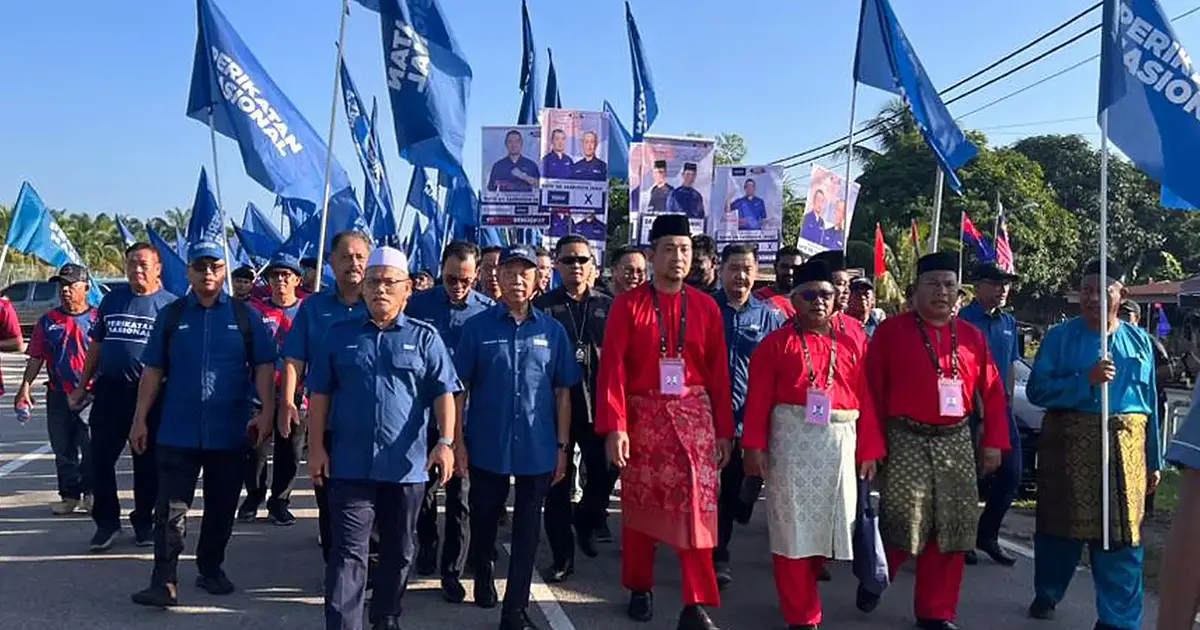
Perikatan Nasional mustered considerable grassroots momentum at Bukit Kepong as party figurehead Muhyiddin Yassin arrived to galvanise the coalition's electoral machine around Dr Sahruddin Jamal, the two-term state assemblyman fielded as Bersatu's standard-bearer for the constituency.
The gathering underscored the tactical importance Perikatan places on retaining the seat, with hundreds of party faithful converging to demonstrate the coalition's organisational depth and voter mobilisation capability. Such mass turnouts serve multiple purposes in the Malaysian political playbook: they energise party loyalists, generate media visibility, and create a visible impression of momentum that translates into voter confidence on the ground.
Dr Sahruddin Jamal's re-nomination as Bersatu's candidate reflects the party's confidence in the incumbent's legislative record. Having served two terms as assemblyman, he carries the advantage of established constituency networks and demonstrated electoral resilience. In Malaysia's competitive state-level politics, retaining seasoned incumbents signals continuity and institutional memory, particularly valuable when defending marginal constituencies or those vulnerable to swing voting.
Muhyiddin's personal involvement in the campaign rally carries symbolic weight within Perikatan's hierarchical structure. His attendance signals that party leadership views this contest as strategically significant—whether for maintaining the coalition's state assembly presence, testing voter sentiment in a particular demographic zone, or simply sustaining morale among grassroots operatives. The presence of a senior political figure can substantially amplify local campaign narratives and attract journalistic coverage that smaller-scale events rarely achieve.
Bukit Kepong's political complexion merits examination in the broader context of Malaysian electoral dynamics. Constituencies bearing Malay-centric names and located in Peninsular Malaysia historically reflect particular voter demographic compositions, though recent electoral trends demonstrate increasing volatility across such seats. The mobilisation of hundreds of supporters suggests Perikatan expects competitive pressure in the contest, necessitating elevated ground-level activity to consolidate its support base.
Bersatu's role within Perikatan continues to evolve following the coalition's formation and subsequent political realignments. The party's candidacy in Bukit Kepong represents its attempt to maintain electoral presence across multiple states while navigating the complex coalition mathematics that characterise modern Malaysian politics. Bersatu's performance in such contests frequently generates implications for the coalition's broader negotiating position, particularly if general elections loom or coalition arrangements face renegotiation.
The campaign dynamics in Bukit Kepong also reflect how Malaysian political parties leverage on-ground activities to build narrative momentum. Mass gatherings allow parties to document supporter turnout through photography and video, subsequently circulated via digital platforms to reinforce perceptions of popularity and electoral viability among voters who did not attend. In Malaysia's increasingly social-media-inflected political environment, such imagery carries considerable weight in shaping voter attitudes.
For regional observers, Perikatan's campaigning intensity in specific constituencies offers a barometer of coalition health and resource allocation priorities. Dedicating leadership bandwidth and mobilising large supporter contingents requires organisational capacity, funding, and strategic judgement about where electoral outcomes carry the greatest significance. The Bukit Kepong campaign investment suggests the coalition views the seat as either defensible or vulnerable enough to warrant heightened attention.
Dr Sahruddin Jamal's candidacy encapsulates the calculus many incumbents face in Malaysian politics. Demonstrating legislative achievements during tenure becomes essential for re-election, yet grassroots sentiment frequently pivots on factors beyond legislative records—demographic shifts, economic grievances, or appeal of opposition messaging can rapidly alter electoral landscapes. The scale of Perikatan's campaign mobilisation suggests party strategists perceive this seat as contested enough to require substantial ground-level conviction-building.
The broader implications for Malaysia's political trajectory merit consideration. Perikatan's performance in state-level contests contributes to the coalition's national positioning and influences intra-coalition dynamics with its partner parties. Success in constituencies like Bukit Kepong strengthens Perikatan's bargaining leverage in future coalition negotiations, while underperformance prompts questions about voter appetite and organisational effectiveness. For Malaysian voters observing these campaigns, the intensity of party engagement often reflects genuine electoral uncertainty rather than assured outcomes.
Looking forward, Bukit Kepong's result will join a growing dataset of constituency-level indicators signalling broader voter sentiment shifts across Malaysia. State-level elections increasingly function as bellwethers for national political direction, with individual contests accumulating into patterns that strategists scrutinise. The turnout and reception Dr Sahruddin Jamal receives from the hundreds of supporters mobilised by Muhyiddin's involvement will yield tangible data about voter receptivity that Perikatan will interpret alongside comparable contests elsewhere.

