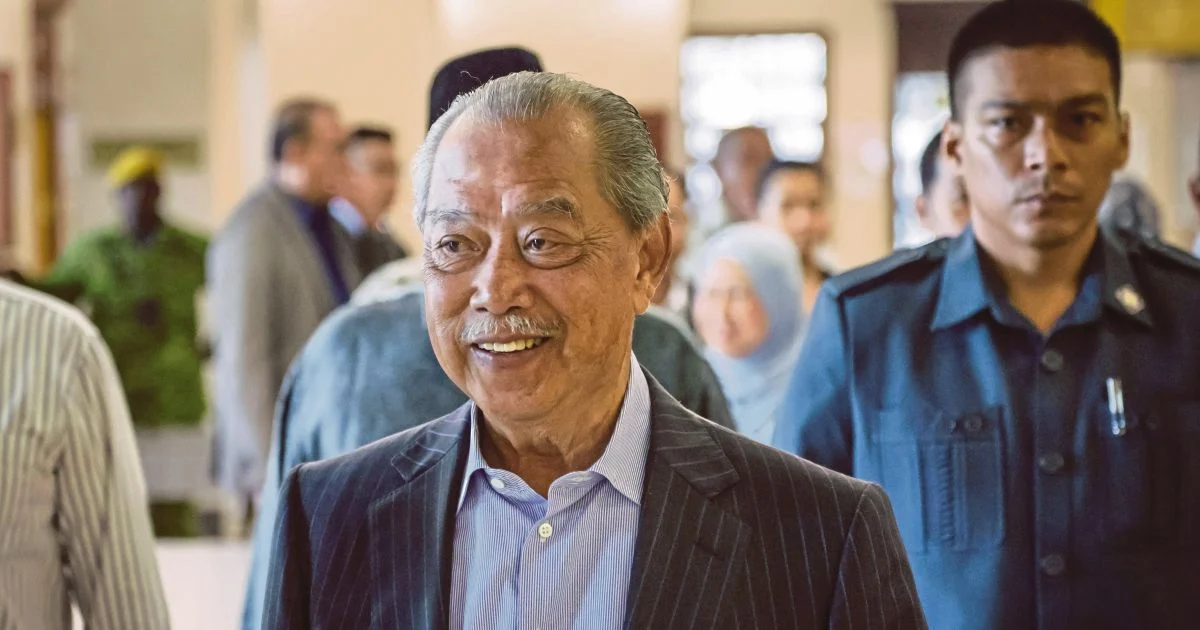
Tan Sri Muhyiddin Yassin has rejected suggestions that Perikatan Nasional faces an insurmountable disadvantage in the upcoming Johor state election, arguing that the coalition retains a realistic pathway to power despite contesting fewer than half the legislature's available seats. The Bersatu president made his remarks in Pagoh, signalling the opposition bloc's determination to make strategic inroads in a state where Barisan Nasional has maintained considerable electoral dominance for decades.
The decision to field candidates in 33 of Johor's 56 state assembly constituencies reflects a calculated approach by Perikatan Nasional rather than a sign of weakness, according to Muhyiddin's framing. This strategy suggests that the coalition has identified specific battleground areas where it believes it can win sufficient mandates to either form government independently or negotiate a coalition arrangement with independent candidates and other political actors. The approach marks a shift from broad-based campaigns toward targeted competition in constituencies where polling data or ground sentiment indicates greater receptiveness to PN's message.
Johor's political landscape presents a unique complexity for opposition movements. The state has been governed by Barisan Nasional since Merdeka, giving the coalition's machinery considerable institutional advantage, established networks within state administration, and deep roots in communities across all districts. For Perikatan Nasional to mount a credible challenge while limiting its candidate slate to 59 percent of available seats reflects either supreme confidence in the quality of those specific candidacies or a pragmatic acknowledgement of resource constraints. The coalition's ability to concentrate its energies and campaign machinery into targeted areas could theoretically yield disproportionate returns if execution proves effective.
Muhyiddin's public confidence also reflects recent shifts in Malaysia's political dynamics. The formation of Perikatan Nasional from the remnants of earlier coalitional arrangements, combined with Bersatu's positioning as a predominantly Bumiputera-focused party with appeal beyond traditional constituencies, has created new competitive possibilities in state-level contests. This reconfiguration differs markedly from the long-established contest between Barisan Nasional and Pakatan Harapan that dominated Malaysian politics for the preceding decade.
The Johor election carries implications extending well beyond the state's boundaries. Success here would provide Perikatan Nasional with its largest state government and a significant political base for national positioning. Conversely, a poor showing would signal that despite national-level fluctuations in political sentiment, traditional state power structures remain resilient and difficult to dislodge. The state accounts for a substantial portion of Malaysia's economic output and parliamentary representation, making its political direction relevant to the broader national narrative.
Independent candidates and smaller parties also feature in Johor's electoral calculation. The 56-seat assembly means that winning 29 seats would theoretically provide a single-party majority, but coalitional arrangements become necessary if no party achieves this threshold. With Barisan Nasional's historical strength, Perikatan Nasional's 33-seat campaign, and smaller players potentially claiming marginal seats, the final outcome could depend heavily on post-election negotiations and defections. This uncertainty injects genuine unpredictability into what might otherwise be a settled contest.
The decision to contest 33 seats rather than offering a complete slate suggests that Perikatan Nasional has conducted granular analysis of voting patterns and demographic trends across constituencies. Modern political strategists increasingly recognize that maximising impact does not always mean maximum candidate deployment. Concentrating resources, volunteer effort, and leadership attention on winnable seats often produces better overall outcomes than spreading thin across hostile terrain. However, this approach also means that PN accepts losing deposits in numerous constituencies and cedes ground uncontested to Barisan Nasional in areas judged unwinnable.
Muhyiddin's optimism must be interpreted within the context of Bersatu's evolution since leaving Pakatan Harapan. The party has rebranded itself as distinctly Malay-Muslim in orientation, which could resonate in areas where Johor's electorate perceives traditional values as threatened by metropolitan-influenced governance. This messaging may prove particularly effective in rural and semi-urban constituencies that feel disconnected from national political debates increasingly centred on urban, pluralistic governance models.
The confidence expressed from Perikatan Nasional's leadership also reflects awareness that Johor's electorate is not monolithic. While Barisan Nasional commands overall advantages, pockets of opposition sympathy exist throughout the state, particularly in urban centres and among younger demographics. Winning these clusters decisively, while accepting losses elsewhere, could yield a surprising aggregate if turnout patterns favour PN supporters over Barisan Nasional's traditional base.
For Malaysian political observers, Muhyiddin's stance underscores how contemporary electoral mathematics increasingly depends on coalition arrangements and cross-party negotiations rather than simple vote plurality. A party winning fewer seats can theoretically form government if it secures sufficient post-election support from other players. This reality transforms Johor's contest from a straightforward Barisan Nasional versus Perikatan Nasional duel into a more complex multi-player contest where multiple pathways to power remain plausible. The 33-seat strategy represents PN's calculated bet that one such pathway leads to the Chief Minister's office.

