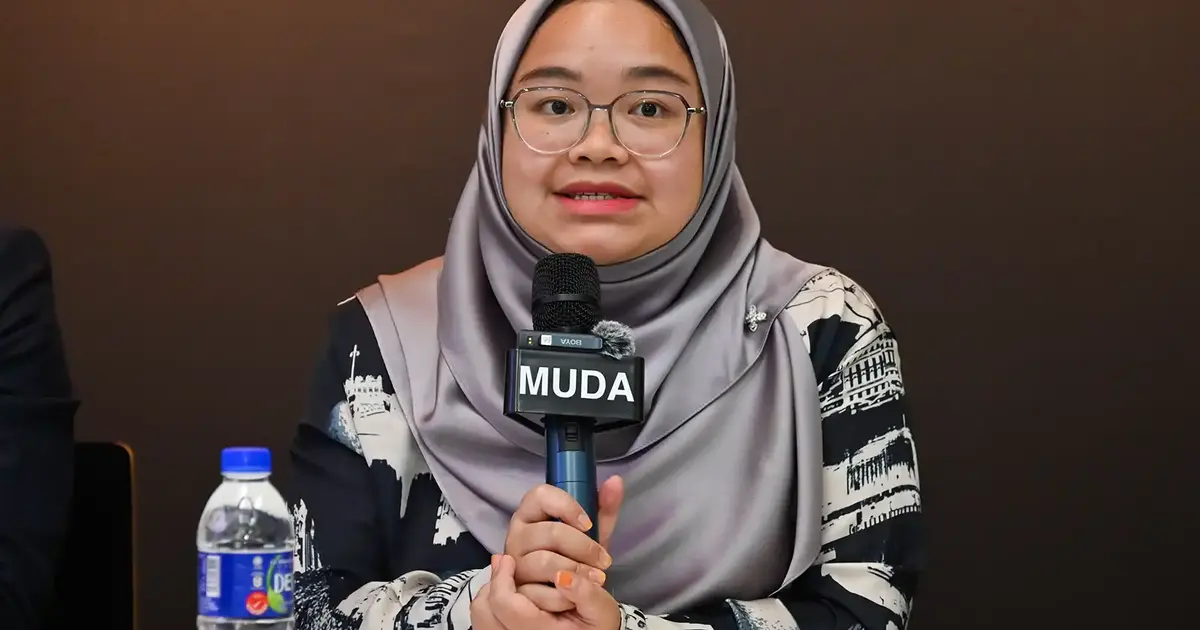
Muda has announced a significant change in its representation for the Puteri Wangsa parliamentary constituency, naming Rashifa Aljuneid as its candidate for the July 11 Johor state election. The decision marks a strategic shift for the party, with Muda president Amira Alia declining to contest the seat she currently holds.
The choice of Aljuneid represents an attempt by the reform-focused party to strengthen its position in this Johor-based constituency. Puteri Wangsa, located in the southern Johor region, has emerged as an important electoral battleground in recent years, with significant demographic changes shaping its political complexion. Muda's decision to field a new candidate suggests the party is recalibrating its approach to maximise its appeal and competitiveness in what is expected to be a closely contested three-cornered or four-cornered fight.
Amira Alia's decision not to defend her seat warrants careful examination within the context of Malaysian opposition politics. Since Muda's formation in 2020, the party has positioned itself as an alternative voice offering generational renewal and fresh perspectives on governance. The party president's stepping back from her parliamentary seat may reflect internal strategic calculations about resource deployment, candidate positioning, or broader reassessment of the party's trajectory ahead of anticipated general elections. Such moves are common in Malaysian politics when parties seek to optimise their chances across multiple constituencies or when leadership figures opt to focus on organisational rather than legislative responsibilities.
Rashifa Aljuneid's nomination brings her into the frontline of Johor politics during a crucial electoral moment. The July 11 election is significant not only for Johor's state assembly but also as a bellwether for national political sentiment. Results from this contest will provide valuable indicators about voter preferences across different regions, particularly regarding the viability of reform-oriented parties in states where traditional political establishments remain entrenched. Muda's performance in Puteri Wangsa and other constituencies it contests will contribute to the broader narrative about whether Malaysians are receptive to the party's messaging about institutional accountability, anti-corruption, and good governance.
The timing of this announcement reflects the compressed electoral calendar that political parties now operate within. With the election date confirmed, Muda must move swiftly to consolidate its organisational machinery, mobilise volunteers, and build momentum in target constituencies. For a relatively young party with limited financial resources compared to established players, strategic candidate selection becomes even more critical. Each nomination carries outsized significance when the party lacks the institutional advantages of longer-established political movements.
Johor state politics has undergone substantial transformation over the past two decades. Once considered a Barisan Nasional stronghold, the state has seen increased electoral competition from opposition coalitions. The presence of Muda as a distinct electoral force in Puteri Wangsa and other constituencies introduces new complexity into the political landscape, potentially fragmenting opposition votes or creating fresh coalition dynamics. The outcomes in constituencies where Muda contests will illuminate whether Malaysian voters are prepared to embrace newer parties or whether they continue gravitating toward more established alternatives within the opposition ecosystem.
For Muda specifically, the July 11 election represents an opportunity to demonstrate growing relevance beyond the federal level, where the party achieved notable success in the 2022 general elections through its concentration in urban constituencies. State elections require different organisational capabilities, including stronger grassroots presence and deeper community relationships. Aljuneid's candidacy in Puteri Wangsa will be carefully scrutinised for what her profile and campaign approach reveal about Muda's strategic priorities and its assessment of what messaging resonates with Johor voters.
The broader context of Johor politics includes the state's economic importance as a manufacturing and logistics hub and its proximity to Singapore, which shapes public discourse around infrastructure, cost of living, and cross-border governance issues. Candidates contesting in constituencies like Puteri Wangsa must address concerns that resonate locally while articulating how they would advance state and national interests simultaneously. Muda's positioning on these issues through Aljuneid's candidacy will partly determine the party's electoral trajectory in this crucial state.
Amira Alia's continued role as Muda president while not defending Puteri Wangsa represents a deliberate organisational choice that distinguishes between party leadership and legislative representation. This separation may allow her to focus on strengthening Muda's internal structures, forging strategic alliances, and developing policy platforms ahead of the general election cycle. Such arrangements exist in various established democracies where party leaders concentrate on organisational governance rather than maintaining individual parliamentary seats.
As Malaysian politics continues fragmenting into increasingly multipolar competition, Muda's electoral performance across diverse constituencies and states will significantly influence the broader trajectory of Malaysian politics. The July 11 Johor election will provide early evidence of whether the party can translate its federal success into sustained regional competitiveness and whether voters in different states find its reform agenda compelling. Aljuneid's campaign in Puteri Wangsa will therefore carry significance well beyond a single parliamentary seat, contributing to assessments about Malaysia's evolving political landscape and the viability of newer political formations in an increasingly competitive environment.

