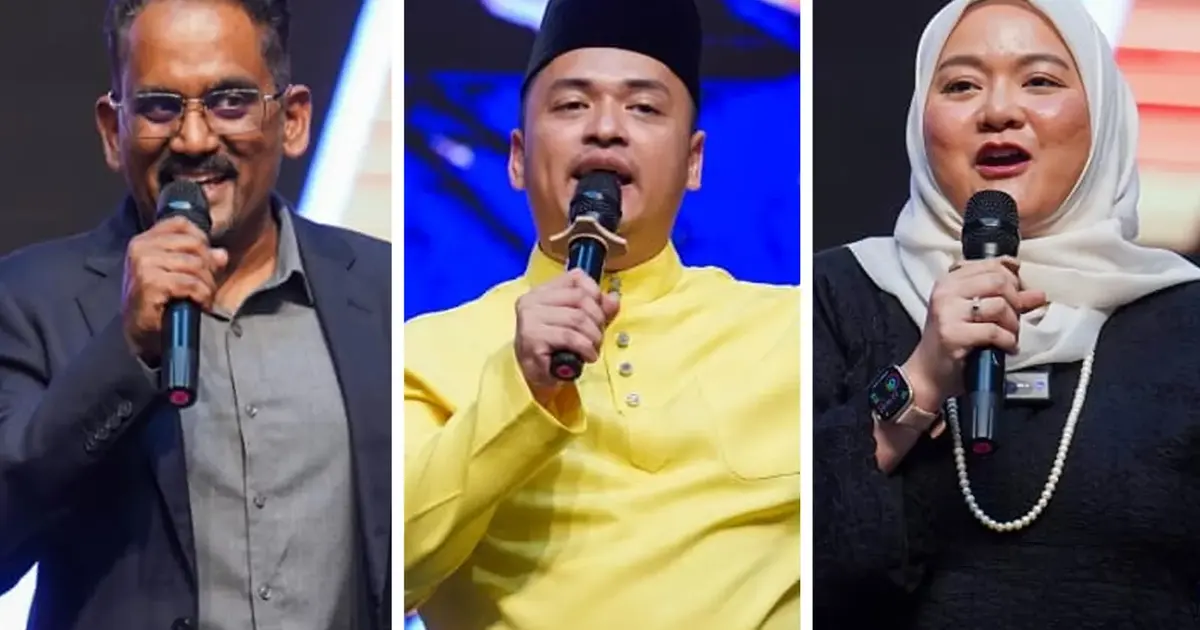
Muda has added three more names to its candidate roster for the forthcoming Johor state election, bringing into focus the party's strategy of championing first-time political contenders with deep roots in their respective communities. The three newcomers, including a 53-year-old candidate, represent an expansion of the youth-oriented party's campaign machinery in the southern state, reflecting its commitment to fielding politicians who have prioritised grassroots work over career ambition in conventional politics.
The party's decision to field three debutants underscores a broader pattern within Muda's organisational approach since its establishment. Unlike traditional political parties that often recycle experienced legislators or party operatives, Muda has positioned itself as a vehicle for fresh voices and community-oriented individuals willing to contest for elected office. This contrasts sharply with the dominant narrative in Malaysian politics, where seniority and tenure within party hierarchies frequently determine candidacy.
Each of the three candidates brings documented experience in community mobilisation and constituency work, having invested considerable effort in addressing local concerns and building networks within their respective electoral divisions. Their backgrounds suggest Muda is prioritising demonstrable community engagement over formal political credentials when recruiting candidates. This approach carries particular resonance in Johor, where voters have traditionally responded to candidates perceived as genuinely connected to ground-level issues affecting families and neighbourhoods.
The inclusion of a 53-year-old candidate in the lineup challenges perceptions that Muda, as a younger party founded on principles appealing primarily to millennial and Generation Z voters, operates exclusively within narrow age parameters. The selection demonstrates the party's willingness to recruit capable individuals across generational lines, provided they satisfy the primary criterion of authentic community involvement and commitment to constituency service.
Muda's candidate strategy reflects broader shifts within Southeast Asian political competition, where established parties face mounting pressure to demonstrate renewal and responsiveness to voter demands for accountability. By foregrounding first-time candidates with community credentials, Muda positions itself as offering an alternative political culture—one emphasising direct constituent engagement over hierarchical party structures and entrenched political networks. This messaging particularly appeals to voters fatigued by perceived disconnect between elected representatives and everyday concerns.
For Malaysian political observers, the deliberate emphasis on grassroots activists rather than party veterans merits attention as an emerging electoral trend. Traditional parties have long relied upon candidate experience and party loyalty as primary selling points to voters. Muda's counter-narrative—that active community participants represent superior alternatives to seasoned politicians—may resonate in constituencies where disillusionment with incumbent representatives runs deep or where voters perceive local representation as insufficient.
The Johor electoral context provides a particularly significant testing ground for this candidate philosophy. Malaysia's most populous state has experienced complex political transitions across recent election cycles, with voter volatility suggesting openness to alternative political offerings. Muda's expansion within the state, achieved through recruiting candidates with demonstrated local standing, suggests the party believes it can translate community credibility into electoral support.
From an organisational perspective, Muda's approach of elevating community activists to candidacy carries operational implications. First-time candidates typically require greater institutional support, training, and campaigning infrastructure than seasoned politicians accustomed to electoral contests. This investment in candidate development may strengthen Muda's internal party structures whilst building long-term political depth, though it simultaneously exposes the party to risks associated with inexperience in high-pressure electoral environments.
The gender composition and demographic profile of these three candidates remains unreported in available information, though such details would illuminate whether Muda's selection processes adhere to balanced representation principles increasingly expected by Malaysian voters. Women's participation in candidate recruitment and candidate diversity more broadly constitute metrics increasingly scrutinised during election cycles across the region.
Muda's Johor campaign strategy, crystallised through these three candidate announcements, suggests the party recognises that electoral success in Malaysian politics depends increasingly upon demonstrating tangible grassroots connections and positioning candidates as solutions to locally-experienced governance deficits. Whether this emphasis on community engagement translates into competitive electoral performance remains to be determined, but the strategy itself signals how younger political forces are challenging established parties' monopoly on candidate selection processes and candidate presentation.
As the Johor state election approaches, observers should monitor whether Muda's community-oriented candidates generate voter enthusiasm comparable to established party nominees, and whether the party's investment in developing first-time activists yields electoral dividends or proves insufficient against opponents with deeper organisational resources and historical voting patterns.

