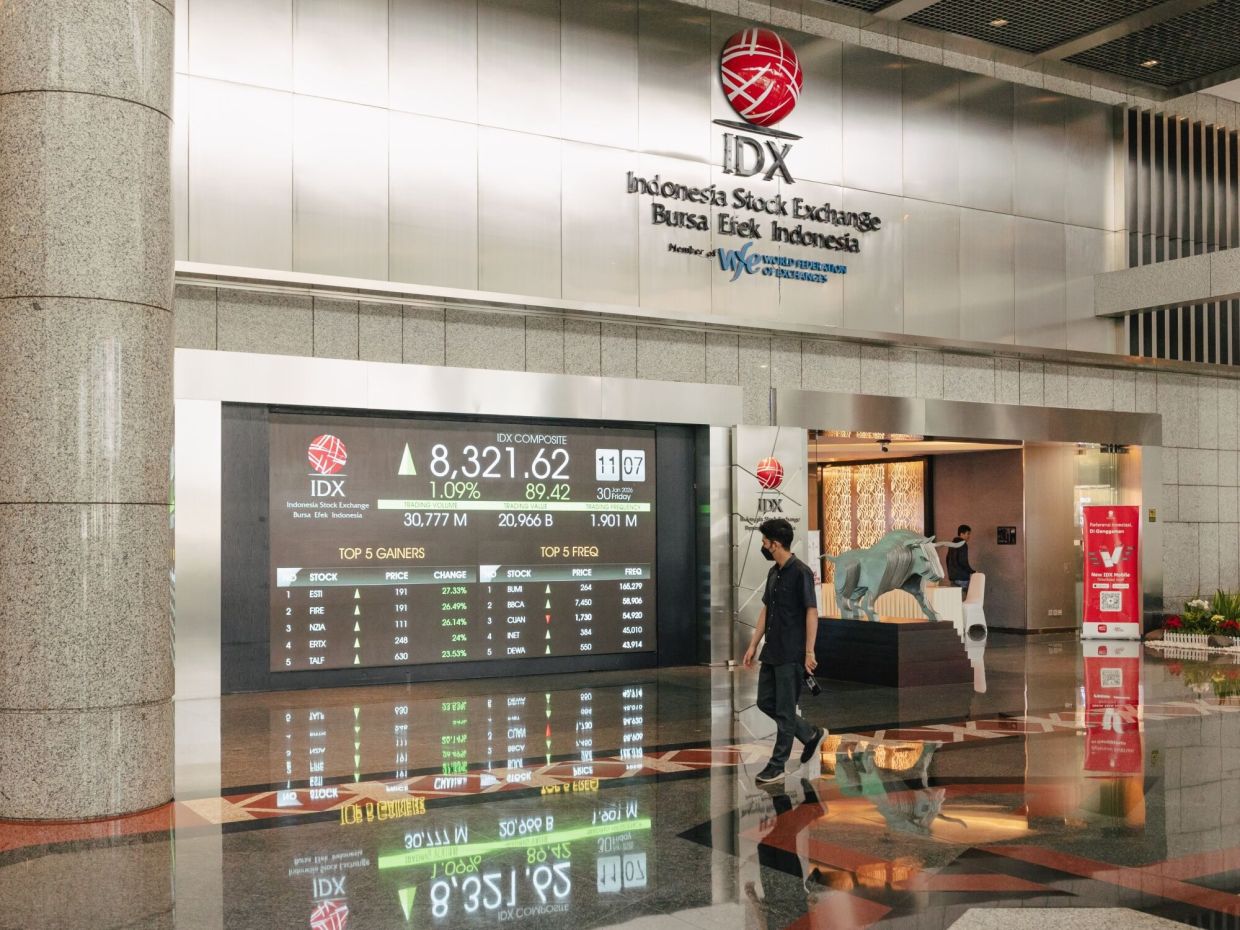
Index provider MSCI has amplified concerns about the investability of Indonesia's stock market, pointing to substantial gaps in corporate ownership disclosures and suspicious trading patterns that suggest systemic governance weaknesses. The development represents another setback for a nation whose equity market has become the globe's poorest performer among major bourses, arriving just as the index giant prepares to announce its final verdict on whether Indonesia warrants demotion to frontier market status from its current emerging market classification—a determination due within days that carries potentially seismic consequences for the country's financial standing.
The stakes of MSCI's imminent decision extend far beyond academic classification. A downgrade would likely unleash forced selling from the vast universe of passive funds that mechanically track MSCI benchmarks, potentially unleashing outflows exceeding $13 billion. Such capital flight would compound the existing distress afflicting Indonesian equities, which have already deteriorated sharply since MSCI first signalled concerns in January. Active investment managers holding positions benchmarked to MSCI indexes would face simultaneous pressure to pare exposure, amplifying selling momentum.
In its formal market accessibility review unveiled Thursday, MSCI downgraded Indonesia's information flow measure to negative status. This technical designation reflects the regulator's assessment that investors lack sufficient visibility into the actual ownership structures of listed companies and possess incomplete windows into trading activity. These deficiencies undermine the fundamental mechanisms through which market prices should form, as they obscure the true available supply of freely tradable shares and prevent overseas institutional investors from confidently assessing their actual ownership stakes and exposure profiles.
Not all market observers have interpreted the latest MSCI findings as uniformly damaging, however. Mohit Mirpuri, managing capital at Singapore-based SGMC Capital, characterised the review as more nuanced than breathless headlines might suggest. He highlighted that only a single accessibility criterion deteriorated, while Indonesia maintained respectable comparative standing relative to regional heavyweights including South Korea, China and India across multiple other important measures of institutional framework quality. Mirpuri's base case projection holds that Indonesia will ultimately retain its emerging market designation when MSCI renders its formal classification verdict.
Indonesia's exchange authorities and financial regulatory apparatus have not yet offered public statements in response to the MSCI assessment. However, the earlier January warning triggered a determined flurry of reform initiatives from officials attempting to address the regulator's objections. Authorities substantially elevated the mandatory free float threshold for newly listed enterprises to 15 percent, effectively doubling the previous requirement. The sense of urgency proved so acute that the exchange's chief executive and the financial services regulator's head both announced their resignations on the same afternoon in January, signalling top-level acknowledgement of institutional failings.
Despite these remedial gestures, MSCI has continued tightening its assessment parameters. The index provider prolonged its formal review period in April, then took the consequential step in May of excising six companies from its benchmarks—the majority connected to prominent business tycoons with concentrated control structures. That exclusion triggered another destabilising equity sell-off, demonstrating how directly MSCI's technical decisions translate into real market consequences and investor behaviour.
The broader context surrounding MSCI's scrutiny reflects compounding macroeconomic and political headwinds enveloping Indonesia under President Prabowo Subianto's administration. His populist policy orientation, when combined with deteriorating perceptions of fiscal discipline and capacity, has exerted downward pressure on the rupiah, which has struck unprecedented weakness levels. The central bank has responded by executing successive interest rate increases in recent weeks, attempting to buttress the currency by elevating returns available to rupiah-denominated assets. MSCI has separately noted that Indonesia suffers from the absence of a functioning offshore currency market while simultaneously confronting meaningful restrictions on onshore foreign exchange transactions, further constraining international investor flexibility.
This loss of investor confidence appears reflected in consecutive downgrades of Indonesia's sovereign debt outlook from major rating agencies. Both Moody's and Fitch have shifted their forward assessment of Indonesia's creditworthiness to negative during the current year, explicitly invoking diminished confidence in policymaking quality and institutional governance as their reasoning. The moves underscore anxiety about the $1.4 trillion economy, which occupied an elevated position in international investor esteem merely months ago but has progressively lost standing as political and fiscal uncertainties have accumulated.
The quantitative deterioration in market performance provides concrete evidence of this confidence erosion. Indonesia's benchmark Jakarta stocks index has contracted by 29 percent during the current calendar year, a stunning reversal reflecting deep pessimism about the nation's economic trajectory and investment climate. International investors have adopted a wholesale exit posture, with foreign institutions having liquidated approximately $3.65 billion of Indonesian equity holdings already in 2026. This capital departure reinforces negative momentum, as forced selling depresses valuations further while simultaneously raising concerns about market depth and liquidity during periods of stress.
The convergence of MSCI's accessibility concerns, currency instability, rating agency downgrades, and visible capital flight has created a reinforcing cycle of negative momentum. International institutional investors, the traditional bedrock of emerging market equity demand, increasingly perceive Indonesia as presenting unfavourable risk-reward characteristics relative to alternative Asian destinations. Unless Indonesian policymakers can convincingly address the transparency and governance deficiencies that MSCI and other international observers have identified, and simultaneously restore credibility around macroeconomic management, the prospect of further downgrades and sustained capital outflows appears distinctly plausible in coming months.