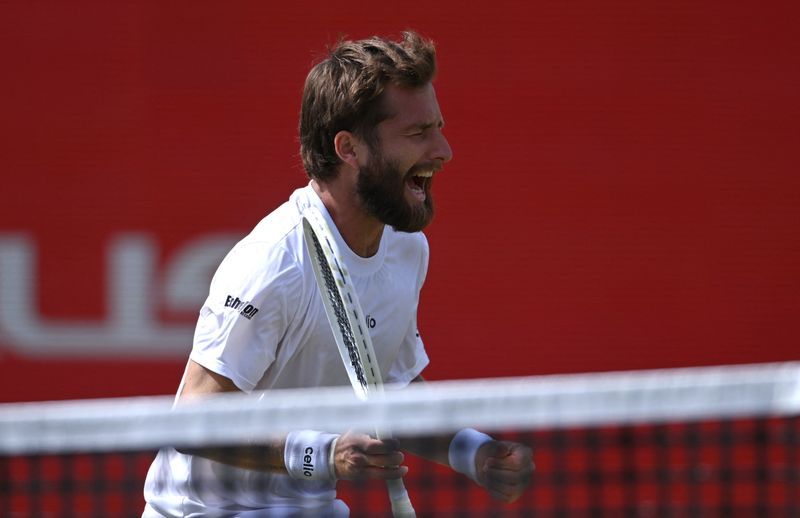
French tennis player Corentin Moutet has been stripped of virtually all his Queen's Club earnings after the ATP handed down a $40,000 fine for unsportsmanlike conduct stemming from a profanity-filled interview with the BBC following his opening-round victory. The financial penalty leaves the world number 36 with virtually nothing from the prestigious grass-court tournament despite advancing to the second round, where he subsequently lost to Spain's Alejandro Davidovich Fokina. Moutet has lodged an appeal against the decision, signalling his intent to contest what many in professional tennis circles view as a severe financial punishment for a single indiscretion.
The incident unfolded immediately after Moutet's first-round win over fellow Frenchman Giovanni Mpetshi Perricard at the London venue. During the on-court interview conducted by BBC personnel, the 27-year-old deployed profanities seven times while discussing his match. When the interviewer politely requested that he refrain from repeating one particular expletive after he had used it to describe being aced on match point by a 142-mile-per-hour second serve, Moutet proceeded to utter the same word three additional times before the broadcast was terminated. Formal apologies were subsequently extended to both the crowd in attendance and television viewers across the United Kingdom and beyond.
The timing of the fine represents a particularly harsh blow to Moutet's finances, as his total prize money for reaching the second round amounted to just $43,000. This means the disciplinary fine of $40,000 effectively consumes nearly the entirety of his tournament earnings, leaving him with minimal compensation despite the competitive achievement of winning his opening match. For professional athletes operating outside the sport's elite tier, such financial consequences can have meaningful implications on their capacity to fund coaching, travel, and tournament entries throughout the remainder of the season.
Following the incident, Moutet attempted to defuse tensions by posting on Instagram that his profane remarks had been made in jest. Whether this explanation influenced the ATP's decision-making process remains unclear, though the organization proceeded with the substantial fine regardless. The ATP's statement cited unsportsmanlike conduct as the grounds for the penalty, a characterization that reflects the sport's increasing emphasis on maintaining standards of professional decorum, particularly when matches are broadcast to global audiences.
This represents the latest chapter in what has become an established pattern of disciplinary issues for the French player. In 2022, Moutet was defaulted from the Adelaide International after directing profanities at the chair umpire during his match against Serbia's Laslo Djere. That same year, the French Tennis Federation suspended his access to federation resources and support due to behavioural concerns, a decision that underscored institutional frustration with his conduct both on and off the court.
The Queen's Club fine illustrates the ATP's willingness to impose substantial financial penalties for conduct violations in high-profile settings. Broadcast interviews conducted immediately after matches, when emotions run high and adrenaline levels remain elevated, have become flashpoints for disciplinary action across professional tennis. Players are increasingly aware that microphones remain active during these interactions and that their words will reach millions of viewers globally, yet infractions continue to occur with regularity.
For Malaysian and Southeast Asian tennis enthusiasts, Moutet's situation serves as a cautionary tale about the intersection of athletic competition and professional expectations in the modern era. While emotional displays and even frustration are understandable components of elite sport, the financial and reputational consequences of breaching established conduct standards have become substantial. The incident also highlights how players competing outside the upper echelon of professional tennis, where prize money pools are considerably smaller, face disproportionately severe financial impact from such penalties.
Moutet's appeal will now proceed through ATP channels, providing an opportunity for his legal representation to argue for mitigation or reconsideration of the penalty amount. The outcome of this appeal could establish precedent for how similar conduct infractions are handled in future cases and whether the ATP considers mitigating factors such as match context, player history, and the intent behind profane utterances. As professional tennis continues to grapple with maintaining broadcast-appropriate standards while accommodating the competitive intensity inherent in the sport, decisions in cases such as Moutet's carry implications extending well beyond a single player's financial circumstances.

