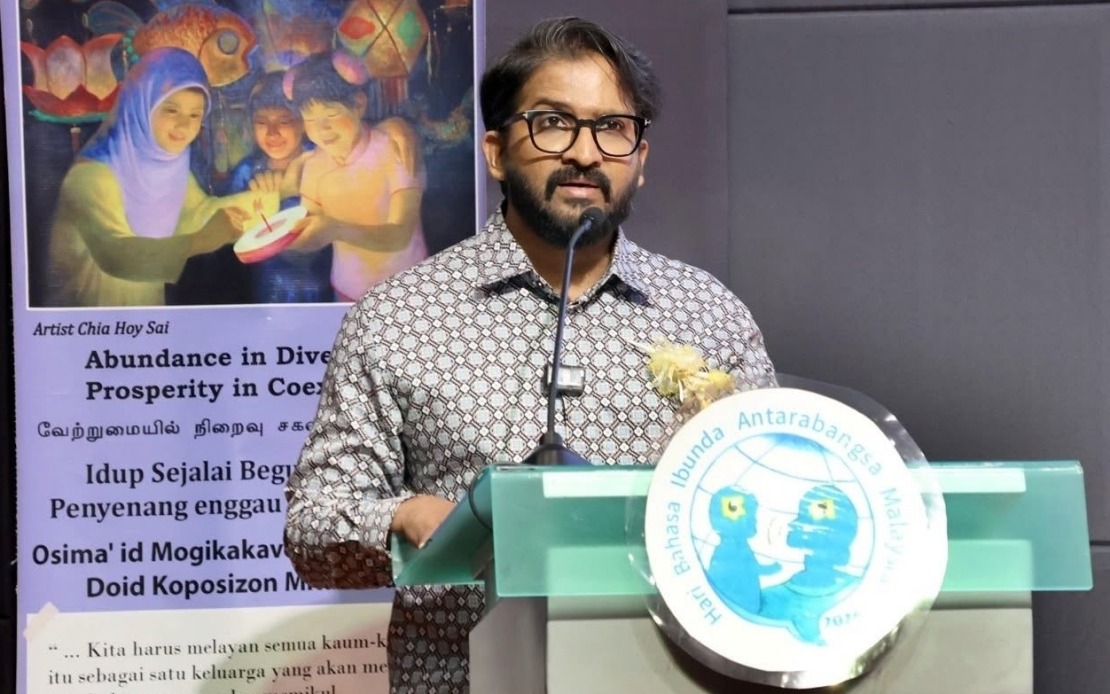
Deputy National Unity Minister R. Yuneswaran has called for a substantial strengthening of mother-tongue education among Malaysia's younger generations, framing linguistic proficiency as a crucial tool for mitigating the contentious debates surrounding race, religion, and royalty that plague digital platforms. Speaking on social media, Yuneswaran identified the persistent emergence of 3R issues as a symptom of deeper societal fractures rooted in mutual incomprehension of diverse histories, languages, and cultural identities that collectively define the Malaysian experience.
The minister's intervention addresses a mounting concern among policymakers about how digital spaces amplify divisive narratives. Rather than attributing these conflicts solely to malicious intent or inflammatory rhetoric, Yuneswaran posits that inadequate cultural literacy and linguistic understanding form the substratum upon which misunderstandings flourish and resentments take hold. This perspective shifts the conversation from policing speech to building foundational knowledge that naturally encourages empathy and contextual awareness.
Yuneswaran underscored that language functions as far more than a utilitarian communication mechanism. Within every linguistic system resides an embedded cultural consciousness—the accumulated wisdom, values, and historical memory of communities that have evolved the language over generations. By mastering one's mother tongue, individuals gain access to this deeper reservoir of meaning, enabling them to comprehend not merely the words but the worldview and sensibilities their own heritage expresses.
Malaysia's linguistic landscape encompasses approximately 130 distinct languages, a reality that Yuneswaran positions as a national asset rather than an obstacle to cohesion. This framing is particularly significant given historical tensions around language policy in the country, where debates over the Bahasa Malaysia's primacy have occasionally overshadowed recognition of the legitimate cultural worth of minority languages. The minister's emphasis on viewing linguistic diversity as a unifying strength rather than a centrifugal force suggests an evolved approach to nation-building that does not demand cultural erasure as the price of national unity.
Critically, Yuneswaran rejected the false dichotomy that often constrains policy discussions in Malaysia—the notion that proficiency in one's heritage language inevitably comes at the expense of competence in Bahasa Malaysia or English. Drawing on his own background as an Indian Malaysian educated in both Chinese and national school systems, he demonstrated through personal example that multilingual capability strengthens rather than weakens individual and collective identity. This lived experience carries particular weight, as it rebuts assumptions that have sometimes influenced education policy debates.
The minister articulated that acquiring fluency in one's mother tongue actually facilitates deeper engagement with other languages and cultures. When individuals possess confident grounding in their own linguistic and cultural heritage, they approach cross-cultural learning from a position of stability rather than defensiveness. This psychological and intellectual foundation enables more genuine openness to understanding perspectives rooted in different traditions, thereby creating conditions more conducive to intercommunal respect.
Yuneswaran contextualised these observations within the framework of the 13th Malaysia Plan, under which the National Unity Ministry has been entrusted with accelerating nation-building efforts. The ministry's mandate explicitly centres on fostering mutual understanding, cultivating respect across community lines, and creating institutional and social spaces where Malaysians genuinely engage with one another's backgrounds. Within this strategic architecture, mother-tongue education emerges not as peripheral concern but as foundational infrastructure supporting the broader unity agenda.
The minister's argument carries implications extending beyond the education sector. Social media platforms have become primary venues where 3R tensions surface, yet conventional moderation and content-removal approaches have proven insufficient for addressing the underlying dynamics. If, as Yuneswaran suggests, these conflicts reflect knowledge deficits rather than solely ideological entrenchment, then interventions targeting cultural literacy could address causal mechanisms rather than merely managing symptoms. This approach also distributes responsibility beyond platforms or enforcement agencies to families, educational institutions, and communities themselves.
For Malaysia, where rapid urbanisation and digital connectivity have simultaneously fostered unprecedented cross-cultural contact and created echo chambers reinforcing communal narratives, the challenge of building substantive intercultural understanding has intensified. Yuneswaran's emphasis on mother-tongue proficiency as a gateway to mutual respect offers a pathway that operates through addition rather than subtraction—communities strengthen knowledge of their own traditions while simultaneously deepening comprehension of others' traditions. Language, in this conception, becomes the medium through which diversity itself reinforces rather than undermines national cohesion.

