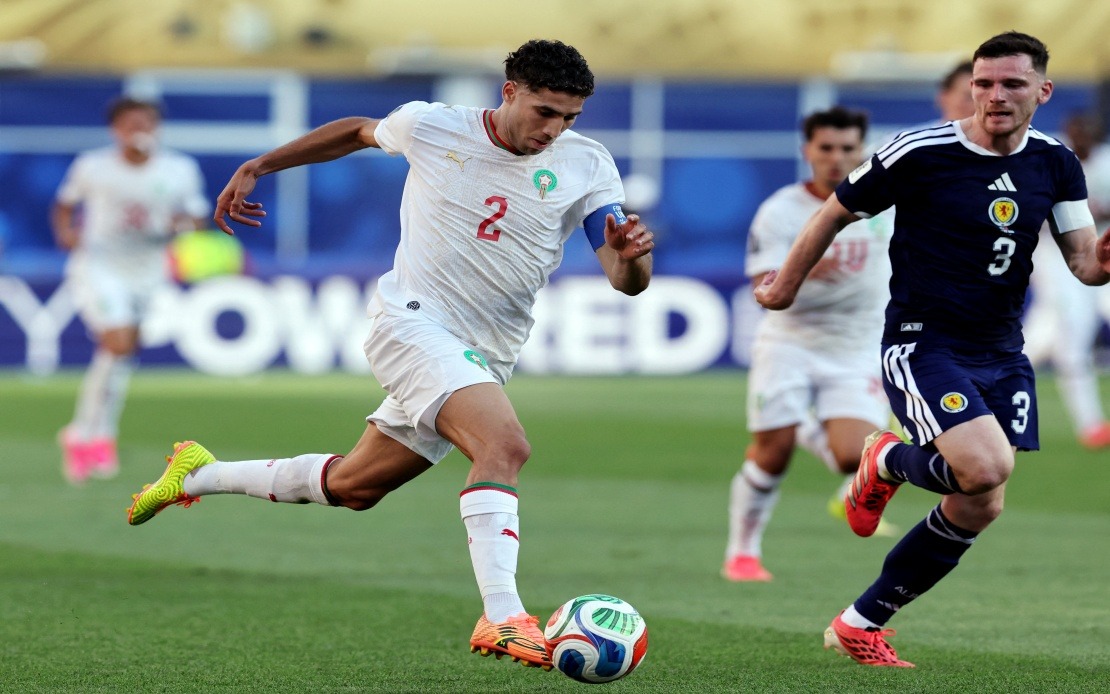
The spotlight fell squarely on Morocco's captain Achraf Hakimi during his nation's 1-0 World Cup triumph against Scotland in Foxborough, Massachusetts on Friday, yet not entirely for reasons connected to his performance on the pitch. The Paris Saint-Germain defender endured a hostile reception from sections of the crowd at the stadium, with supporters whistling and booing him both when the team lineup was announced and repeatedly whenever he touched the ball. The timing of the jeers coincided with a significant legal development that had emerged just hours earlier, when a French court formally decided the player must face trial on serious allegations.
Morocco's head coach Mohamed Ouahbi moved swiftly to shield his captain from the controversy, emphasizing that the national team remained united in its backing for Hakimi. Rather than engaging with the broader legal questions swirling around the player, Ouahbi chose to reframe the narrative around sporting performance and professional conduct. His words reflected a deliberate strategy to separate the player's personal situation from his role as a national team representative. "We are behind him," the coach stated plainly, signalling that Morocco's dressing room would not be fractured by external pressures or public sentiment.
The French legal system had delivered its ruling earlier on Friday when the Versailles appeal court determined that Hakimi must stand trial in connection with charges of rape involving a 24-year-old woman. According to reporting from France, the incident that forms the basis of the charges allegedly occurred at the footballer's residence during 2023. This marked a pivotal moment in a case that had already generated significant controversy, particularly given Hakimi's high profile both as a major European club player and as captain of the Moroccan national side.
Hakimi's legal team had previously challenged an initial decision made by an investigating judge, leading to the appeal court proceedings that resulted in Friday's announcement. The player himself has consistently maintained his innocence throughout the process, and he seized upon the court's decision to speak publicly on social media. In a statement released following the ruling, Hakimi expressed relief at finally having the opportunity to address the allegations directly, suggesting that he viewed the trial as a platform to clear his name rather than an additional burden.
The practical reality for Hakimi at the World Cup became evident through the crowd's reaction, which presented a test of both his mental resilience and the team's cohesion. International football tournaments place extraordinary psychological demands on players, who must perform at peak levels while managing external distractions. For Hakimi, managing the knowledge of an impending trial while simultaneously dealing with crowd hostility represented a compounded challenge that few athletes face on such a public stage.
Ouahbi's assessment of Hakimi's actual performance during the match against Scotland offered a counterpoint to the negative atmosphere. The coach praised the defender's composure and quality, describing him as "very strong" and noting that the player appeared mentally settled despite the circumstances. This characterization suggested that Hakimi had managed to compartmentalize the external noise and concentrate on delivering for his country, a significant achievement given the circumstances he faced.
The broader question of how sports organizations should respond when players face legal challenges remains contentious across professional football. Morocco's approach through Ouahbi's statements reflected a principle of presumption of innocence and unwavering team solidarity, a stance that several other international football associations have adopted in similar situations. However, the public's right to express disapproval through protest remained evident in the crowd's behavior, illustrating the tension between supporting athletes and acknowledging public concern about serious allegations.
Hakimi's status as Morocco's captain added an additional layer of complexity to the situation. The armband represents not merely individual honor but a statement about national identity and values, making his presence in the role a decision that carried symbolic weight. Ouahbi's vocal support suggested that Morocco's football federation stood behind the player and intended for him to continue in the leadership position, at least throughout the tournament.
For Malaysian and Southeast Asian sports followers, the situation highlighted the increasingly globalized nature of professional football, where players operating at Europe's elite level can find themselves at the center of international controversies that ripple across continents. The incident also underscored how modern athletes must navigate complex intersections between their personal legal obligations and their professional responsibilities to their nations and clubs.
Looking ahead, the trial process itself will likely unfold over months, potentially extending well beyond the conclusion of the World Cup. Hakimi will need to balance his footballing commitments with his legal proceedings, a juggling act that few players have successfully managed under intense scrutiny. The Moroccan federation's public backing provides him with institutional support, but the path forward remains uncertain both legally and professionally.

