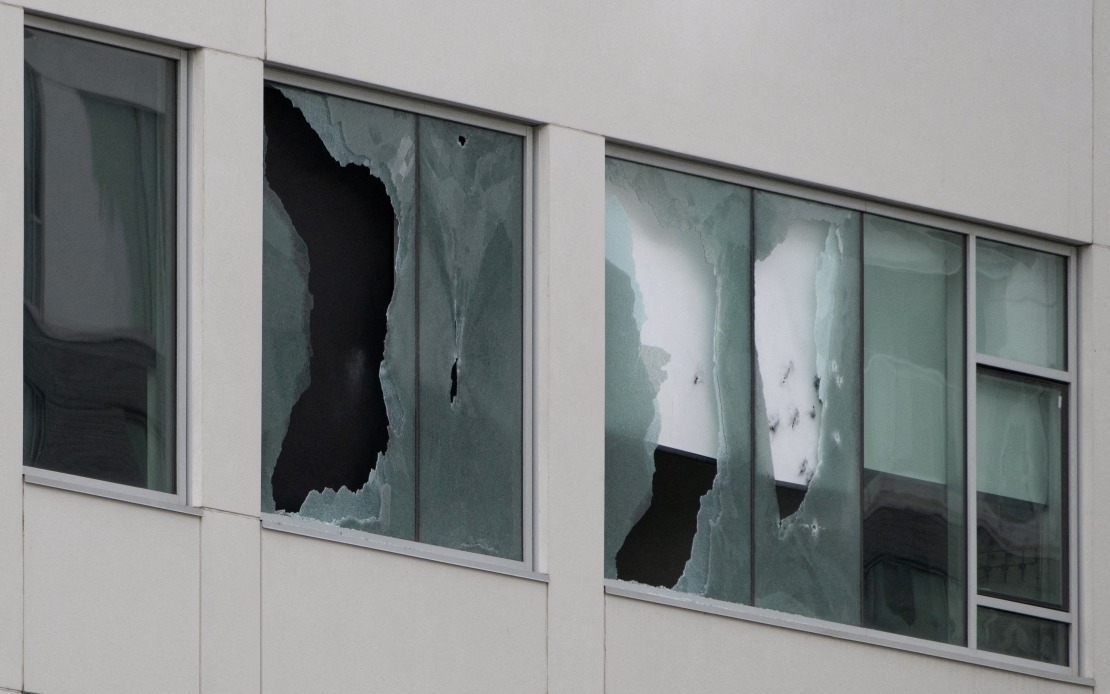
A gunman opened fire in Montreal on Monday, killing a police officer and a civilian before being fatally stopped by responding officers in what authorities have confirmed was not a terrorist attack. The incident unfolded in the Côte-des-Neiges neighbourhood, prompting an immediate emergency response and lockdown of the surrounding area. Montreal police announced the death of one of their officers through a statement on social media platform X, describing the fatality as occurring during the course of duty. The force vowed to provide additional details as the investigation progressed.
The violence claimed three lives in total. Beyond the slain officer and civilian resident, the suspected gunman himself was killed during the police response. Two additional people sustained injuries, including another police officer whose condition was later described as no longer life-threatening, according to a police spokesman. The rapid escalation from active threat to contained incident reflected the immediate tactical response mounted by Montreal police chief Fady Dagher's officers, who came under fire upon arriving at the scene.
Authorities moved swiftly to secure the neighbourhood and communicate with residents about the danger. Police issued an urgent warning about an "armed and dangerous suspect" and instructed people living in the Côte-des-Neiges area to remain indoors and secure their homes. Public broadcaster CBC reported that residents received formal direction to shelter in place, reflecting the severity of the threat perception at that moment. The emergency alert system was subsequently lifted once the tactical situation had been resolved and the suspect neutralised.
Investigators rapidly assessed the nature and motivation behind the attack. Montreal police confirmed that they had ruled out any connection to terrorism, a critical distinction that shaped the public narrative and operational response. The force also determined that the shooter had acted independently, with no evidence suggesting additional suspects or co-conspirators. Police chief Dagher told media outlets that officers faced gunfire when they initially responded to the scene, placing responding personnel in immediate danger before they successfully neutralised the threat.
Mediareports, citing investigative findings, indicate that the suspected attacker may have been motivated by ideology associated with the incel movement, a decentralized online community known for promoting anti-feminist views and misogynistic rhetoric. According to these accounts, the gunman produced a manifesto containing hateful language consistent with incel ideology, which typically revolves around themes of perceived rejection, traditional gender roles, and resentment toward women. However, Canadian security authorities have not yet officially confirmed these claims, leaving the precise motivation subject to ongoing investigation.
The incel movement, short for "involuntary celibate," has emerged as a concerning source of radicalization in recent years. Members of this loosely affiliated online community often express extreme misogyny and have been linked to several violent incidents across North America. The ideology appeals to individuals who feel socially marginalized and blames women and modern society for their perceived romantic and sexual failures. If confirmed, this Montreal incident would represent another instance of incel-motivated violence, a pattern that has prompted increased scrutiny from law enforcement and researchers tracking extremist movements.
For Canadians and observers across North America, the incident underscores the persistent threat posed by individuals radicalized through online spaces and driven by anti-feminist extremism. Montreal, Canada's second-largest city, has experienced multiple mass shootings in recent decades, each leaving deep impacts on public safety perception and community cohesion. This particular shooting adds to a growing body of evidence suggesting that incel ideology represents a legitimate security concern warranting attention from intelligence and law enforcement communities.
The loss of a police officer performing official duties strikes particularly deeply at institutional and community levels in Canada. Officers killed in the line of duty are remembered through formal ceremonies and public recognition of their sacrifice. The additional death of a civilian resident demonstrates how these incidents extend their harm beyond law enforcement to the broader public. The two injured survivors, including another officer, represent individuals whose recovery and long-term wellbeing will be followed closely.
Investigations into such incidents typically examine multiple dimensions: the shooter's personal history, online activities, access to firearms, any prior contact with authorities, and the specific circumstances that triggered the violent act on that particular day. Understanding these elements helps law enforcement across the region develop better threat assessment protocols and early intervention strategies. The ongoing nature of Montreal police's investigation suggests that additional details about motive, planning, and the shooter's background will emerge in coming weeks.
For Southeast Asian readers and observers, this incident provides perspective on how extremism and radicalization increasingly operate across borders through digital platforms. Online communities promoting misogyny and violence are not geographically limited; similar movements exist and recruit within Malaysia, Singapore, and other regional nations. Understanding the pathways to radicalization and the ideologies driving such violence remains relevant to security professionals and policymakers throughout the Asia-Pacific region, where monitoring of extremist online spaces has become an essential component of counterterrorism and public safety strategies.

