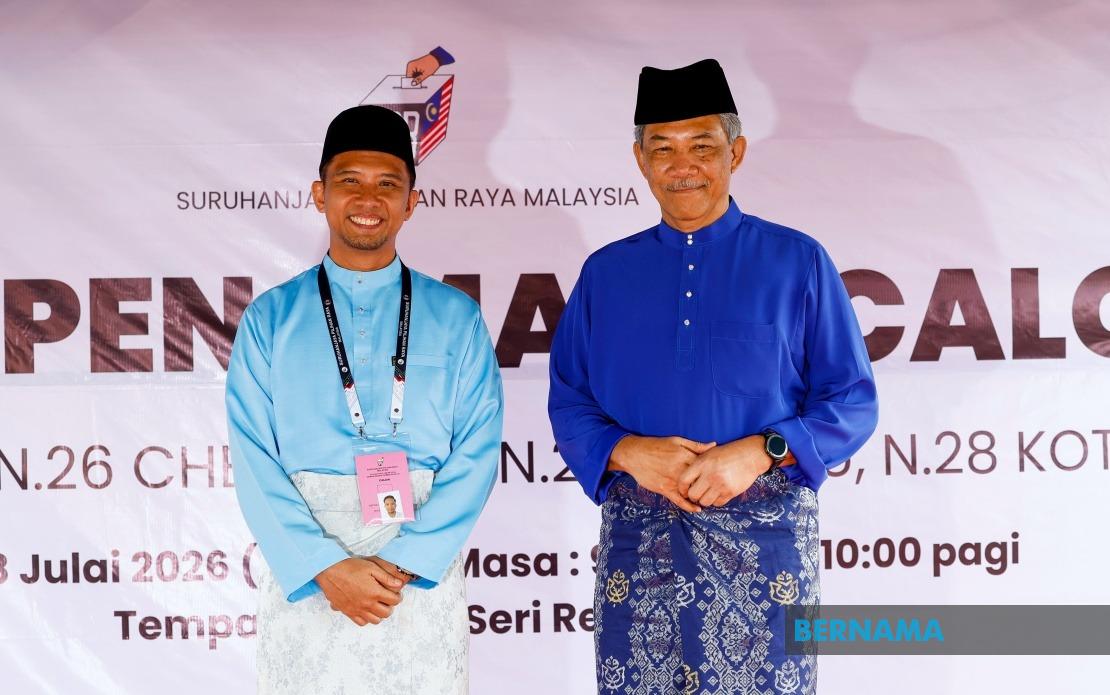
The stage is set for a significant political duel in Rantau, where Foreign Minister and Barisan Nasional state chairman Datuk Seri Mohamad Hasan will defend his long-held seat against Pakatan Harapan candidate Dr Azizul Hakim Mahdi in the 16th Negeri Sembilan state election. Nomination papers have been formally processed and accepted, with the returning officer confirming a straight contest in this constituency that carries considerable symbolic weight given Mohamad's dual roles as a senior national politician and entrenched state assemblyman.
Modhamad, who has represented Rantau since 2004 and serves as UMNO deputy president, holds substantial incumbency advantages built over two decades of representation. His electoral performance two years ago demonstrated his appeal, securing 16,957 votes and defeating opposition challenger Rozmal Malakan by a commanding 10,280-vote majority in 2023. This margin underscores the challenge facing any opposition candidate seeking to dislodge him from an ostensibly secure seat. The Foreign Minister's longevity in the role has allowed him to consolidate grassroots support and institutional machinery across the constituency.
Yet the emergence of Dr Azizul Hakim as the PH standard-bearer introduces a different dynamic to the traditional incumbent-versus-challenger narrative. The 35-year-old medical practitioner is positioning himself as a youth-oriented alternative, leveraging professional credentials and community engagement rather than relying solely on party machinery. His decade of medical practice and ownership of three clinics across the Klang Valley—in Senawang, Puncak Alam, and Melaka—provide him with genuine grassroots connections within the healthcare sector, a portfolio that resonates particularly with voters prioritising accessibility to medical services and public health improvements.
Dr Azizul's campaign strategy deliberately emphasises healthcare as a differentiating issue, framing his candidacy around practical improvements in clinic accessibility and preventive health services rather than traditional party politics. This approach reflects broader trends among younger opposition candidates seeking to anchor campaigns on specific sectoral concerns rather than ideological messaging. His messaging appears designed to appeal to middle-class, urban voters in constituencies where lifestyle amenities and service quality compete with traditional bread-and-butter political appeals.
Elsewhere in the 36-member Negeri Sembilan state assembly, the electoral landscape reveals varied competitive structures. The Paroi constituency has evolved into a three-cornered contest featuring PH's Ahmad Shahir Mohd Shah, who serves as press secretary to the Menteri Besar, alongside Perikatan Nasional's Kamarol Ridzuan Mohd Zin and Bersatu's Mohd Nazree Mohd Yunus. This fragmentation reflects the broader fracture within Malaysia's opposition coalition, where Bersatu's independent positioning has splintered what might otherwise be a consolidated anti-BN challenge. Such splits frequently advantage the BN's more disciplined party machinery, though the specific dynamics depend on local voter preferences and demographic composition.
The Chembong seat presents a more straightforward two-way contest between incumbent BN assemblyman Datuk Zaifulbahri Idris and PH challenger Danish Nazran Murad. Zaifulbahri's incumbent status typically provides name recognition and constituent service advantages that translate into electoral resilience, particularly in constituencies where BN has maintained consistent representation. Conversely, Kota exhibits the familiar three-way fragmentation, pitting BN's Suhaimi Aini against PH's Muhammad Allif Ibrahim and Bersatu's Akmal Noradzmi Abdul Rahim, again illustrating how opposition division potentially undermines the PH's ability to consolidate anti-government votes.
Negeri Sembilan's electoral framework encompasses approximately 889,490 registered voters distributed across a state assembly significantly smaller than those in peninsular Malaysia's more densely populated states. This relatively intimate voter base means that localised issues, incumbent performance records, and personality-driven politics often outweigh national narratives. The composition of the electorate includes 867,151 ordinary voters, supplemented by 16,884 military and spousal voters and 5,455 police early voters—blocs traditionally considered supportive of BN, though their margin of support fluctuates with broader political currents.
The election commission has structured the voting calendar to permit early polling on July 28 for military and police personnel, with general polling scheduled for August 1. This phased approach allows security personnel voting days before the general population, a mechanism incorporated into Malaysian electoral administration to accommodate personnel unable to vote on standard election days. The timing also provides an initial indication of electoral trends, though the small size of these blocs relative to the overall electorate limits their predictive value regarding final outcomes.
Modhamad's campaign rhetoric emphasises BN's responsibility to translate its manifesto pledges into concrete governance outcomes, suggesting that his campaign will rest substantially on the coalition's track record and future commitments rather than personality-driven messaging. This positioning reflects maturation in BN's campaign strategy, moving beyond individual charisma toward institutional credibility arguments. The Foreign Minister's dual role as state chairman and national cabinet member carries both advantages and risks—his national prominence elevates BN's profile but also makes him a symbolic target for opposition mobilisation efforts seeking to frame the state election as a referendum on national governance.
For Malaysian political observers, Negeri Sembilan's election provides valuable indicators regarding electoral sentiment in a compact, relatively representative state. The constituency offers manageable case studies for analysing how opposition fragmentation affects electoral outcomes, how incumbent advantages function across different voter demographics, and whether healthcare-focused campaign messaging resonates with contemporary Malaysian electorates. The results could inform broader calculations about coalition viability entering subsequent electoral contests, particularly regarding whether Bersatu's independent positioning continues eroding PH's unified opposition challenge or whether local accommodations preserve anti-BN vote consolidation.
The campaign period, now officially underway following nomination completion, will determine whether Dr Azizul can translate his professional credentials and sectoral focus into sufficient voter mobilisation to overcome Mohamad's structural advantages, or whether the Foreign Minister's two-decade incumbency and BN machinery prove determinative. Similarly, the resolution of multi-cornered contests elsewhere will illuminate whether opposition fragmentation remains electorally consequential or whether local alliance-making produces unexpected results. These dynamics extend beyond state-level significance, offering preliminary evidence regarding the broader competitive balance as Malaysian politics navigates post-2023 election reconfiguration.

