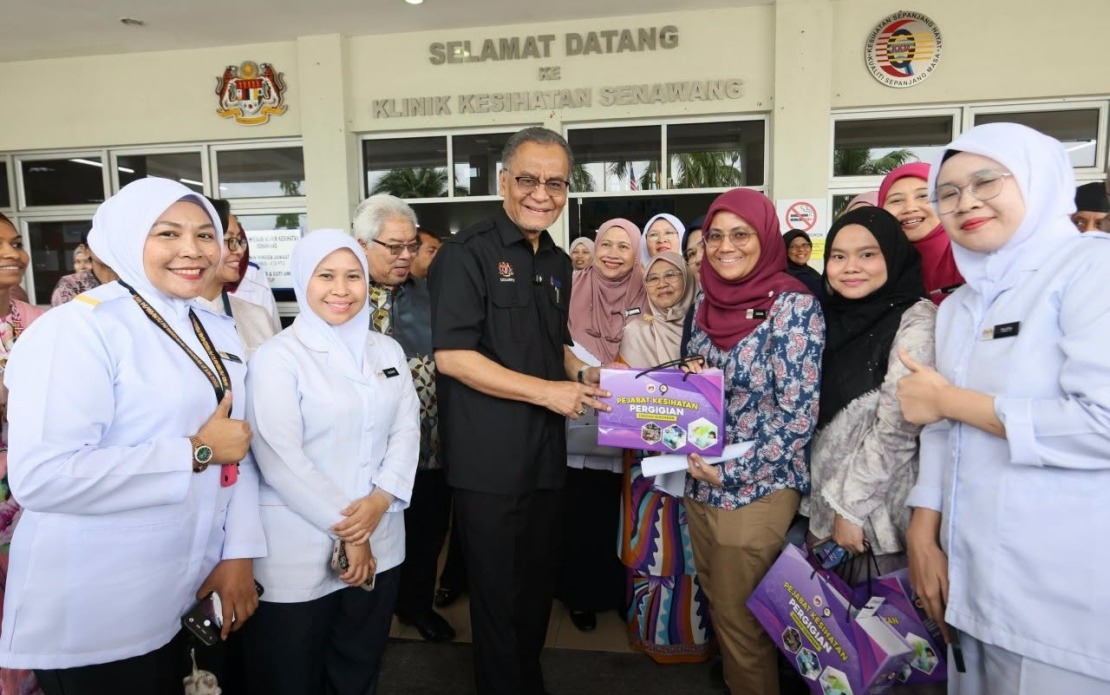
The Health Ministry has secured immediate financial backing of RM805,700 to bolster service delivery at Senawang Health Clinic in Seremban, according to Health Minister Datuk Seri Dr Dzulkefly Ahmad. The two-pronged investment reflects the government's commitment to upgrading primary healthcare infrastructure in Negeri Sembilan, a state where clinics serve as critical entry points into the public health system for rural and urban populations alike.
The funding package divides resources between the main health clinic and its dental component. The Senawang Health Clinic will receive RM588,400 of the total sum, while the attached Dental Clinic gets RM217,300. These allocations are earmarked for substantial infrastructure repairs and structural improvements, together with investments in contemporary medical equipment and operational assets. The tiered approach ensures both general and specialized dental services receive proportionate attention, reflecting the dual burden of health conditions requiring preventive and curative dental interventions across the catchment population.
A standout element of this investment is the procurement of a new ultrasound machine, which significantly enhances the diagnostic arsenal available to practitioners at the facility. Ultrasound technology serves as a frontline imaging tool for conditions ranging from obstetric care to abdominal pathology, kidney disease, and thyroid assessment. For a primary health clinic serving a population exceeding 220,000, access to reliable ultrasound capacity reduces referral delays to secondary hospitals and enables earlier detection of potentially serious conditions. The decision underscores recognition that even clinic-level facilities must possess adequate diagnostic depth to function effectively as gatekeepers within the healthcare system.
Refurbishing the Dental Clinic building forms another significant component of the initiative. The upgrade aims to enhance the physical environment where patients receive care, addressing comfort and safety standards that influence both service quality perception and actual clinical outcomes. Improved dental facilities help reduce patient anxiety, particularly among children and those with dental phobia, thereby encouraging preventive care attendance and early intervention for oral health problems. In Malaysia's context, where oral health awareness remains variable across socioeconomic groups, a modernized clinic environment serves broader public health messaging about the legitimacy and importance of dental care.
Two additional vehicles complete the package, addressing an often-overlooked but critical operational constraint. These vehicles enable clinic staff to conduct outreach activities, immunization campaigns, and health education programmes across the dispersed communities within the Senawang catchment area. For a region with mixed urban and semi-rural characteristics, vehicular mobility determines whether public health initiatives reach peripheral populations or concentrate only in easily accessible locations. The investment reflects understanding that primary healthcare delivery extends beyond clinic walls into community settings where preventive services and health promotion prove most cost-effective.
The Senawang Health Clinic operates under substantial patient demand, averaging approximately 1,000 daily visits. This volume places it among the busier primary care facilities in Seremban and indicates robust utilization of public health services in the area. Such caseload volume typically strains facility infrastructure, equipment, and workforce capacity, making targeted capital investments essential for preventing service degradation. The RM805,700 allocation, while substantial, reflects recognition that sustaining quality across this patient volume demands continuous infrastructure renewal and equipment modernization.
Geographically, Senawang's strategic position within Seremban makes its health clinic a crucial node in Negeri Sembilan's primary care network. The state occupies an intermediate position between the Klang Valley's developed healthcare infrastructure and less-resourced areas further south, making facility quality at Seremban-level clinics particularly important for regional health equity. Improvements here ripple across the surrounding districts, as residents in neighboring communities increasingly seek services at well-equipped facilities, reinforcing the clinic's role as a genuine primary healthcare hub rather than a residual facility for those unable to access private care.
Minister Dzulkefly's public commitment to efficient, equitable, and comfortable healthcare delivery reflects broader Ministry objectives aligned with national health policy frameworks. The emphasis on equity specifically acknowledges that public clinic users often derive from lower-income groups with fewer alternatives for private healthcare, making service quality at public facilities a social determinant of health outcomes. By channeling resources toward comfort and capability enhancements, the Ministry addresses both clinical effectiveness and the dignity dimension of healthcare access that frequently falls from focus during budget discussions.
For Malaysian healthcare observers, this allocation exemplifies targeted infrastructure investment in the primary care sector, which policymakers increasingly recognize as underfunded relative to hospital budgets. Clinics like Senawang form the foundation of the public health system, managing chronic disease burdens, maternal and child health services, and communicable disease surveillance. Without adequate equipment, vehicles, and facilities, even well-trained clinic staff cannot deliver their potential impact. The initiative thus represents not merely facility enhancement but strategic strengthening of the system's foundational layer, with implications extending across the broader health security and population health architecture of the region.

