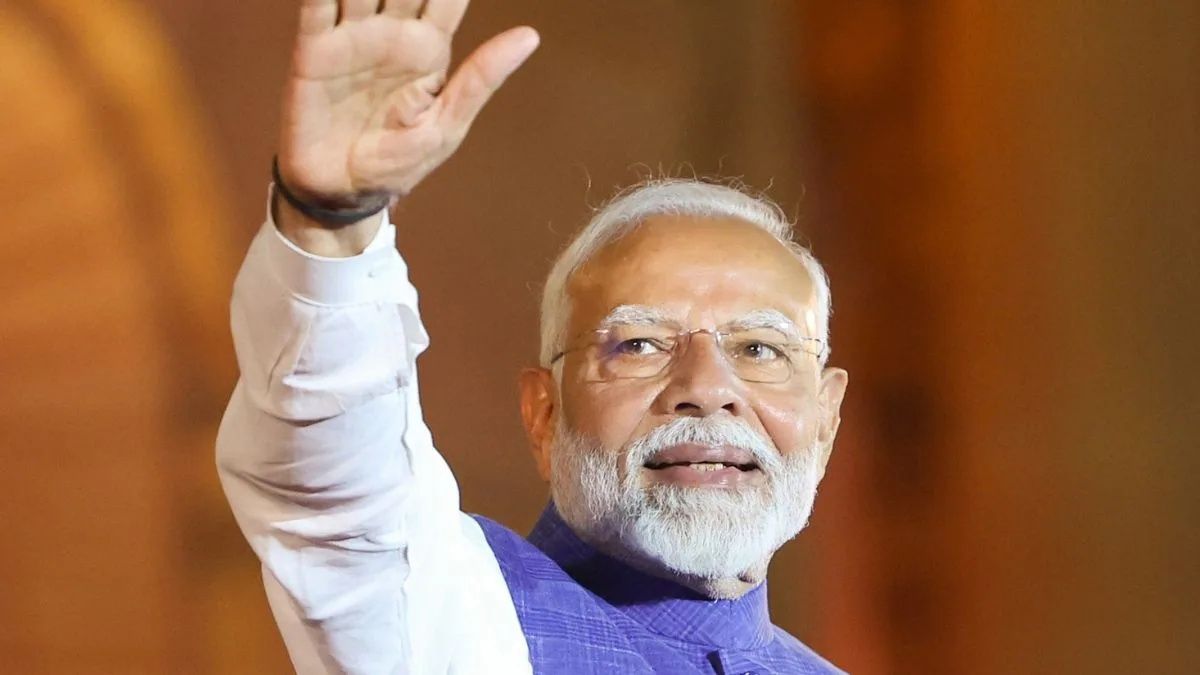
Prime Minister Narendra Modi will lead India's 12th International Day of Yoga (IDY) celebrations from Kolkata's historic Red Road on June 21, continuing his signature emphasis on the interconnection between physical wellness and mental resilience. The early morning gathering will showcase demonstrations of the Common Yoga Protocol with participation from thousands of attendees, government officials, and ordinary citizens converging on the City of Joy's most prominent public thoroughfare.
The choice of Kolkata as the venue carries considerable political significance, arriving on the heels of the Bharatiya Janata Party's decisive performance in West Bengal's recent Assembly elections, which resulted in the party displacing the Trinamool Congress from provincial power. Senior BJP officials have indicated that the state will remain a strategic priority for the Modi government's developmental agenda going forward, with senior party leaders emphasising that accelerated resource allocation will address years of governance deficits in infrastructure and public services.
Red Road itself symbolises far more than merely a ceremonial gathering point. The sprawling public space represents the intersection of civic engagement, military heritage, and ecological advancement within India's urban landscape. As a venue selection, it demonstrates organisers' intention to situate wellness and yoga within the broader context of civic responsibility and national identity. Officials anticipate record-breaking attendance as the event unfolds across the early morning hours.
The 12th International Day of Yoga operates under the overarching theme of "Yoga for Healthy Ageing," a selection that reflects global demographic realities and health challenges. Across the world, increasing life expectancy creates a paradoxical challenge: while people live longer, ensuring those additional years remain characterised by vitality, independence, and purpose remains contested. According to Union Minister of State for Ayush Prataprao Jadhav, yoga offers a scientifically-grounded and holistic methodology for addressing healthy ageing by simultaneously strengthening physical resilience, enhancing psychological equilibrium, and elevating overall life quality.
The breadth of participation anticipated this year underscores yoga's integration into India's national wellness framework. The Ministry of Ayush has coordinated approximately 2,500 organised events spanning the globe, with engagement across 211 Indian diplomatic missions abroad. Within India itself, the Yoga Sangam Portal has registered over 600,000 organisations—ranging from schools and workplaces to community centres and residential associations—each mobilising participants for simultaneous practice. This logistical coordination represents unprecedented scale in yoga advocacy, transforming a cultural practice into a nationwide simultaneous activity.
The Ministry of Culture will complement the main celebrations by organising dedicated yoga programmes at 100 iconic locations throughout the country, deliberately bridging India's cultural heritage with contemporary wellness traditions. This integration acknowledges yoga not merely as physical exercise but as a cultural inheritance embedded within India's philosophical and spiritual legacy. The simultaneous programming ensures that participation extends beyond urban centres, reaching smaller cities and towns where yoga institutions and cultural organisations will orchestrate local commemorations.
Leading into the main June 21 celebrations, Kolkata experienced heightened engagement through the "Daud Se Dhyan 2026 – From Movement to Stillness" initiative, organised under the Swachhata Se Swagat Programme. This preparatory campaign synthesised health promotion, environmental cleanliness, and civic engagement, establishing thematic continuity between physical wellness and community responsibility. The initiative generated substantial grassroots enthusiasm across the eastern metropolis, laying groundwork for larger participation in the national celebration.
West Bengal's government has mandated that all state employees participate in IDY celebrations, directing workers to join activities either at their respective offices, residential compounds, or designated venues including Red Road and Milan Mela grounds. This top-down participation mandate reflects the intersection of wellness policy with administrative compliance, embedding yoga observance within official institutional practice. The requirement ensures visible, organised participation while simultaneously positioning the state government as aligned with central health promotion objectives.
For Southeast Asian readers, India's massive yoga mobilisation offers broader implications regarding how regional governments might leverage traditional wellness practices for public health objectives. Yoga's positioning as both cultural practice and preventive health strategy provides a template for integrating traditional knowledge with contemporary health challenges, particularly addressing ageing populations. India's coordination mechanisms—from the Yoga Sangam Portal to ministry-level programming—demonstrate how substantial grassroots participation can be organised through digital infrastructure and institutional partnerships.
The emphasis on healthy ageing also resonates across Southeast Asia, where several nations confront rapidly ageing demographic profiles. Thailand, Vietnam, and Indonesia face comparable challenges in ensuring extended lifespans translate into active, independent living. India's yoga framework, grounded in centuries-old practice while adapted for modern contexts, illustrates how traditional systems might be systematised for national health policy. The theme's focus on preventing age-related decline through holistic practice offers alternative approaches to purely pharmacological or institutional solutions that dominate Western gerontological frameworks.
India's International Day of Yoga has evolved substantially since its inaugural 2015 celebration, when approximately 35 million people participated globally. The current scale—with 600,000 registered organisations and involvement across 211 missions—reflects how systematically yoga has been positioned within India's development narrative. This transformation occurs not in isolation but alongside broader Indian efforts to establish itself as a knowledge economy and advocate for traditional systems within global health discourse.
The gathering in Kolkata ultimately represents more than ceremonial commemoration. It constitutes a deliberate statement regarding India's regional political priorities, its commitment to traditional wellness systems, and its capacity to mobilise populations around shared health objectives. As neighbouring countries observe India's coordination of such massive simultaneous activities, questions emerge regarding how similar mechanisms might serve public health objectives across Southeast Asia, whether addressing non-communicable diseases, mental health challenges, or the health implications of rapid urbanisation.

