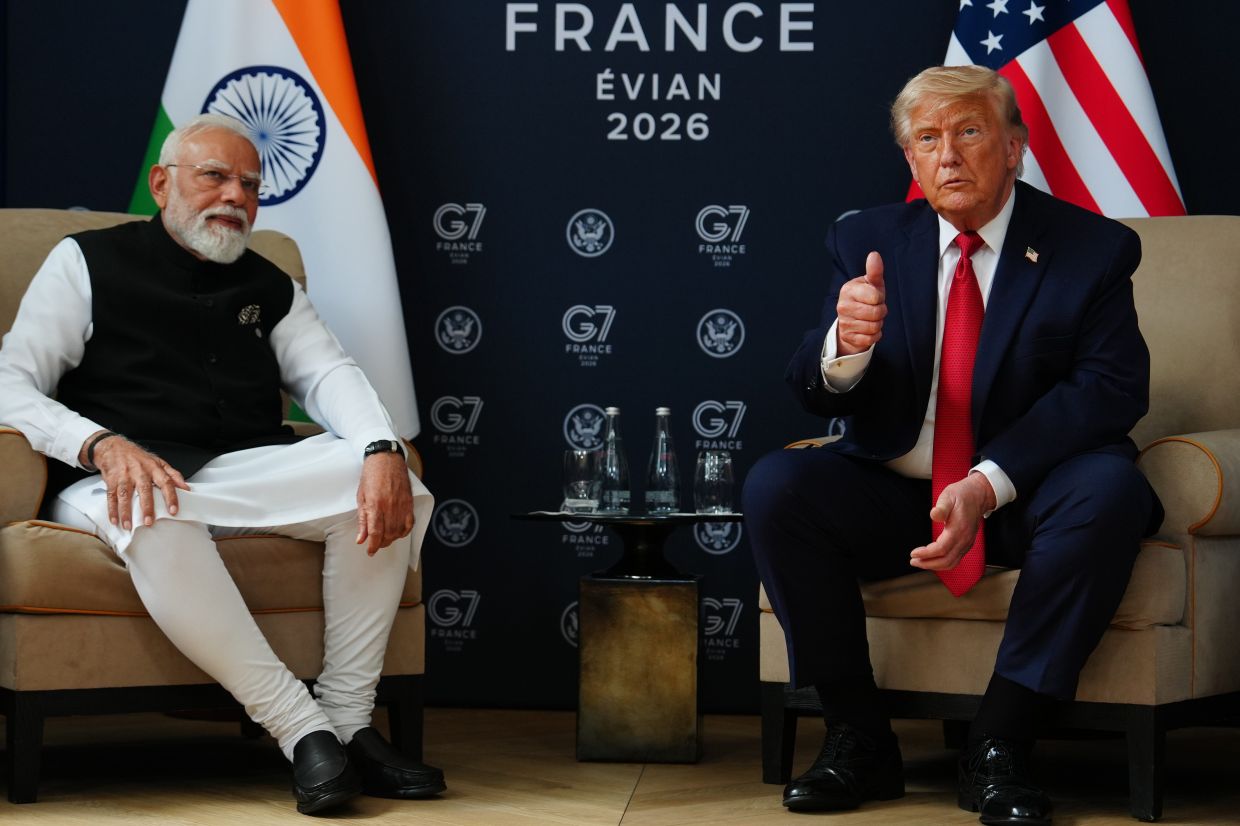
New Delhi and Washington have moved closer to concluding a long-delayed bilateral trade agreement, with Prime Minister Narendra Modi announcing "significant progress" following his meeting with US President Donald Trump at the G7 summit in Evian, France. The two leaders held their first face-to-face discussions since their February 2025 encounter in Washington, with both emerging from the Wednesday talks optimistic about the trajectory of negotiations that have stretched over multiple years. Observers tracking the talks closely view the latest announcement as a meaningful signal that the two nations may finally overcome the substantial disagreements that have periodically stalled negotiations.
Trump characterised India's chief as an exceptionally tough negotiator, suggesting that the concessions achieved in recent weeks represent genuine movement from New Delhi's traditionally firm stance on protecting domestic industries. The US administration has framed the negotiations as a priority within its broader Indo-Pacific strategy, viewing a comprehensive trade partnership with India as essential to counterbalancing economic influence in the region. For India, a finalised trade agreement offers an opportunity to deepen commercial ties with a crucial strategic partner while potentially offsetting some economic headwinds that have slowed growth in recent quarters.
The foreign ministry statement emphasised that both leaders had tasked their respective officials to pursue a "commercially meaningful agreement at the earliest," a phrase suggesting that substantive market access commitments rather than symbolic measures are now on the table. This language represents a significant shift from earlier phases of talks, when both sides appeared willing to accept modest gains simply to demonstrate progress. The urgency reflects recognition from both governments that protracted negotiations carry political costs and that finalising a deal would strengthen bilateral relations ahead of potential changes in either country's political leadership.
US Trade Representative Jamieson Greer is scheduled to visit India in the coming week to lead the next negotiating round, signalling that high-level engagement will intensify. This visit follows India's Commerce Minister Piyush Goyal's assertion in early June that the two countries had resolved approximately 99 per cent of the initial tranche of the agreement, meaning only technical details and final commitments on contentious items remain unresolved. The precision of Goyal's claim, while potentially overstated, indicates that negotiators have narrowed disagreements to a manageable set of issues that experienced trade officials can address within weeks rather than months.
The two nations have set an ambitious target to expand bilateral trade to US$500 billion by 2030, a figure that would represent a near-tripling of current levels and position the US as India's largest trading partner. Achieving this goal requires not merely concluding an agreement but implementing it effectively and building momentum through subsequent trade rounds. The preliminary understanding reached in February served as a foundation, yet subsequent developments in the US legal landscape complicated the path forward when the Supreme Court struck down Trump's sweeping tariff measures, temporarily derailing momentum.
That court decision prompted the Trump administration to initiate fresh investigations into purported unfair trade practices by multiple countries, including India, whilst imposing a blanket 10 per cent tariff across multiple sectors. For Indian exporters reliant on the American market, this period of uncertainty created significant business planning challenges and raised doubts about whether political goodwill would ultimately translate into preferential market access terms. The recent diplomatic movement suggests that Trump administration officials have prioritised securing a deal with India over pursuing protectionist measures through investigative channels, a calculation that reflects India's geopolitical importance to Washington's Asia strategy.
Beyond trade mechanics, Modi used the G7 platform to press Trump on maritime security concerns affecting Indian nationals, specifically requesting assurances regarding the safety of Indian seafarers following the deaths of three Indian sailors in a US military strike on a commercial vessel off Oman on June 10. This incident, occurring amid broader Middle East tensions connected to ongoing Iran-US hostilities, highlighted the vulnerability of Indian maritime workers and supply chain vulnerabilities that extend far beyond traditional commerce statistics. Modi's explicit raise of this humanitarian issue alongside trade negotiations underscores how security and economic matters have become inseparably linked in modern great power diplomacy.
India's positioning at the G7 gathering as a guest nation reflected its significance to Western strategic thinking, yet also highlighted how non-traditional members navigate meetings dominated by established powers. Modi used his presence to advocate for Global South concerns, particularly regarding disruptions to energy, fertiliser, and food supply chains stemming from Middle East instability. He cautioned that these disruptions would persist for an extended period, a sobering assessment that carries implications for food security across South Asia and energy affordability for India's industrial sector.
The Strait of Hormuz closure by Iran has directly impacted Indian energy imports, forcing New Delhi to navigate complex geopolitical dynamics whilst maintaining its energy security. This vulnerability has incentivised India to strengthen relationships with stable partners like the United States that can potentially guarantee supply chain stability or alternative sourcing arrangements. A comprehensive trade agreement that includes cooperation on energy security matters could therefore provide India with strategic insurance against future Middle East disruptions, making the commercial benefits of the agreement extend beyond narrowly defined trade flows.
For Malaysian readers and Southeast Asian observers, the US-India trade momentum carries significant implications. A deeper US-India economic partnership will reshape regional dynamics and potentially influence how American economic policy affects Southeast Asian nations that compete in similar sectors. The precedent set through this negotiation—of resolving long-standing trade disputes through high-level political engagement—may influence how Washington approaches outstanding disagreements with other regional partners, including Malaysia.