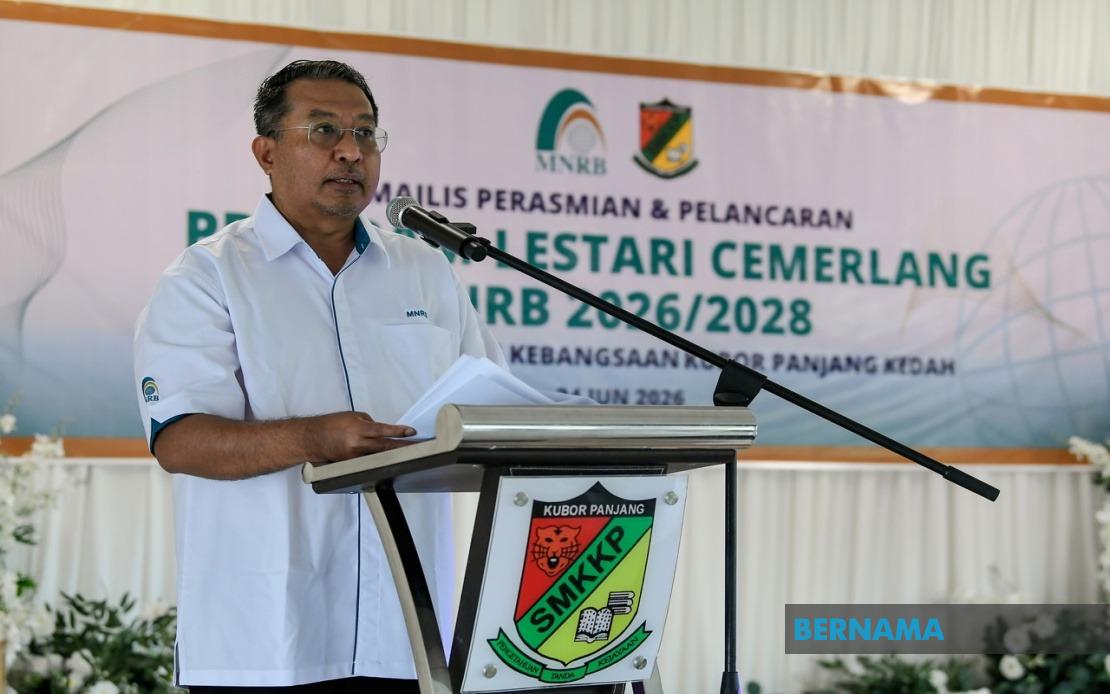
MNRB Holdings Berhad, a major investment holding company, has substantially expanded its commitment to Malaysian education by distributing nearly RM600,000 across six schools nationwide through its flagship Lestari Cemerlang Programme. The latest phase of this corporate social responsibility initiative was launched at Sekolah Menengah Kebangsaan Kubor Panjang in Pendang, Kedah, marking the sixth institution to benefit from the company's educational investment strategy that has remained active since 2011.
Datuk Rudy Rodzila Che Lamin, the group's interim president and chief executive officer, unveiled the comprehensive approach underpinning the initiative during the ceremony, which emphasised the company's dual commitment to academic rigour and character formation. The programme deliberately prioritises schools in underserved rural communities, recognising the disparities in educational resources that often disadvantage students in less urbanised areas. By targeting these regions, MNRB seeks to level the playing field and ensure that geographical location does not determine a student's access to quality learning opportunities.
The geographical expansion of the initiative demonstrates a calculated strategy to build systemic impact across Malaysia's diverse regions. Following successful implementations in Perak, Pahang, Negeri Sembilan, Melaka, and Selangor, the extension to Kedah signals the company's confidence in the model's effectiveness and its intention to scale the programme further. This regional approach allows MNRB to address specific local needs while building a network of supported institutions that can share best practices and experiences.
Within participating schools, MNRB has implemented a multifaceted suite of interventions designed to address both immediate and longer-term educational challenges. Enhanced tuition for upper secondary students sits alongside motivational workshops and structured student development activities, reflecting recognition that academic support alone cannot fully transform educational outcomes. The company has also prioritised the physical infrastructure dimension, upgrading learning facilities and introducing technology-enabled spaces that prepare students for a digitally-integrated future.
Among the more innovative infrastructure investments is the MNRB Smart e-Learning Room, equipped with interactive television systems and broadband connectivity. This facility represents an attempt to bridge the digital divide that continues to affect learning quality in many Malaysian schools, particularly in rural settings where technological access remains limited. By embedding these resources within the school environment rather than leaving implementation to already-stretched education budgets, MNRB addresses a critical gap in Malaysia's journey towards comprehensive digital literacy across all student populations.
Beyond immediate school support, MNRB has architected a parallel scholarship mechanism specifically targeting high-achieving students from its adopted schools. The Tabung Biasiswa MNRB initiative currently supports five top-performing students from SMK Kubor Panjang, extending financial assistance through diploma and degree-level studies. This tiered approach acknowledges that identifying and nurturing talent early can unlock potential that might otherwise remain dormant due to financial constraints.
The scholarship programme's track record demonstrates tangible return on investment. According to Hazlina Hazani, the group's chief people officer, fourteen students from previously adopted schools have received sponsorship, with eight subsequently joining MNRB Group upon completion of their studies. This employment outcome suggests that the scholarship mechanism functions not merely as charitable giving but as a deliberate human capital development strategy that benefits both the students and the company's long-term workforce composition.
Notably, MNRB has structured its scholarship programme to align with its corporate business interests, explicitly supporting students pursuing qualifications in insurance, takaful, and financial services sectors. This narrower focus distinguishes the scholarship initiative from the broader Lestari Cemerlang Programme, creating a two-tier system where universal school support coexists with sector-specific talent cultivation. Such positioning allows the company to address genuine skills shortages in its operating industries while simultaneously building brand loyalty among scholarship recipients.
The initiative reflects broader trends within Malaysian corporate social responsibility practice, where established companies increasingly move beyond ad-hoc charitable donations toward structured, long-term programmes embedded within strategic business objectives. MNRB's thirteen-year commitment to the Lestari Cemerlang model positions it among the more persistent private sector educational investors, demonstrating that genuine impact requires sustained engagement rather than episodic interventions.
For Malaysian policymakers, the MNRB experience offers insights into how private sector capabilities and resources can complement government educational efforts, particularly in under-resourced rural communities. The model demonstrates that corporate support need not be sporadic or publicity-driven, but can instead form the foundation of mutually beneficial partnerships where schools receive sustained backing and companies develop workforce pipelines aligned with their operational needs.
The Kedah launch also underscores the persistent resource challenges facing Malaysian secondary education in rural districts, even as the nation pursues Vision 2050 aspirations. That a company must deploy its own capital to equip schools with basic digital learning facilities highlights gaps in government budgetary allocation, particularly regarding technology infrastructure in less urbanised areas. While corporate support provides valuable supplementation, the reliance on such contributions suggests systemic underfunding that policy interventions should address.
Looking forward, the expansion to six schools positions MNRB to establish itself as a meaningful player in Malaysian educational philanthropy. Should the company sustain its investment trajectory and expand to additional states, the cumulative effect could influence practices and outcomes across dozens of institutions. The programme's emphasis on rural schools particularly distinguishes it from philanthropic initiatives often concentrated in urban centres, addressing a genuine equity concern within Malaysia's educational landscape.

